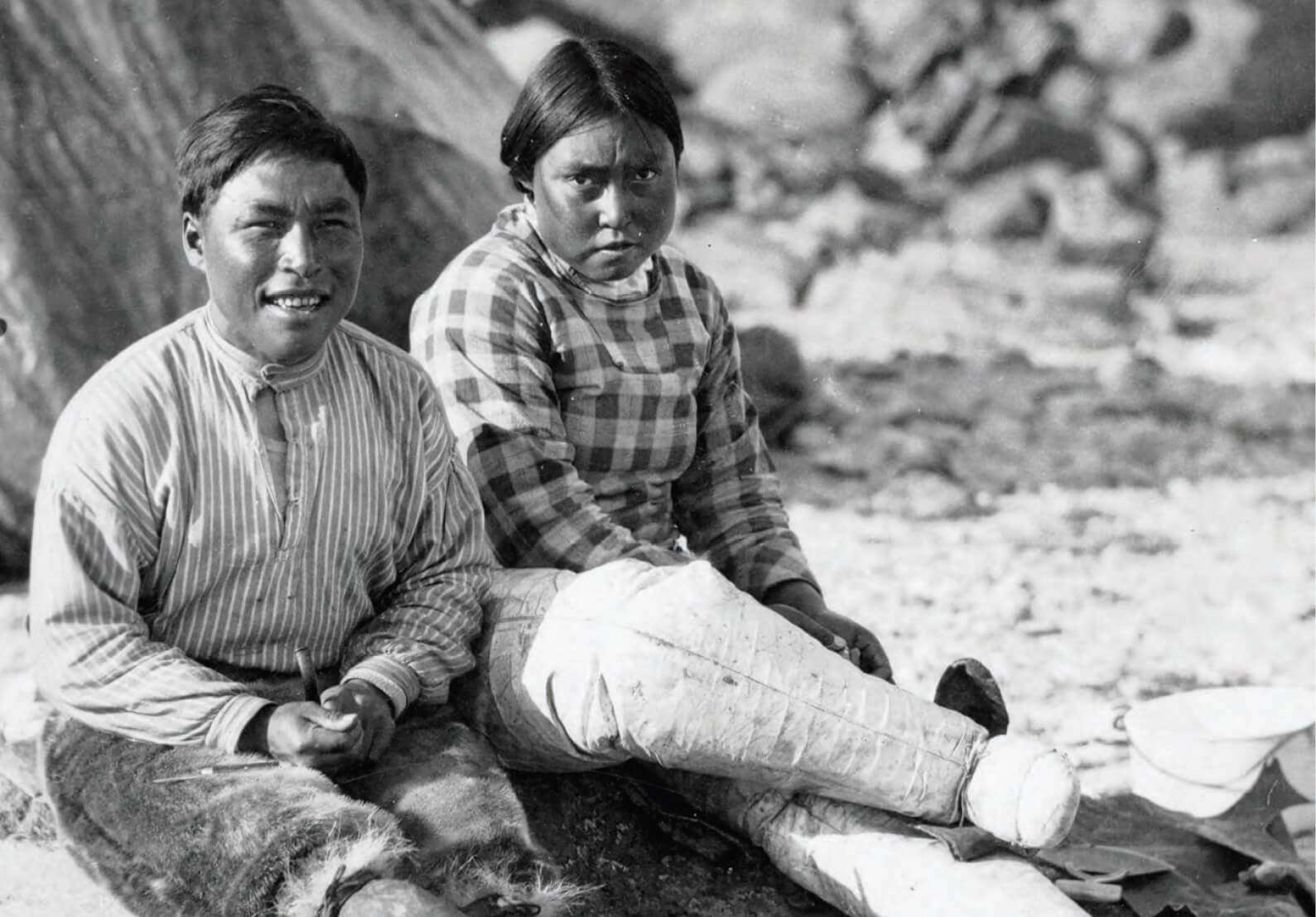
Inughuit couple at the Bache Peninsula RCMP detachment on Ellesmere Island. Maurice Haycock, Library and Archives Canada
Unrecognized:
The Wives and Children of Inuit Special Constables
INUIT RCMP SPECIAL CONSTABLES are unsung heroes, but let us acknowledge the partners of these special constables who helped support their husbands’ work, which has largely gone unrecognized. Prior to 1983, when Mary Hunt became the first Inuk woman officially hired as a special constable in what is now Nunavut, Inuit women, and sometimes even children, assisted with various duties, but were never designated as special constables. Here are a few examples of how the families of special constables assisted the RCMP in Inuit Nunangat in earlier years.
Inuit women are renowned for their ability to sew clothing suitable for the Arctic environment. A special constable’s wife was often called upon, on short notice, to sew clothing such as qulittit (outercoats), kamiik (footwear), and pualuuk (mitts) or sleeping bags for members before they went on patrol. In the 1920s and 1930s the RCMP employed Inughuit (Inuit from north western Greenland) men as special constables at the Bache Peninsula detachment on Ellesmere Island. Their families accompanied them and documents show that the women were paid for sewing.
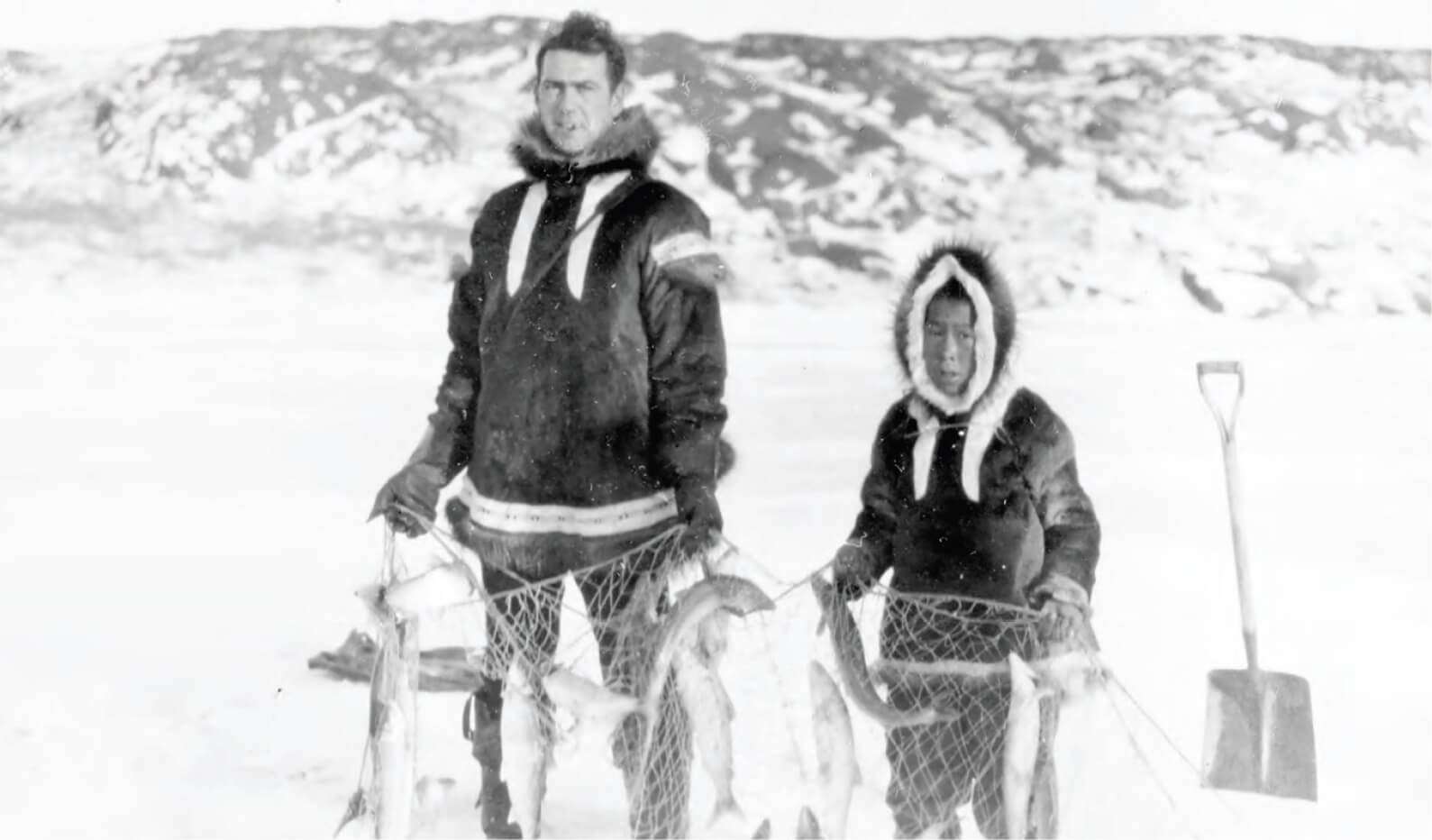
Twelve-year-old interpreter Peter Natit with Constable Albert Joseph Chartrand. Royal Canadian Mounted Police Collection, Library And Archives Canada
When a special constable went on an extended patrol, sometimes he brought his family with him. This was the case for guide Joe Panipakuttuk who was hired as a casual and later became a special constable. In August 1944, he boarded the RCMP schooner St. Roch with his wife Letia, mother Panikpak, step son Arreak, daughter Annie Palluq, son Elijah Kudlu, daughter Soopi Viguq, niece Mary Panigusiq, and 17 of his sled dogs. They sailed from Pond Inlet in the Qikiqtaaluk region to Herschel Island in the Inuvialuit Settlement Region, completing the east-west voyage through the Northwest Passage. During their travels, Arreak and his father shot game, which was eaten by the RCMP crew, and hunted seal to feed the dogs. Letia sewed clothing for the men and Panikpak helped navigate the St. Roch. The Panipakuttuk family were stationed at Herschel Island for a year before boarding the St. Roch again to travel eastward to Cambridge Bay where they wintered. They then travelled by dog sled to Fort Ross (now an abandoned trading post located between Resolute Bay and Taloyoak) where they were picked up by the Hudson’s Bay Company ship Nascopie before finally returning to Pond Inlet in September 1946, two years after having left.
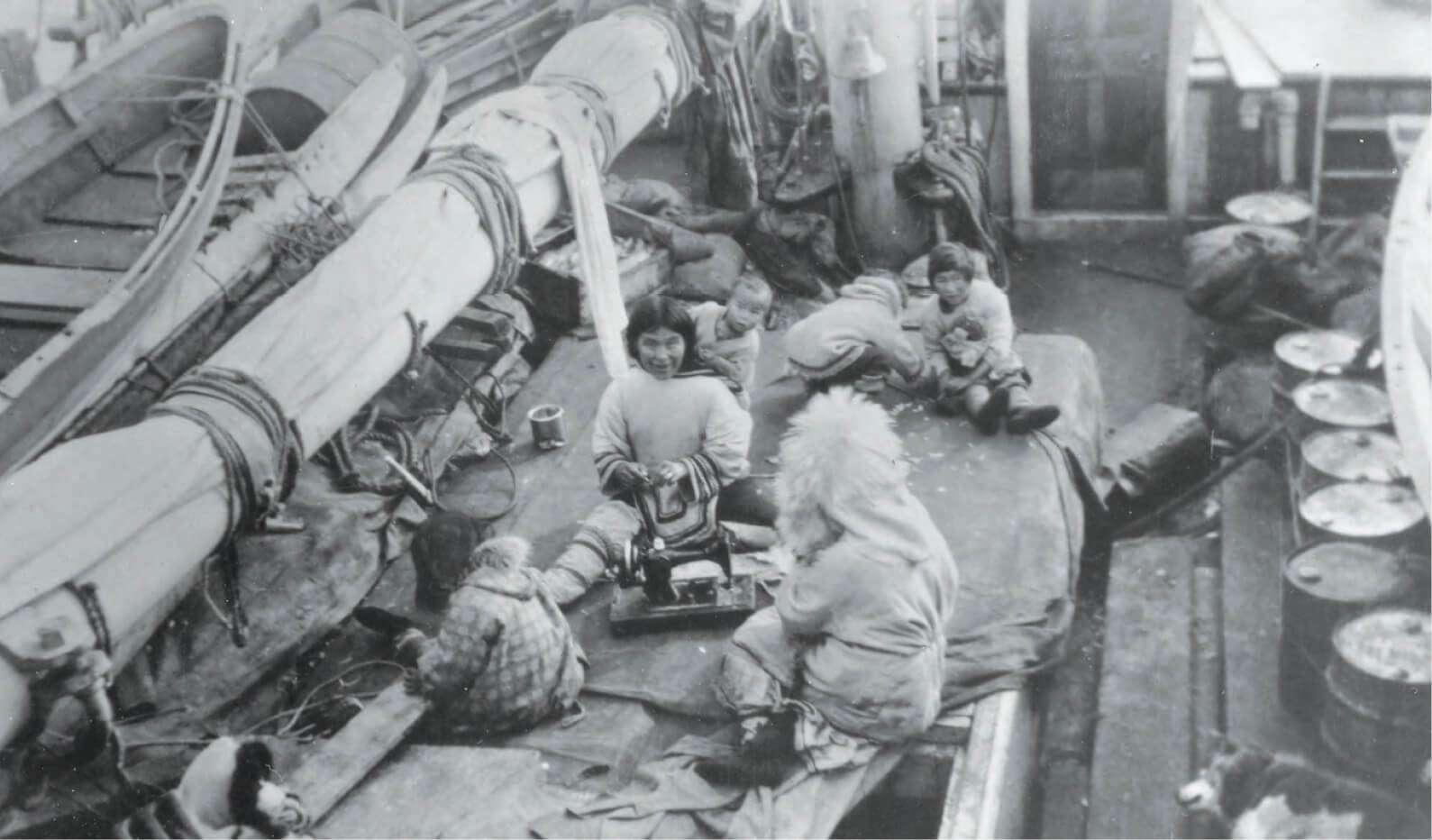
Letia (centre, facing camera, wife of Joe Panipakuttuk) and Panikpak (centre-right, back to camera, mother of Joe Panipakuttuk) sewing with their family on the ship, the St. Roch, August 1944. Courtesy Of The Vancouver Maritime Museum, Larsen Fonds Collection
Wives of special constables also assisted the RCMP by interpreting. In 1926, reports show that Maria Theresa Kumaa’naaq Parker of the Kivalliq region was a police interpreter and went on patrol. She was the wife of Special Constable Parker (Paaka or Paakajuaq) and had been brought up by an Anglican missionary who taught her English. Sometimes, even children acted as interpreters for the police, as you can see in the photograph of 12-year-old Peter Natit of the Kitikmeot region. Children would help their fathers care for the sled dogs or accompany them on patrol.
In more recent years, the wives would often take on the role of dispatcher — relaying messages from telephones to homes. And sometimes Inuit women were asked to be guards for prisoners held in cells.
As you can see, when a man took on the job of a special constable, it usually meant the family also assisted, with or without pay. We must remember that, historically, women and children were valuable contributors to policing in Inuit Nunangat.