Inuktitut Magazine - Issue 133/134

Love at the Border

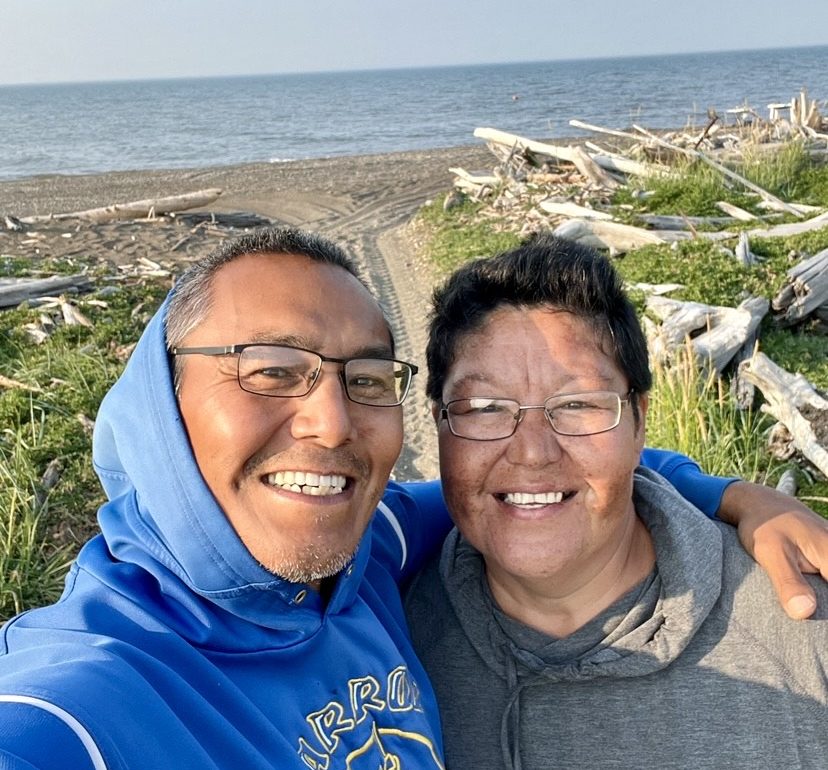
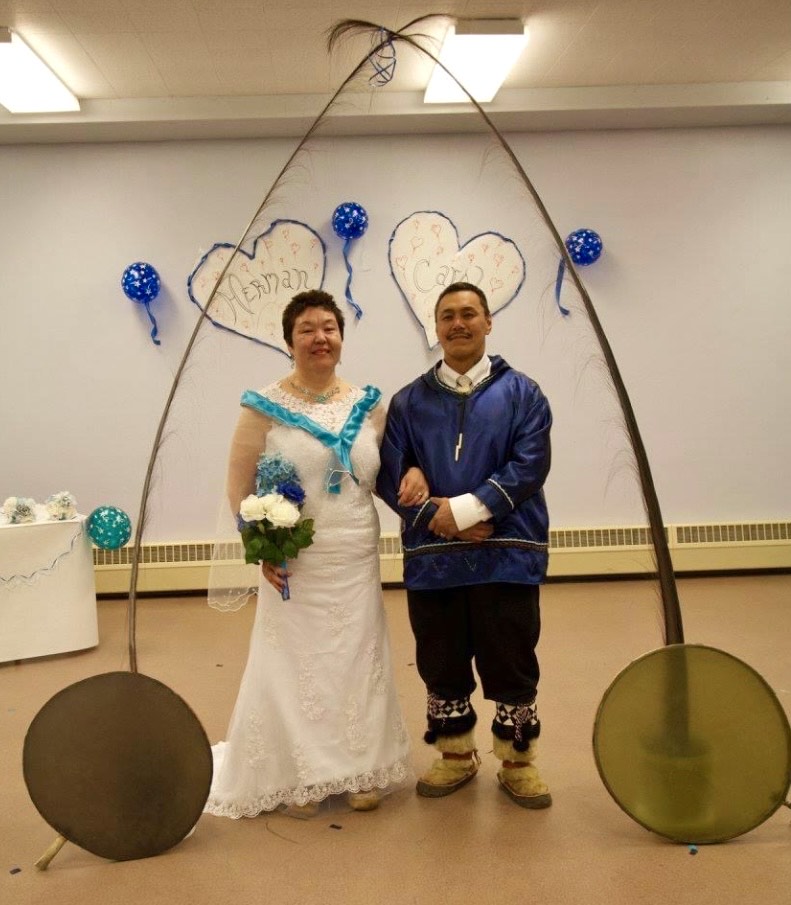
HERMAN AND CAROL OYAGAK first met at Kivgiq; an Iñupiat drum dancing celebration hosted in Utqiaġvik on Alaska’s North Slope.

Over a century ago, the celebration was called a “messenger feast,” where settlements would send out runners inviting neighbouring communities to attend, share news, harvests and gifts. Today, the festival continues to draw Iñupiat and Inuvialuit every other year to celebrate their common bonds.

Herman, from Utqiaġvik, Alaska, and Carol, from Aklavik, Northwest Territories, had known each other casually for many years, through festival‐going and mutual connections, before they noticed a spark. They married in 2017.

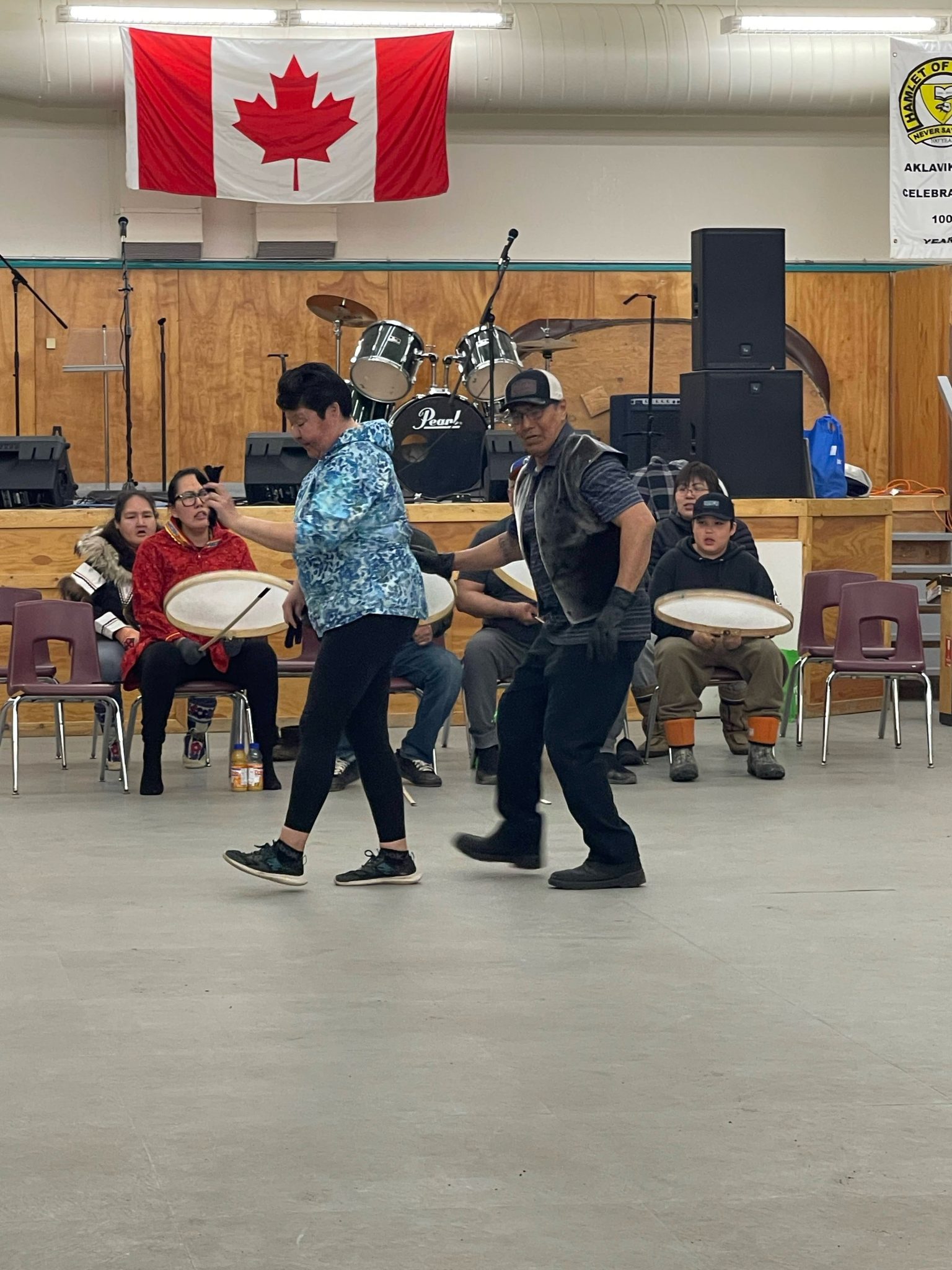
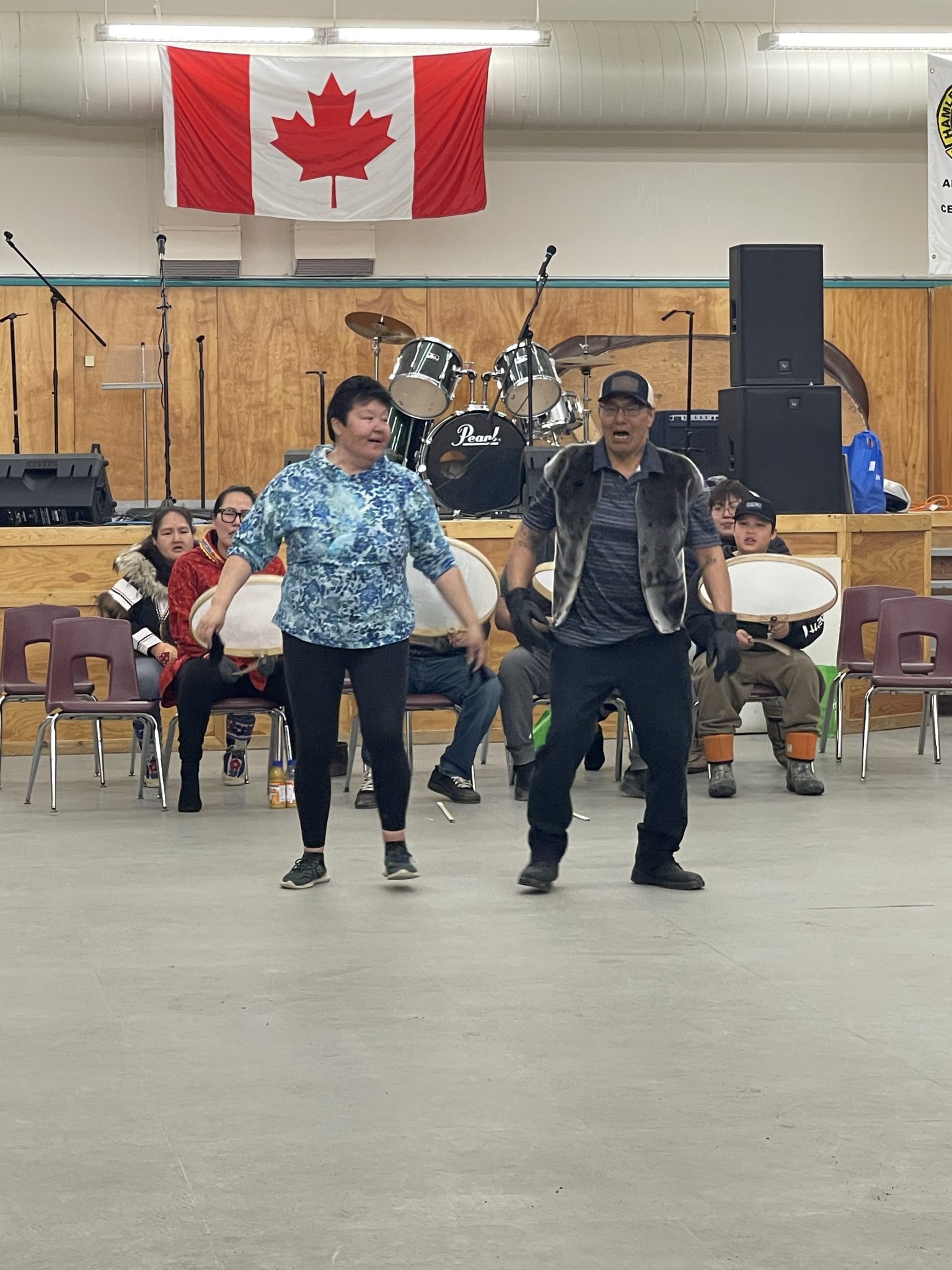
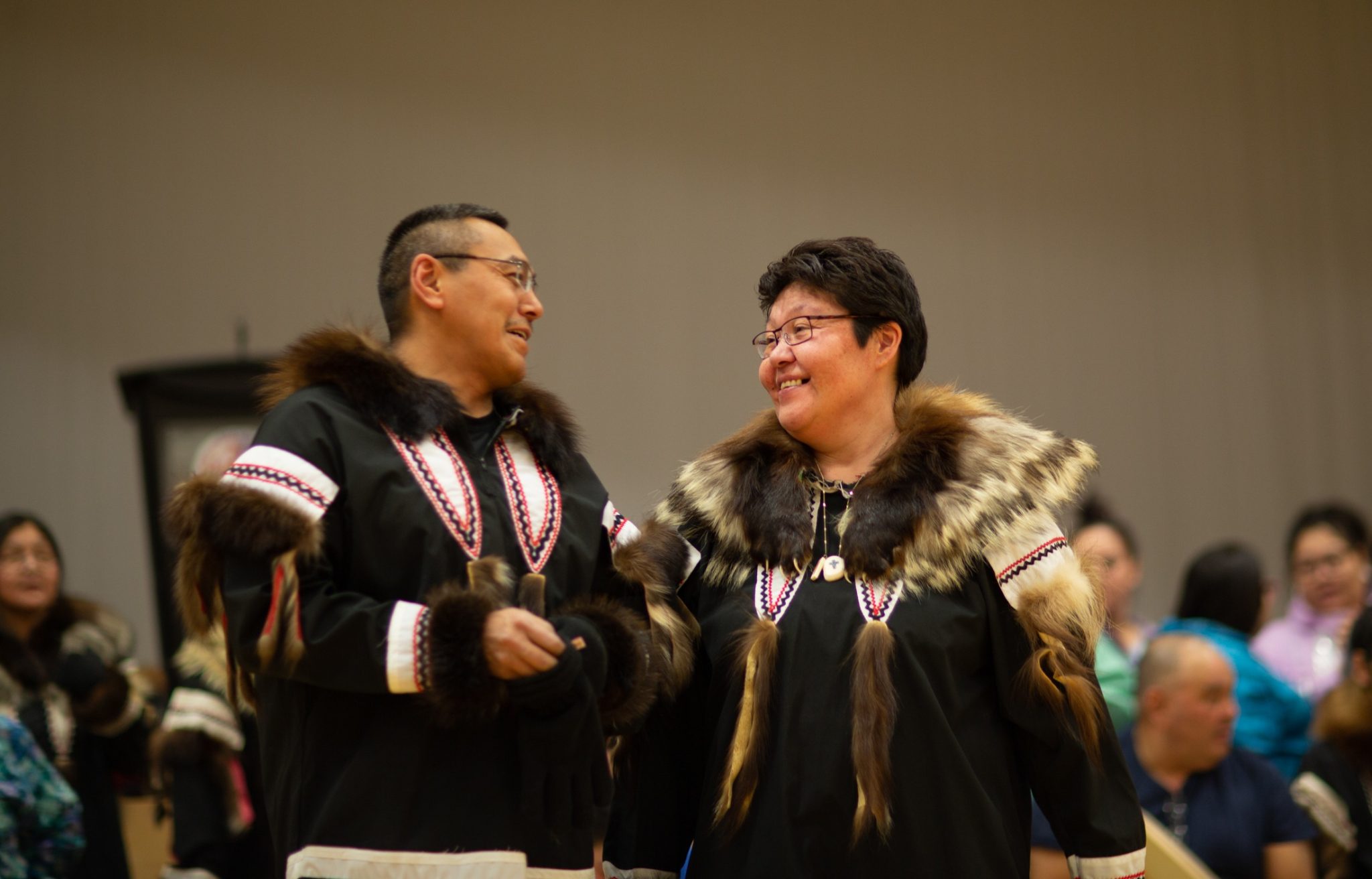
Carol and Herman perform at a community feast in Aklavik in April 2024. © Ben Mitsuk

Their love story is not uncommon in this part of Inuit Nunaat, where Inuit on either side of the US‐Canada border grew up treating the land as one. But when Herman relocated to Canada in 2018, setting out by snowmobile to make the two‐day trip from Kaktovik to Aklavik, legal complications arose from their cross‐border union that the couple, now in their 50s, continue to face today.

“For myself, you’re not Canadian or American, you’re just Iñupiat,” said Herman, 53. “Growing up, I never knew the border because we really always just went back and forth. We had family over there and family over here.”

Carol, who was born in Canada with Iñupiat roots, never experienced any issues travelling over the US border into Alaska, frequent trips she most often made by snowmobile. She typically tries to spend March through October each year out on the land, “following the food,” she said, spending lots of time in Kaktovik, on Barter Island.

“We never had issues; we were always welcome,” Carol said of her travels.

Still, when Aklavik became his home base, Herman was unable to be formally employed without a work or other residence permit from the federal government, though he applied for permanent residency. In the years that followed, Herman integrated into the Inuvialuit community of 700 people, making new friends and volunteering for the local search and rescue. On March 24, 2020, the couple was getting ready to go to a birthday party when the RCMP showed up at the door. Police had come to arrest Herman and have him deported to Alaska.

“They apologized; [they said] we have no choice, but we’ve had orders from the CBSA,” Carol recalled, referring to the Canadian Border Services Agency. Herman faced a charge under Canada’s Immigration and Refugee Protection Act for not presenting himself when he first arrived in the country. A previous criminal mischief conviction from over a decade ago meant he was inadmissible, which led to a deportation order.

For several days, Herman was kept in custody and transferred to Inuvik and then Yellowknife. That’s where his deportation order was stayed and eventually cancelled. But that move is considered a temporary measure, explained his lawyer, Nick Sowsun, noting the CBSA could still move to deport Herman again at any time.

In the years following his arrest, Carol and Herman have had to do weekly, and now monthly check‐ins with the CBSA by phone to confirm Herman’s whereabouts, preventing them from spending long periods of time out on the land, where they would be outside of cell service areas.

“The CSBA officer who was dealing with Herman had no idea of life in Aklavik or traditional practices,” Sowsun said. “They had no knowledge of that culture of tradition — they thought he was hiding.”

“There’s a long historical record on Iñupiat travelling into the Inuvialuit region and intermarrying, starting families, travelling back and forth to harvest,” he added. “It’s grounded in the historical record, and I think there’s a really strong argument to be made that the right already exists.”

Inherent rights aside, Sowsun pointed to the Jay Treaty as an example of a mechanism that Canada could use to enable and support Inuit immigration. The treaty of Amity, Commerce and Navigation, otherwise known as the Jay Treaty, was signed by the US and Great Britain in 1794.

The Treaty affirms the right of “Indians” living on either side of the border to freely cross it; this means that any Inuk with 50 per cent or more blood quantum may enter the US for the purposes of immigration, employment, study, retirement or investing and cannot be deported for any reason.

The Government of Canada has never enacted legislation required for the Jay Treaty to have force of law in Canada, and as such, the Treaty does not affect the admissibility of US‐born Indigenous peoples to Canada.

In the summer of 2024, Herman finally received news that he had passed the first stage in the approval process for his application for Permanent Resident, filed in 2021 on humanitarian and compassionate grounds. He’s now awaiting final approval.

Carol estimates that half of the current Inuvialuit population descend from families who traveled from Alaska to what is now Canada in recent generations. For decades, the Inuvialuit Regional Corporation has raised the issue of cross‐border mobility for Inuit who live and travel between that region and Alaska.

Carol and Herman perform at a community feast in Aklavik in April 2024. © Ben Mitsuk

In recent years, Inuit Tapiriit Kanatami has proposed legislative measures to Immigration, Refugees and Citizenship Canada that would implement Article 36 of the United Nations Declaration on the Rights of Indigenous Peoples. Article 36 affirms the rights of Indigenous people to move freely throughout their respective territories. Canada’s United Nations Declaration on the Rights of Indigenous Peoples Act obligates the federal government to align its laws with the rights affirmed by the UN Declaration.

ITK’s proposed legislative amendments would uphold the right of eligible, federally recognized US tribal members like Iñupiat, as well as Greenland Inuit, to enter Canada. They would also create the option for Inuit Treaty Organization members to enter Canada on the basis of their Inuit Treaty Organization
membership, rather than on the basis of citizenship.

In late 2023, Canada’s then‐Immigration Minister Marc Millersaid the federal government planned to make it easier for Indigenous peoples to move across international borders. Then, in October 2024, the government announced interim policy measures that were intended to enable members of US federally recognized tribes who have a close relative in Canada to apply at no financial cost for open work permits, study permits, or to extend the duration of their stay in Canada as visitors—an initiative that could benefit other Iñupiat like Oyagak.

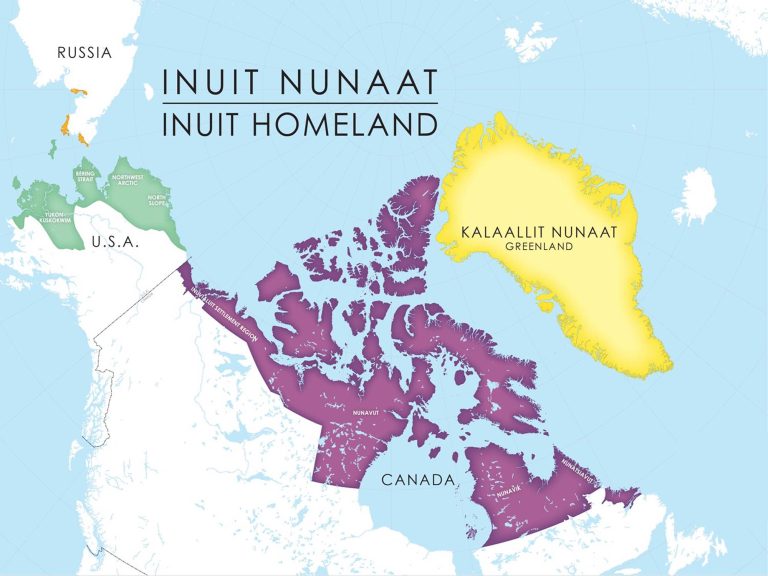
The Oyagaks’ story is not unique to the Inuvialuit Settlement Region. In Iqaluit, Nunavut, at the opposite end of Inuit Nunangat, Navarana Beveridge believes that Inuit have so much to gain from more open borders.

Beveridge grew up in Qaqortoq and Nuuk, Greenland, before relocating to Nunavut. She was selected to attend an Inuit youth exchange program in 1994, where she met her now husband William Beveridge, who is from Naujaat, Nunavut.

Carol and Herman Oyagak were wed in 2017.

The couple first tried to live in Greenland, but William was undocumented and forced to leave after a few months. The couple moved to Nunavut and married in 1997 to facilitate her permanent residency status. The administrative process was “daunting,” Beveridge said, and included an invasive medical exam. It’s only been since 2014 that Denmark allows for dual citizenship, meaning Beveridge couldn’t vote or serve in public office in Nunavut for many years.

“Through this process, we just understood that [my husband and I are] from two different countries. So even though we’re the same people over a large area of land, there are two jurisdictions governing them, and there are rules for entering those lands,” said Beveridge, who works as a senior director of strategic planning at the Qikiqtani Inuit Association, the Inuit Treaty Organization for the Qikiqtaaluk region of Nunavut.

Beveridge has also served as Danish honorary consul for Nunavut. Through that experience, she learned of the family relations between many High Arctic communities like Pond Inlet or Grise Fiord, and Qaanaaq in Greenland. Border restrictions and long air travel routes make it very difficult now for those families to travel back and forth. Immigration laws have also deterred Beveridge’s sister, a teacher and Kalaallisut speaker, the Inuit language of Greenland, from applying to work in Nunavut.

“It’s not to the benefit of Inuit,” Beveridge said. “If more people could see what’s possible, then that opens up possibilities in terms of language advancement and promotion, and other initiatives.

“Drawing on each jurisdictional strength would empower Inuit to a new level, if we could just figure out how to work better together.”

In the meantime, Herman Oyagak continues to wait on his permanent residency, which could spell the end of his fight against deportation. In the meantime, he had to pull out an infected tooth himself because he doesn’t have access to Canadian health care. “We just need my husband’s case to be done,” said Carol. “My personal standpoint is that we’re being discriminated against and being colonized all over again.”

Herman and Carol Oyagak perform at a cultural celebration in the Inuvialuit Settlement Region. © Courtesy of OKT LLP

Author: Sarah Rogers