© Leeor Wild
Like Elisapie, Through the Heart
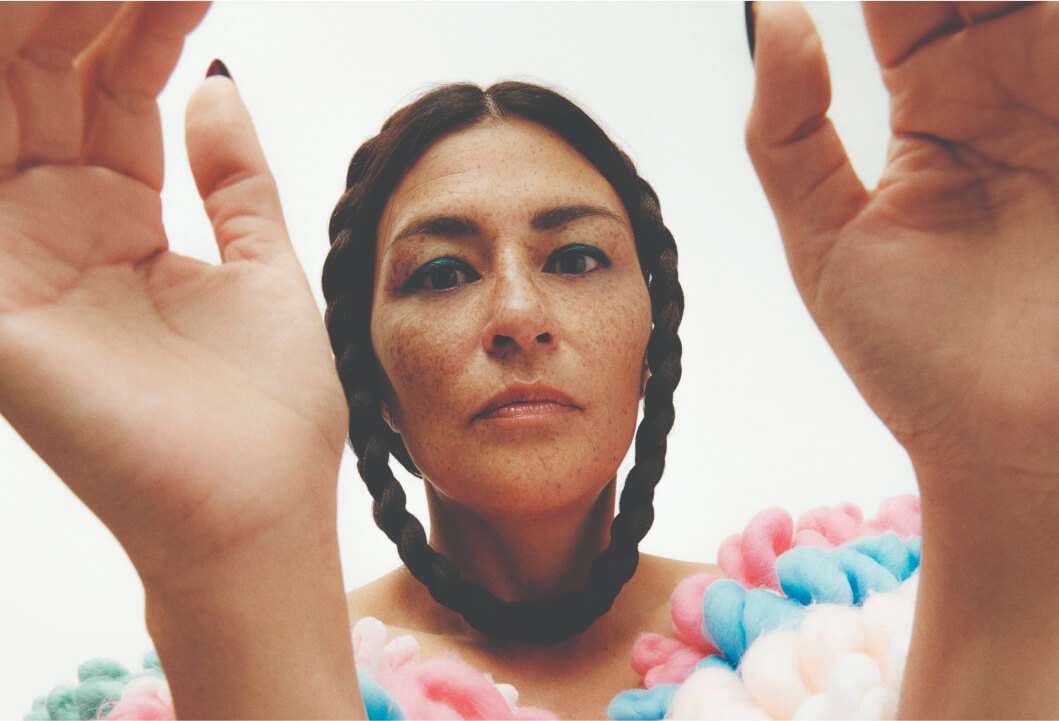
I IN BETWEEN CONCERTS and amid fine‐tuning for her national and international tours, Salluit songstress Elisapie Isaac found time to chat about her newest album Inuktitut, released in September 2023. The album is a collection of classics from the ’60s through to the ’90s, reimagined in Elisapie’s mother tongue and unique voice.
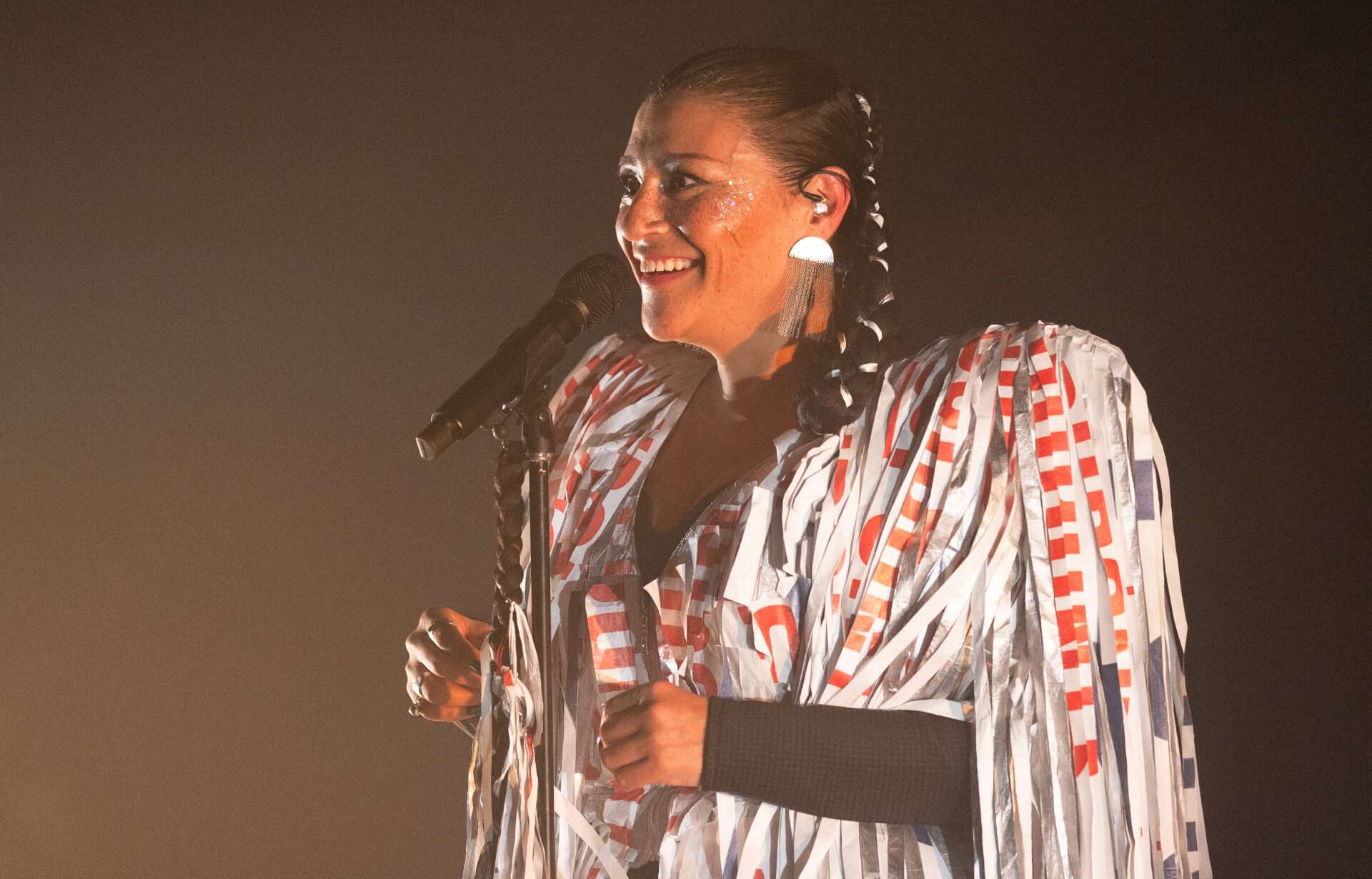
“It’s something I’ve always wanted to do, not for Southern fans, but just for me and my family, right?” she says in an interview in both Inuktitut and English. “Because I find something really satisfying—because this is how I found my voice as a kid, through other people’s songs, through pop songs, through Abba, through Blondie.” Songs she heard blasting at the Salluit arcade in the ’90s, where folks of all ages played video games by day, and older kids and adults danced their hearts out at night.
“It was open until 2 a.m., and I would go freeze my body from 10 p.m. to 2 a.m.,” she says with a laugh. “We would hang out in the porch outside because we weren’t 16. And we’d watch people come in and out, and this was just our hang‐out, waiting to be 16, watching everybody dancing to these great songs.”
She puts her mark on the album’s 10 cover songs with a delicate touch—this is partly her characteristic style, and partly the emotional connections she brings to the songs.
© Maxim ParéFortin
“I’ve been asked so many times, how were you able to translate this one? I don’t know! With my heart. When it’s very passionate and it’s feeling the emotion, it’s so much easier to get into the words and make it work… You’ll find that lyric that feels weird, that word that feels weird, you’re going to find a way because those emotions are taking over.”
And, she says, there were many words and ideas that didn’t fit into Inuktitut easily, even with the mental elasticity that comes with being fluent in three languages, Inuktitut, English, and French.
Though humble about her part as a language keeper, Elisapie says she enjoys finding new ways to express herself through the more practical Inuktitut.
“It’s not something easy to make it sound beautiful, when it’s not the first language intended to be sung in. So, I think when a song is so close to your heart, it’s one hundred per cent easier to translate.”
Elisapie also had the ear of an expert for feedback and guidance in remaking the songs.
“Sarah Aloupa from Quaqtaq, she’s a great translator, and she loves music also. I don’t think you can just translate a song and get a translator to translate it and then you sing it. It doesn’t work like that,” she says.
Translating the music was not the only challenge.
To confirm that she could cover the original copyrighted songs, she had to produce the whole album and present the completed covers to music labels first. Happily, it’s a risk that paid off.
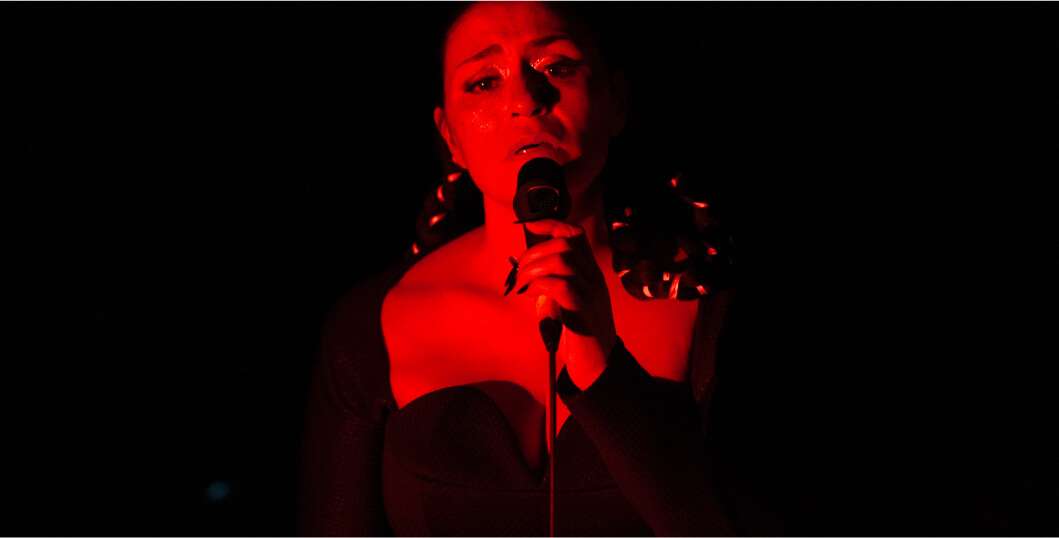
Inuktitut begins with Isumagijunnaitaungituq, Elisapie’s take on The Unforgiven by Metallica, who she says has had a big impact on Inuit and other Indigenous people the world over.
© Maxim ParéFortin
“They express emotions on our behalf. And I think at times when we couldn’t be yelling and being mad and express ourselves, it’s like they were there.”
Throat‐singing and the mouth harp complement her lyrics on Californiamut, marrying classic Inuk music with the Led Zeppelin cover, Going to California.
On Uummati Attanarsimat, Elisapie transforms Cyndi Lauper’s Time After Time into a gentler, yet just as danceable, bop.
All throughout, one gets a sense that Elisapie cherishes Inuktitut, singing softly through the carefully interpreted music.
Though humble about her part as a language keeper, Elisapie says she enjoys finding new ways to express herself through the more practical Inuktitut.
“That’s what we need to do, I think we just need to explore it and not be afraid of it anymore, right? We can even challenge it, because our language is supposed to adapt, like our culture, like we are adapting.”