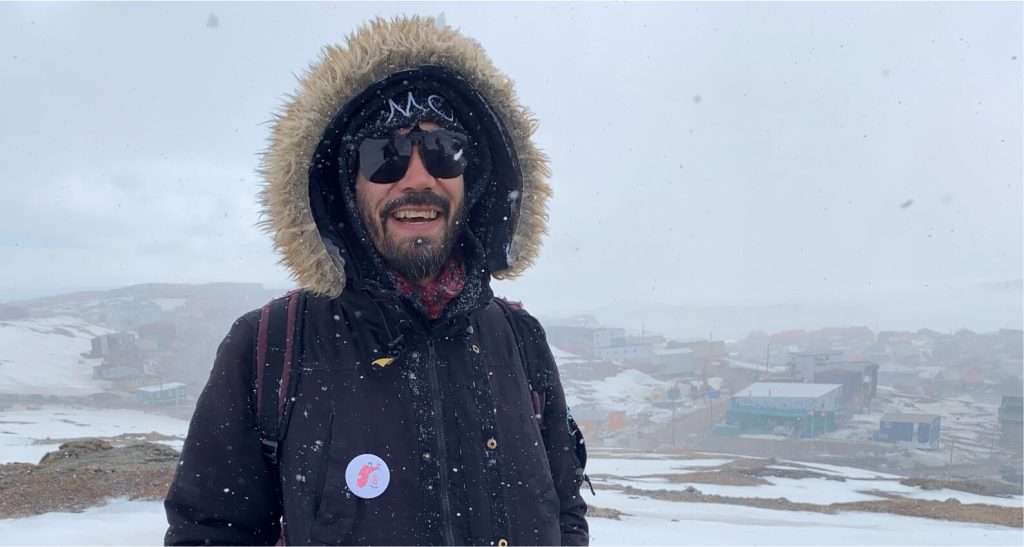
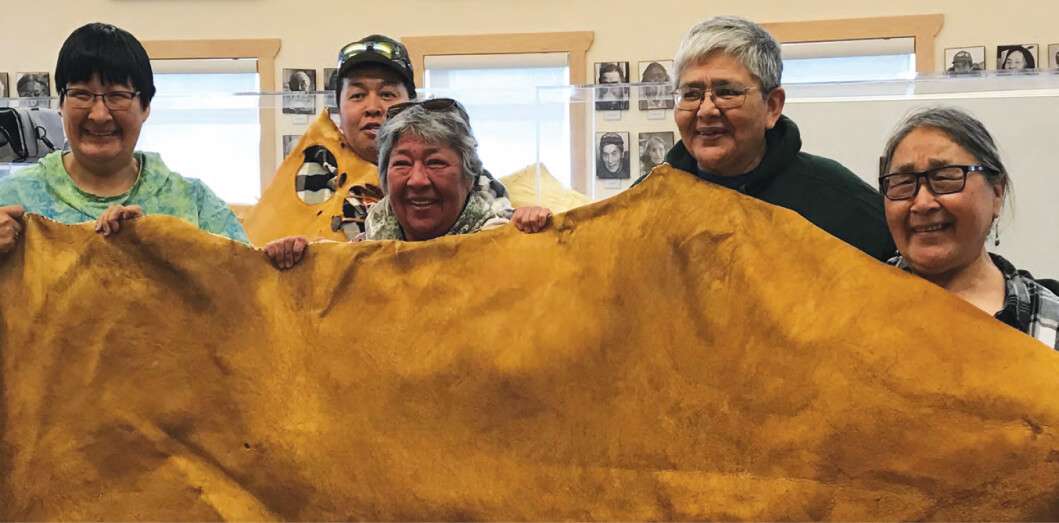
Left to right: Doreen Evyagotailak, Quentin Norberg (back), Millie Kuliktana, Margaret Douville, and Joanne Taptuna
Embracing Moose in Kugluktuk
TENT RINGS, ARTIFACTS AND REMNANTS of rusted barrels can be seen as you travel the islands and shores along the Coronation Gulf of Western Nunavut. Copper Inuit hunters and gatherers have crossed these shores since time immemorial, travelling by seasons, following migrations paths, and charting the land and rivers for food and skins.
In the past, Copper Inuit relied on seal in the winter for heat, light, and warmth. Every year there was an adaptation period between settling on the islands in winter, and moving to the mainland in spring where land animals replaced seal and fish. The mainland provided bountiful caribou, as hares migrate near Kugluktuk. Muskoxen also nourished families, although they were less likely to be hunted unless caribou was scarce.
It used to be rare for Copper Inuit to harvest moose, as the skins were not ideal for clothing. But, with change and adaptation, many Inuit have adopted moose as a valuable resource. Today, they are abundant and harvested regularly for their meat and beautiful skins that are tanned into leather.
As settled communities began to grow in Western Nunavut, the culture changed for many families. Younger generations started raising families in town, although cultural behaviours were never lost. Now, there’s a movement towards re‐learning traditional skills.
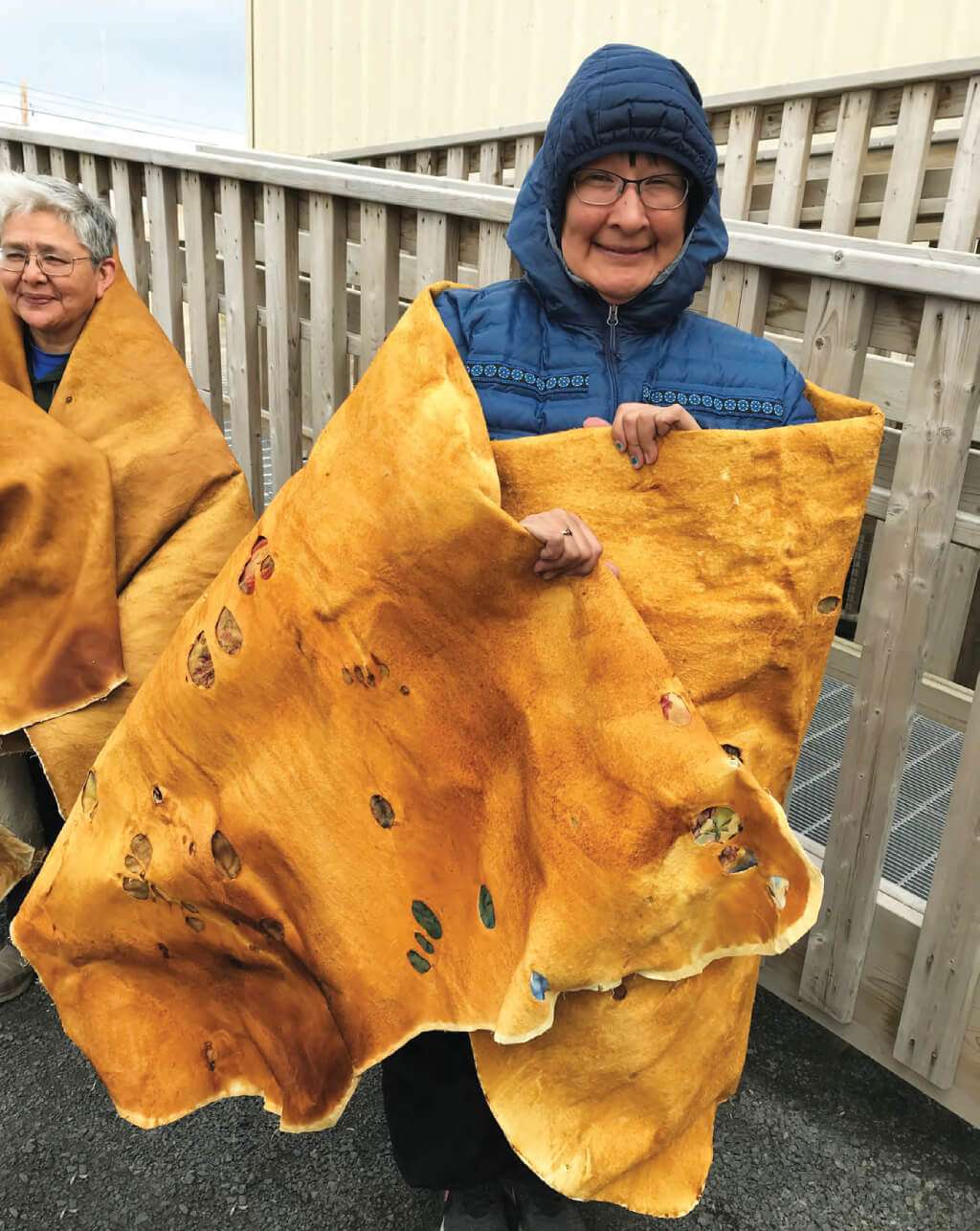
Doreen Evyagotailak shows her moose hide, crafted in Kugluktuk
Adaptation came full circle with new technologies, recipes, and economy. With caribou numbers being monitored and controlled, muskox and moose became just as valuable. Climate change has brought more growth on the tundra, and now moose are more plentiful than the days of seasonal living. It’s a welcomed resource for the community. Moose hides are treasured by seamstresses as they are heavier and thicker than caribou skin, and easier to stretch. In particular, moose hide soles are now preferable for footwear, rather than sealskin.
Some residents of Kugluktuk wanted to be trained on how to best preserve and tan moose hides. The practice of tanning moose hides is not unprecedented for Inuit. I thank our late Elders Lena Klengenberg, Naomi Niptanatiak, Alice Kinaviak, and Elva Wenek for leaving us with their knowledge on tanning, and the curiosity to learn more.
The late Bessie Algek (daughter of renowned seamstress Kinaviak), lead the way in finding a trainer to teach the process to properly preserve, tan and treat moose hides. Margaret Douville, a tanning and cultural instructor from Taku River Tlingit First Nations, in Teslin, Yukon, joined us for two weeks in Kugluktuk in 2018 to demonstrate the full process of tanning moose hides.
It takes years to properly process and tan a moose hide. During the workshop, 12 of us joined to de‐hair, scrape, stretch, and smoke moose hides over the period of a year. Each stage required unique skills and energy. It also included weathering the hides outside during the winter season, which allowed the fibres to break down.
Some of the materials such as acorns and punk — which are used during the smoking process — were brought to the workshop from outside of our territory. Participants also purchased their portions of special homemade soap bars that are used to soak the de‐haired hides. The traditional method uses moose brain matter. The secret ingredientbased soap bar soon became a treasured tool!
When you share, you’ll get more in return.
Overtime, families have also adapted and learned how to process moose meat for nourishment. Many hours of hard work to grind, dice, dry, and slice into various packaging to make delicious meals, adapting recipes traditionally used for caribou, muskox and beef. And the gift of sharing within the community is practiced, and continues. As we say, When you share, you’ll get more in return.