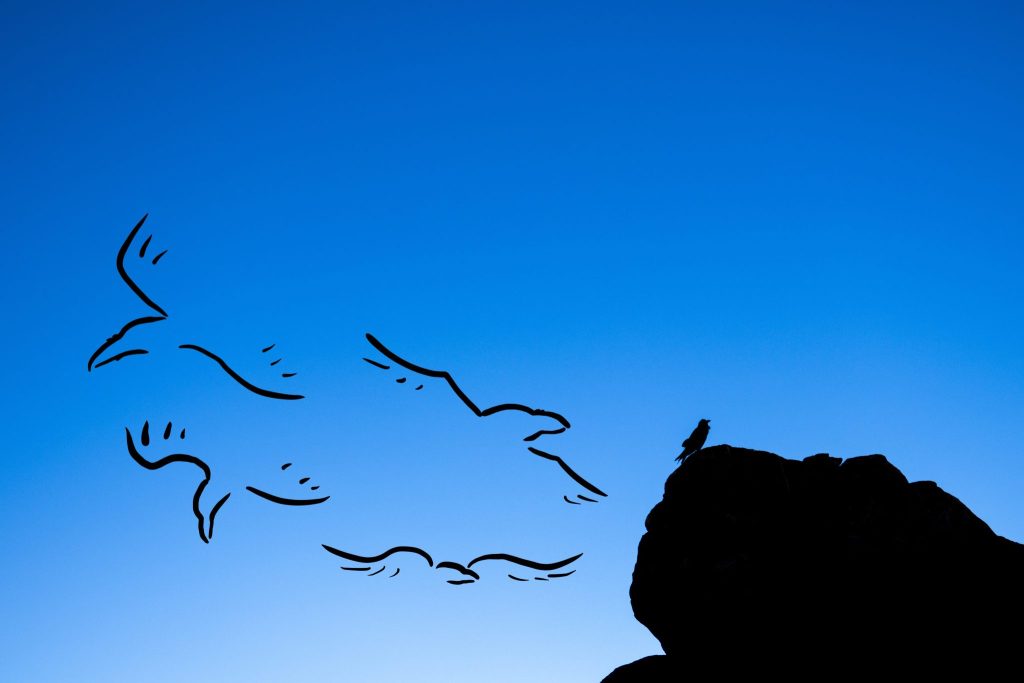
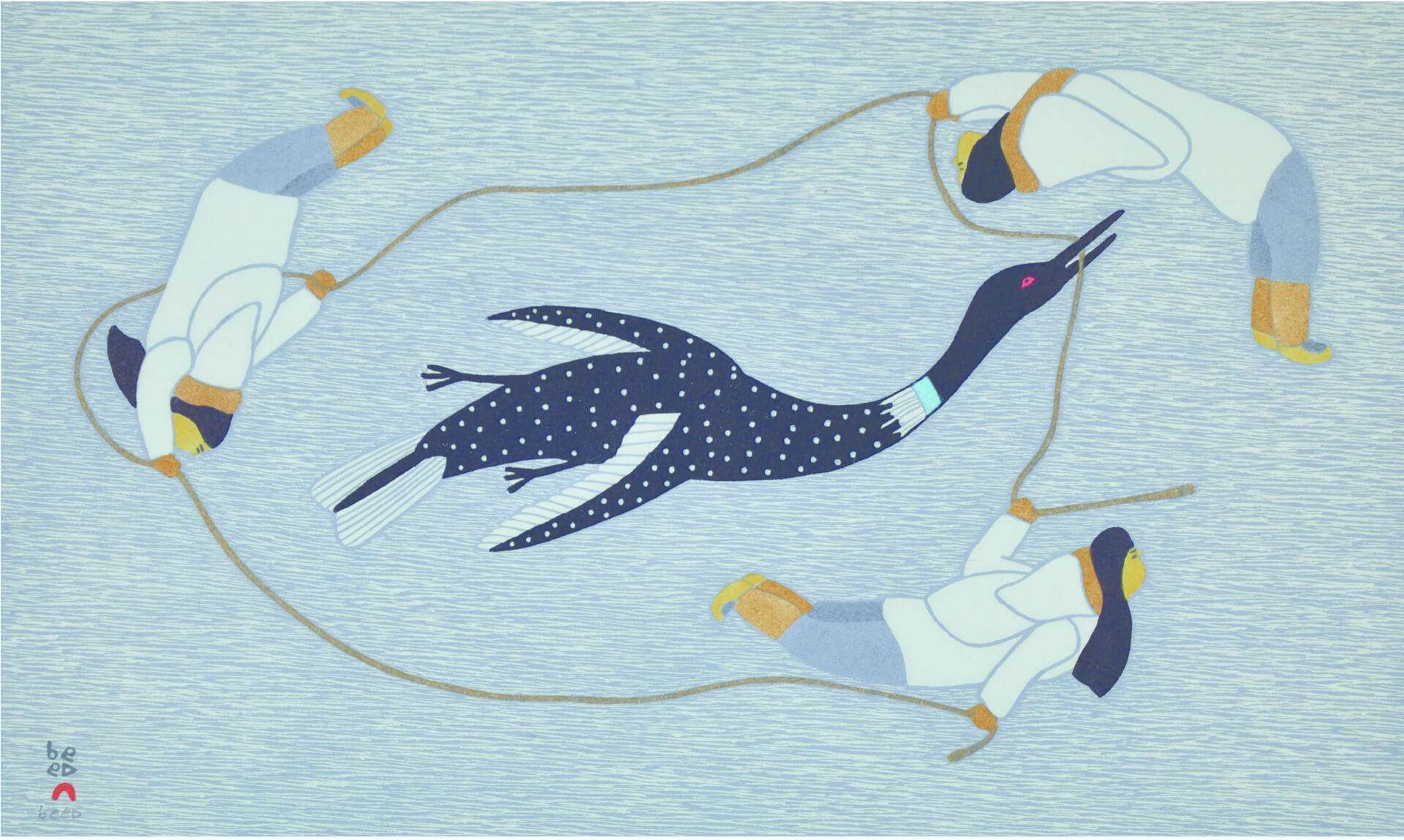
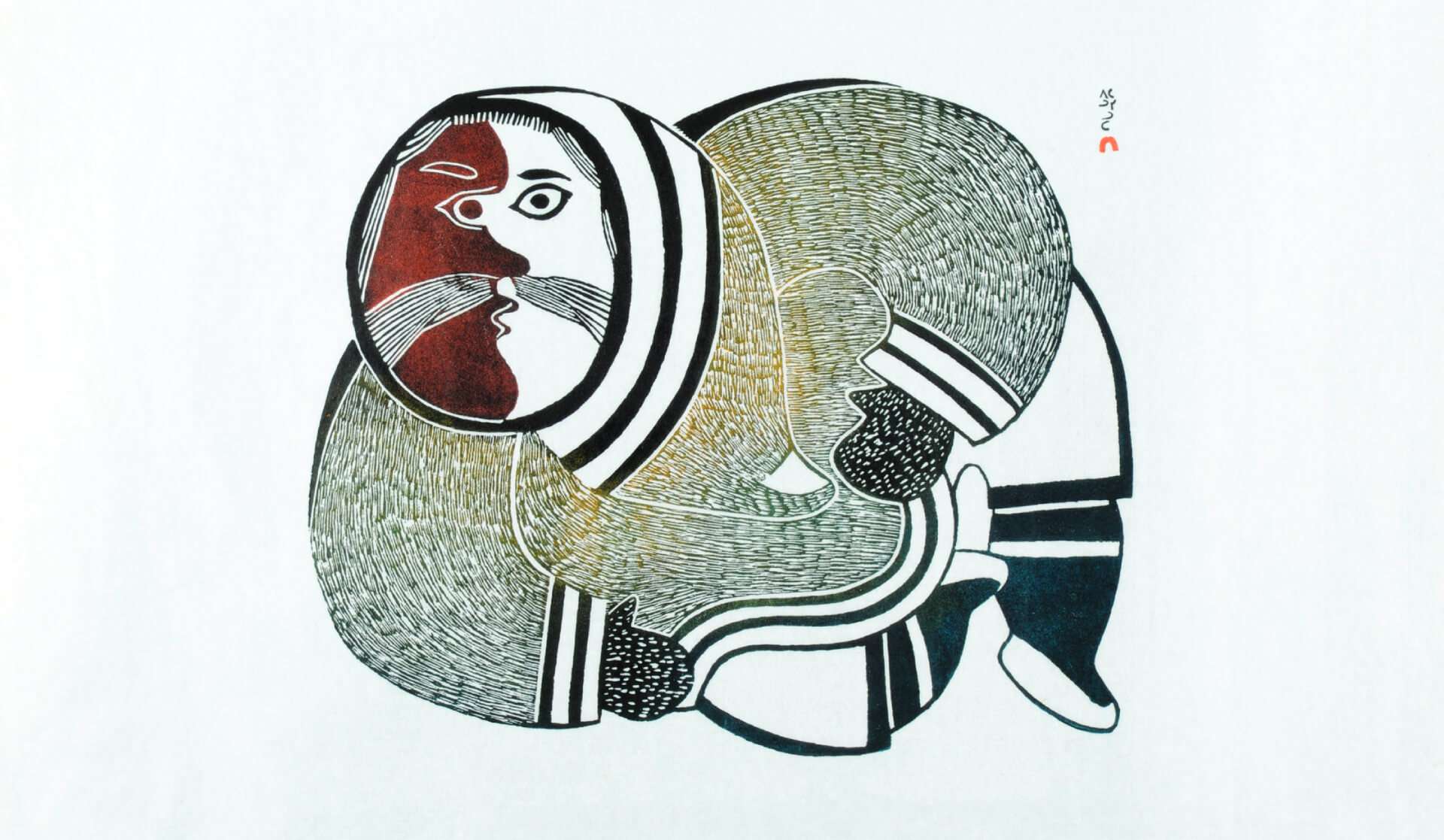
Qavavau Manumie, Chasing the Loon, 2015, stonecut, stencil © Courtesy Dorset Fine Arts
BIG MONEY
The right to profits from resold artwork
On November 20th, 2018, history was made at Waddington’s Auction House in Toronto. A limited edition print of Kenojuak Ashevak’s “Enchanted Owl” sold at auction for a whopping $216,000. This simultaneously shattered previous records held by the famous bird, and reopened a recurring debate in the Canadian arts landscape—resale right.
Initially conceived of in France over a century ago and effective in at least 93 other countries globally, resale right guarantees artists a 5% cut of the profits on resold work in secondary markets, such as in auction houses. Works by artists often appreciate in value as their careers progress, or following their deaths, so it is not uncommon for works to sell for a much lower price at creation: “Enchanted Owl” originally sold for about $24 in 1960. Artworks can rapidly increase in price as they move through secondary markets and the artist becomes more recognized. When Ashevak’s work sold for six figures in 2018, with none of the profits paid to her estate, northern artists took notice, wondering again why artists, their descendants, and communities, were continually being denied the profits on high performing sales of their work in secondary markets.
In 2015, Crown‐Indigenous Relations and Northern Affairs Canada determined, in its Impact of the Inuit Arts economy study, that the Inuit art market contributed $87.2 million to the Canadian GDP, with visual arts accounting for approximately $64 million, or nearly three quarters, of that figure. The same study also estimated that the average Inuit artist or craftsperson was making the equivalent of just $12.17 per hour from their labour. And while many Inuit artists and craftspeople are creating art as supplemental income, some are also subsistence artists who rely on the sale of their work to feed families and ensure access to the necessities of life.
Notable artists such as Kablusiak have been adamantly vocal in the push for the adoption of resale right, but they are not alone. National artists representation organization CARFAC has, for decades, been at the forefront of the fight for the implementation of the 5% cut Canada‐wide and released a comprehensive list of recommendations for its implementation in 2015. In recent years, much of this initiative has been led by CARFAC Vice‐President Theresie Tungilik, an artist and Government of Nunavut advisor who has been a tireless advocate for the rights of Inuit artists throughout her celebrated career. They have often faced opposition from the Art Dealer’s Association of Canada who take a contrary stance on the issue of resale right, citing the added complexity and additional costs to the art making and marketing process which could potentially lead to increased prices and perhaps even lower sales.
Pitaloosie Saila, Eskimo Leader; Printer Lukta Qiatsuk, 1972, Stonecut print © Courtesy Dorset Fine Arts
The debate periodically makes its way to a federal level, notably in standing committees before the House of Commons in both 2013 and 2019. Bill C‐516 was initially proposed in 2013 as an Amendment to Canada’s Copyright Act to make resale right mandatory in Canada. It was unsuccessful. By the summer of 2019, however, the House of Commons and Senate reports ultimately concluded that resale right deserved “further study and consideration,” in what finally felt like a slight advancement towards adoption. The Standing Committee on Industry, Technology and Science (INDU) recommended that: “The Government of Canada consult with provincial and territorial governments, Indigenous groups, and other stakeholders to explore the costs and benefits of implementing a national artist’s resale right, and report on the matter to the House of Commons Standing Committee on Industry, Science and Technology within three years.”
The Standing Committee on Canadian Heritage offered an even more direct take on the issue, recommending that “The Government of Canada establish an artist’s resale right.” Now, more than a year and a half after these recommendations, little action has been taken to explore them further. With the impact on art sales being felt at every level of the Inuit art market and beyond, as a result of the Covid‐19 pandemic, the gaps identified in artists’ incomes—compared to that of the secondary market—have become even more apparent.
As of late 2021, CARFAC has begun to explore a new route in which resale right becomes adopted as an amendment to the Copyright Act, rather than as its own bill. This may be the ticket forward to a more streamlined and hopeful future for the implementation of resale right in Canada. While the amendment has the capacity to benefit artists from any walk of life within the country, the effects on Indigenous and especially Inuit artists and their descendants could be profound, as pieces that may have sold for $35 or less in 1960s art markets are now reselling for tens of thousands of dollars in contemporary secondary art markets.
Considering how much Inuit art has contributed to Canada’s GDP and to Canada’s visual identity for decades, the time is long overdue for artists to be fairly compensated within this ever‐expanding, multi‐million dollar market in order to achieve a fully equitable and sovereign Inuit art landscape.