© Lucasi Kiatainaq
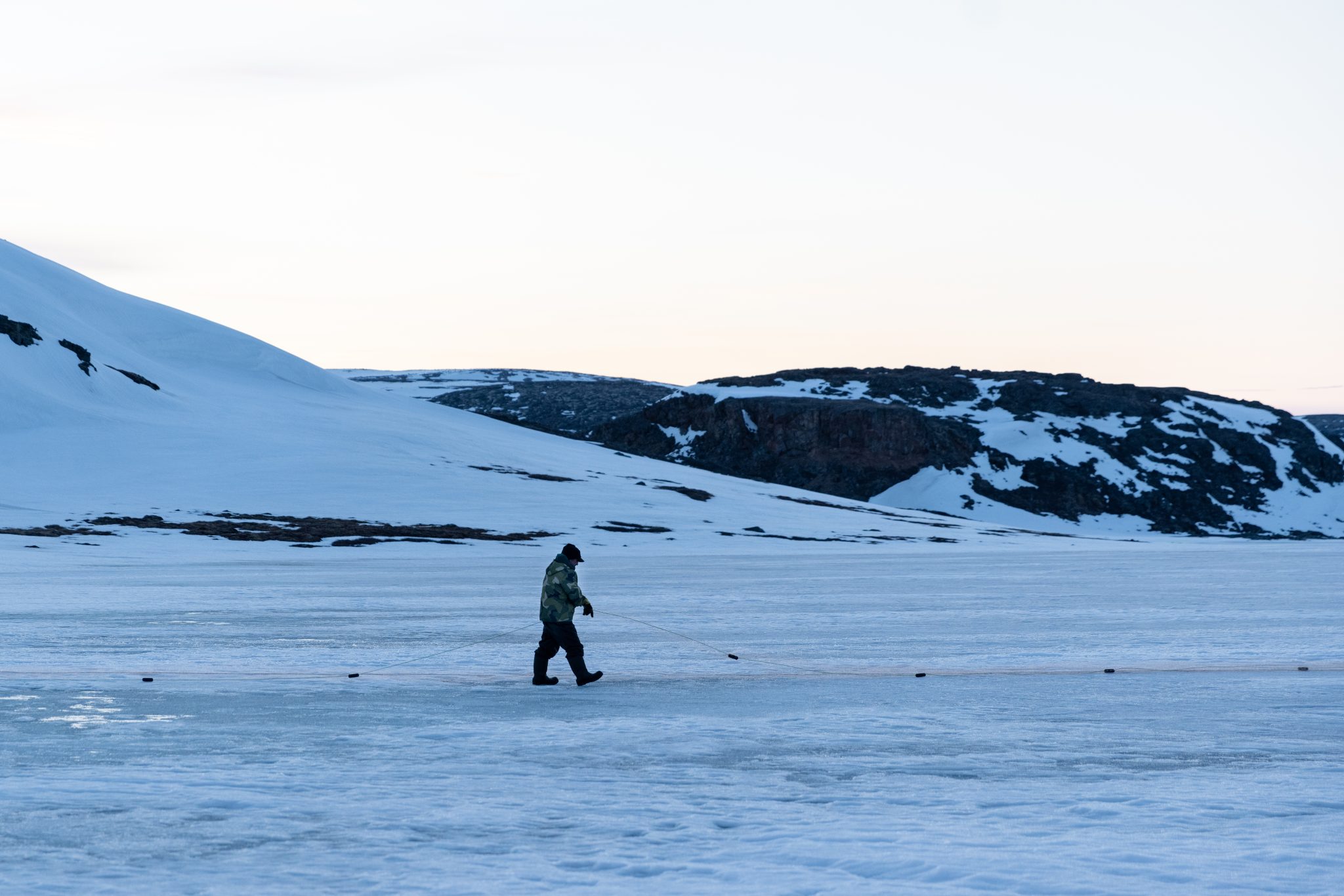
Fishing at Tasiraq
Ice melt is changing access to my family’s harvesting place
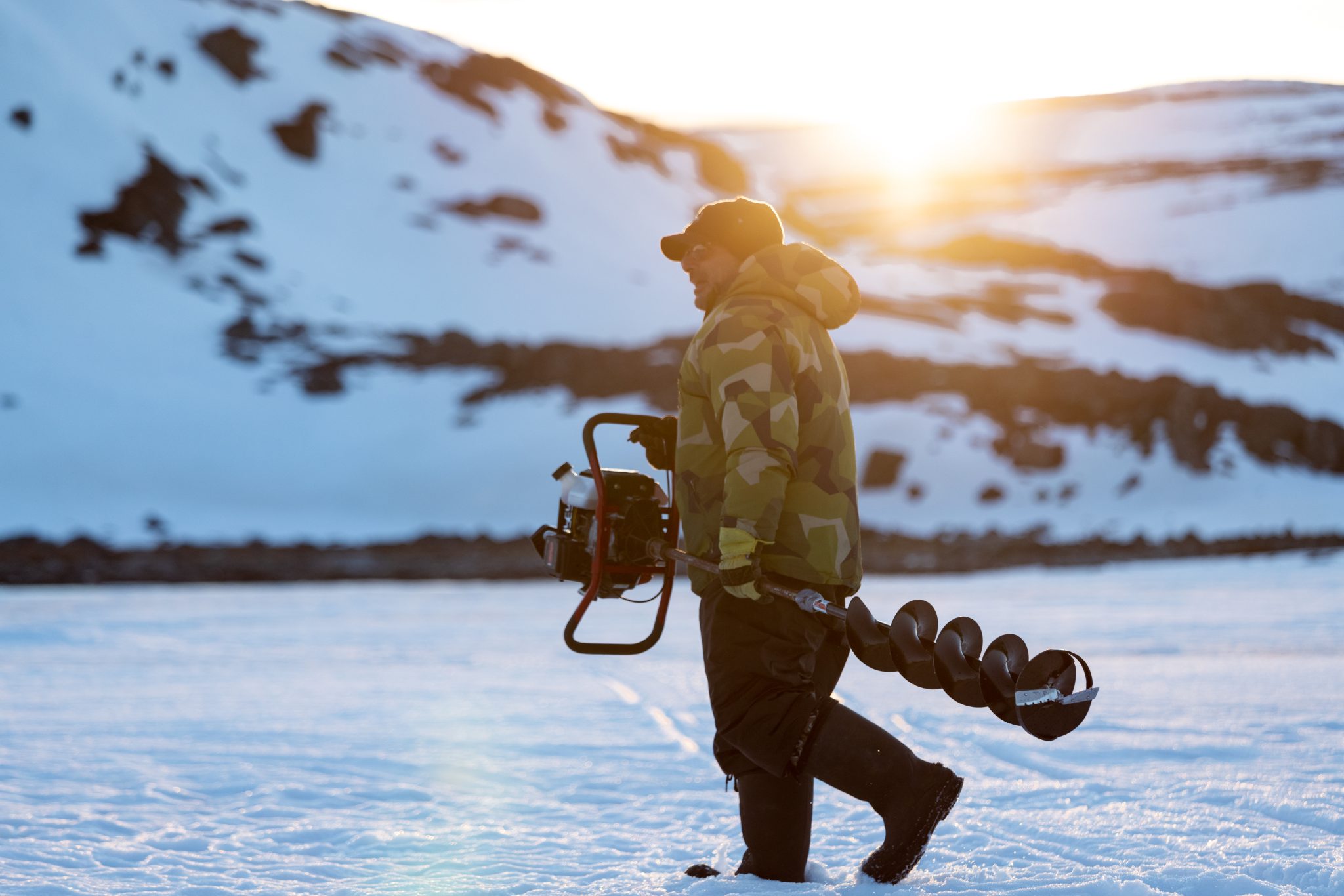
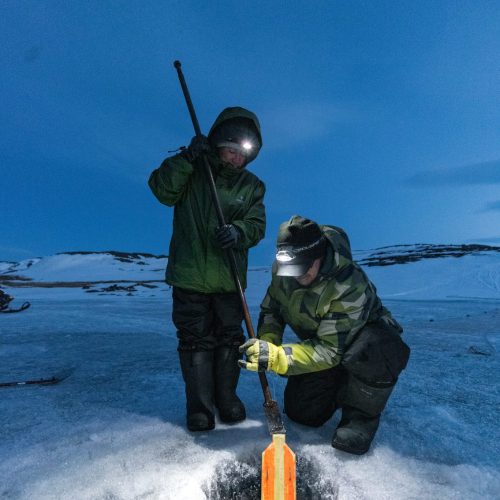
MY FATHER CAUGHT his first fish and his first caribou here. It’s also where I got my first black bear and where I grew up hunting birds and other animals. This place is called Tasiraq, a lake close to my home village of Kangiqsujuaq. We travel on the sea ice to get to this lake, but with the thinning sea ice and ice cracks getting bigger sooner, our ability to get to the lake is shortened every year. This past spring, I went fishing at Tasiraq with my family and spoke with my parents, Tiivi Alaku and Christina Kiatainaq, about this place and how it is changing. Here is what they told me.
© Lucasi Kiatainaq
Tiivi: The name of the lake is Tasiraq, (my lake). The people who made the name claimed the lake for themselves thus the name Tasiraq, according to an Elder who often went to the lake, too. It has fish throughout the year, lake trout and landlocked char. The lake is also near a migration route for caribou, so there is a high chance there will be caribou around during the spring, summer, and fall season.
Christina: This is the campsite we go to when we go camping as a family. It’s a place where your dad grew up, and likes to hunt. Your little brother and sister caught their first fish here, in the same spot in different years. It’s a campsite where there is something to hunt all season. But now the sea ice takes longer to form and melts fast. It becomes dangerous to go through much earlier than in recent years.
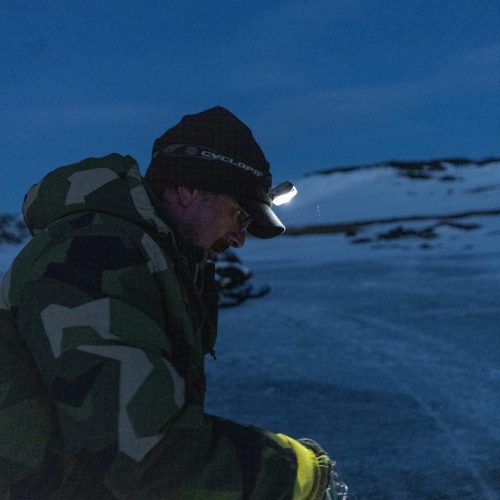
Tiivi: We go to this campsite all throughout the year because of its reliability in the animals that are around it. Travelling here, I’ve noticed the snow and sea ice has changed. The snow is a lot softer, and the sea ice is thinner. The sea ice used to form around the month of October and would fully freeze in November and melt only in July. This year the sea ice froze in December and melted in June. We don’t go through the same trail we used to on the sea ice and the route we take to get on land from the lake is not the same anymore.
© Lucasi Kiatainaq
© Lucasi Kiatainaq
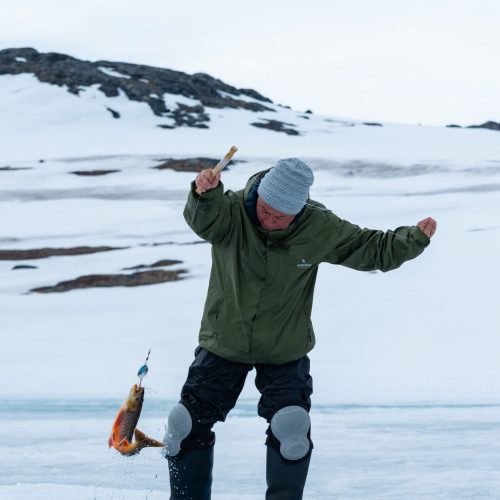
Christina: When we aren’t using nets, we fish with a stick and fishing wire, with a spoon-like hook. That is how we were taught to fish from a very young age.
Christina: Very few people from the village go fishing by travelling through the land, and so everybody has to wait for the ice to clear to go fishing by boat. The spring harvesting season comes to an end when the sea ice gets too dangerous.
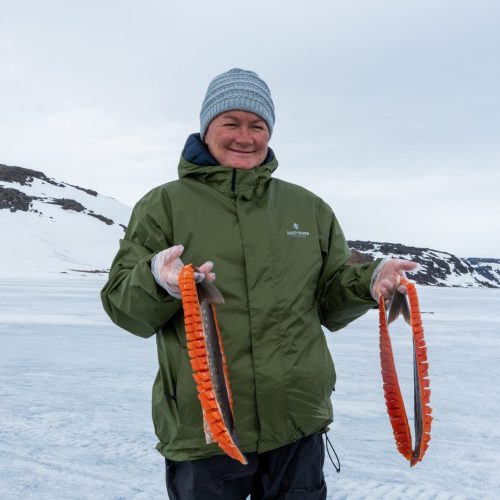
Christina: During springtime, we make the fish into pitsik, which is fish that is filleted with the bone cut out but not all the way through and scored in stripes to dry. During the winter we freeze the fish right away.
Tiivi: There are more accidents happening because the sea ice is thinner than in previous years. Because of that, the hunting season in certain parts of Kangiqsujuaq had to be stopped because there was no way to get to these locations. With everything that is changing, we will have to adapt and make the best of what we have.
© Lucasi Kiatainaq
© Lucasi Kiatainaq