Saali Kuata in Montreal. © Lisa Milosavljevic
Reclaiming the City
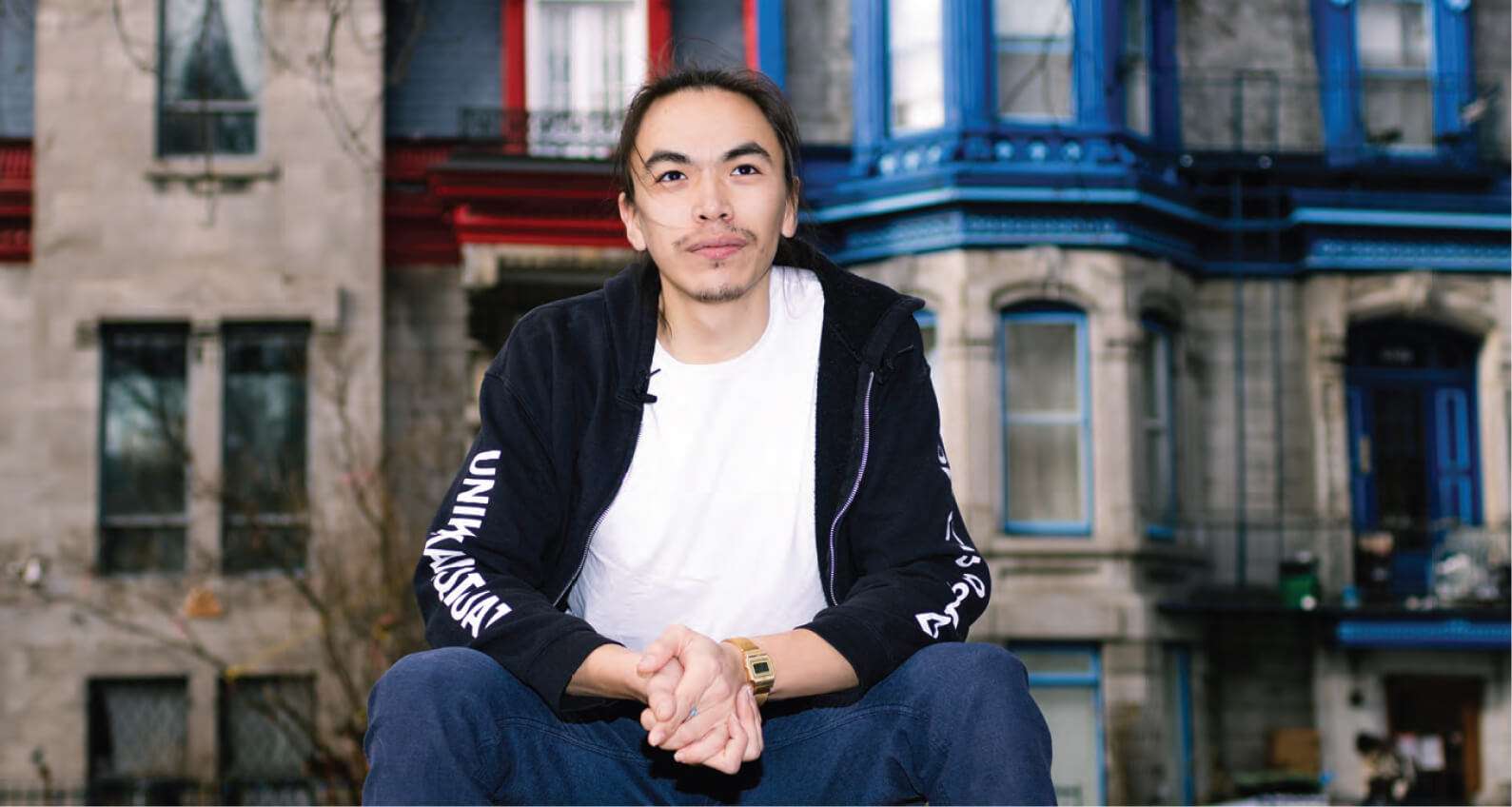
SAALI KUATA IS A MONTREAL-BASED multidisciplinary artist who works in circus, photography, and soapstone carving. He also takes roles on creative projects that teach Montrealers about Inuit history through art. Saali’s introduction to circus took place 10 years ago. After graduating high school in Kuujjuaq, Nunavik, he went off to study psychology and theatre in Montreal and found his way to becoming a full‐time artist who works closely with the Inuit community in Montreal. He lives on the island with his partner and their baby son.
What drew you to all the different art mediums you work in?
I do photography, circus, and soapstone carving. My favourite thing about circus is that it keeps me fit and engages with my body. It also gives me an opportunity to perform on stage and bring a piece of myself that’s usually reserved. For photography, I find myself to be more of an archivist and enjoy 35mm film. Now that I have a son, it’s mostly been doing lots of family‐focused images. For soapstone carving, I really enjoy it because it puts me in a very meditative state where I can just sit down and have an uncarved block and ask myself, what can I make out of this?
At what moment did you know you wanted to become a full‐time artist?
What inspired me was the prospect of opening my own circus troupe called Tupiq with my friends and colleagues I’ve been working with for such a long time from Nunavik. We [eventually] opened as a non‐profit organization, to provide jobs for ourselves and give us full creative freedom in terms of what kind of shows we produced.
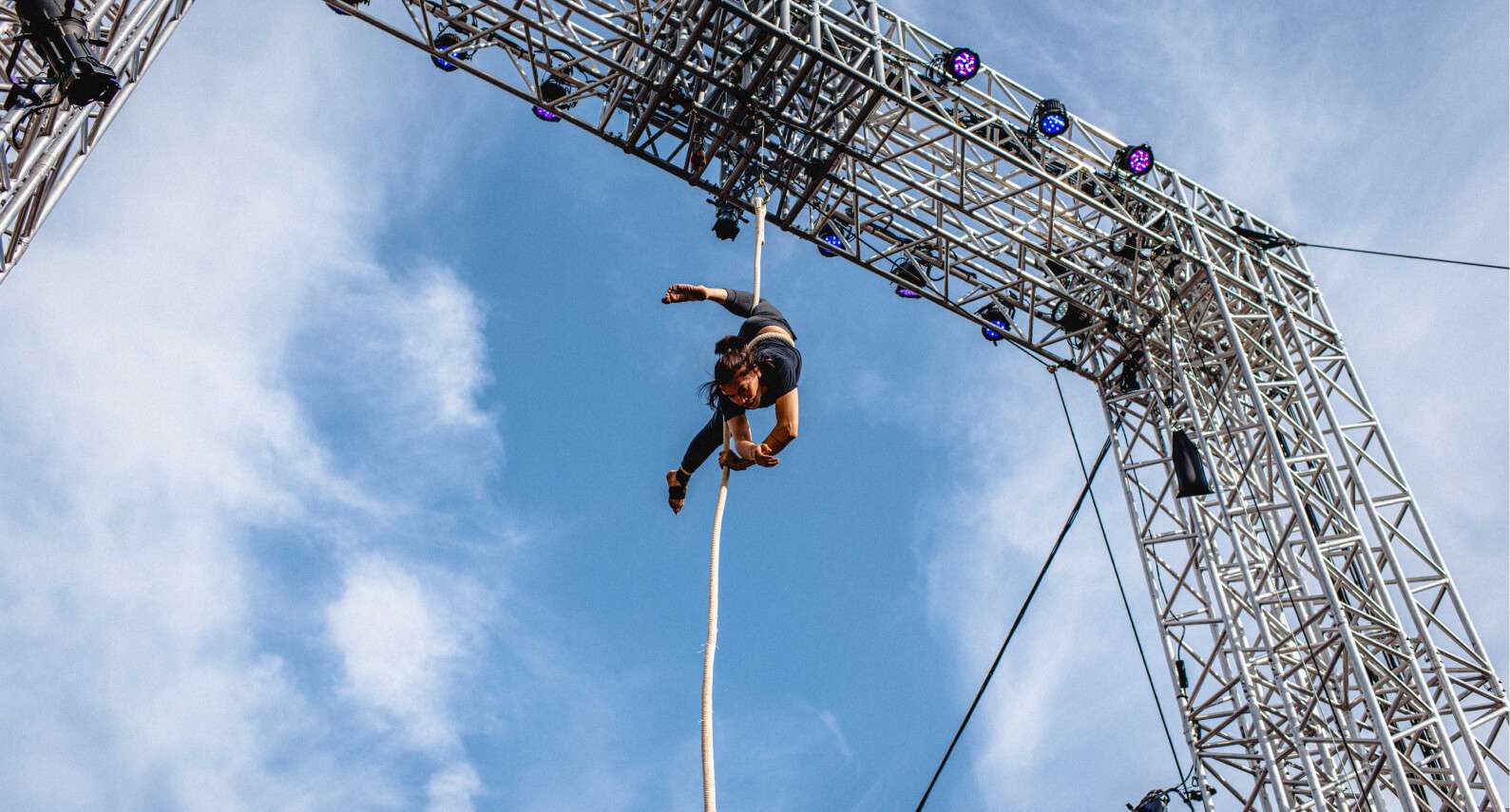
Saali Kuata performs aerial circus at MONTRÉAL COMPLÈTEMENT CiRQUE in 2022. © Sage Rebelle Photo
How does your non‐profit work fit with your life as an artist?
At Tupiq, we decided to be a non‐profit organization because we recognize that there’s a lot of grant opportunities for Indigenous non‐profit organizations. That’s how we’re able to produce shows. I currently work at the Avataq Cultural Institute for a department called Aumaaggiivik, which is essentially a Nunavik Arts Secretariat. My specific role is taking care of the grant program that we run for Nunavik‐Inuit artists to apply for their first grant and we help them along the way.
What are personality traits or things you have learned that have helped you as a freelance artist?
I always enjoyed having an open mind to not have deep expectations from colonial standards. Let people come up with their own ideas, whatever comes out of their imagination, and make it.
What do you like about working in Montreal and how have people responded to your work?
It’s kind of a weird situation to be in Montreal because if people know you’re an Indigenous artist, then they have these expectations of you. They work differently and that doesn’t always translate well into Indigenous worldview. That’s not how we work oftentimes. But overall, how people respond to my work here, it’s mostly positive.
Tell us about your career aspirations and describe your dream project!
When my son was gestating, I really started thinking, what kind of world is he going to be brought up in if we choose to live here in Montreal for our whole lives. It brought back challenges in my upbringing up North, of this imposter syndrome because I was surrounded by pop culture, a language, and a system that wasn’t mine. A lot of times when I was younger, I kept asking, who am I? I didn’t want my son to grow up the same way.
So, I envisioned a world in urban spaces that is more representative of who we are as Inuit or as Indigenous people. My big dream was to take over the whole city, not in an oppressive way, but to remind the inhabitants what this island was before all the concrete and bricks were laid. It would be represented in words like on billboards telling an Indigenous story. Or stepping in a green space where you can hear the stories of Elders and the Indigenous language. That way you can be reminded every day that you’re on Indigenous land. So, I think that my overall dream was to revamp the societal mindset of what is Canada. What does it mean to be Canadian? What does it mean to be a resident of a specific space?
Do you have any advice for young Inuit who want to have a career in arts and culture?
I would say keep your head up and stand your ground.
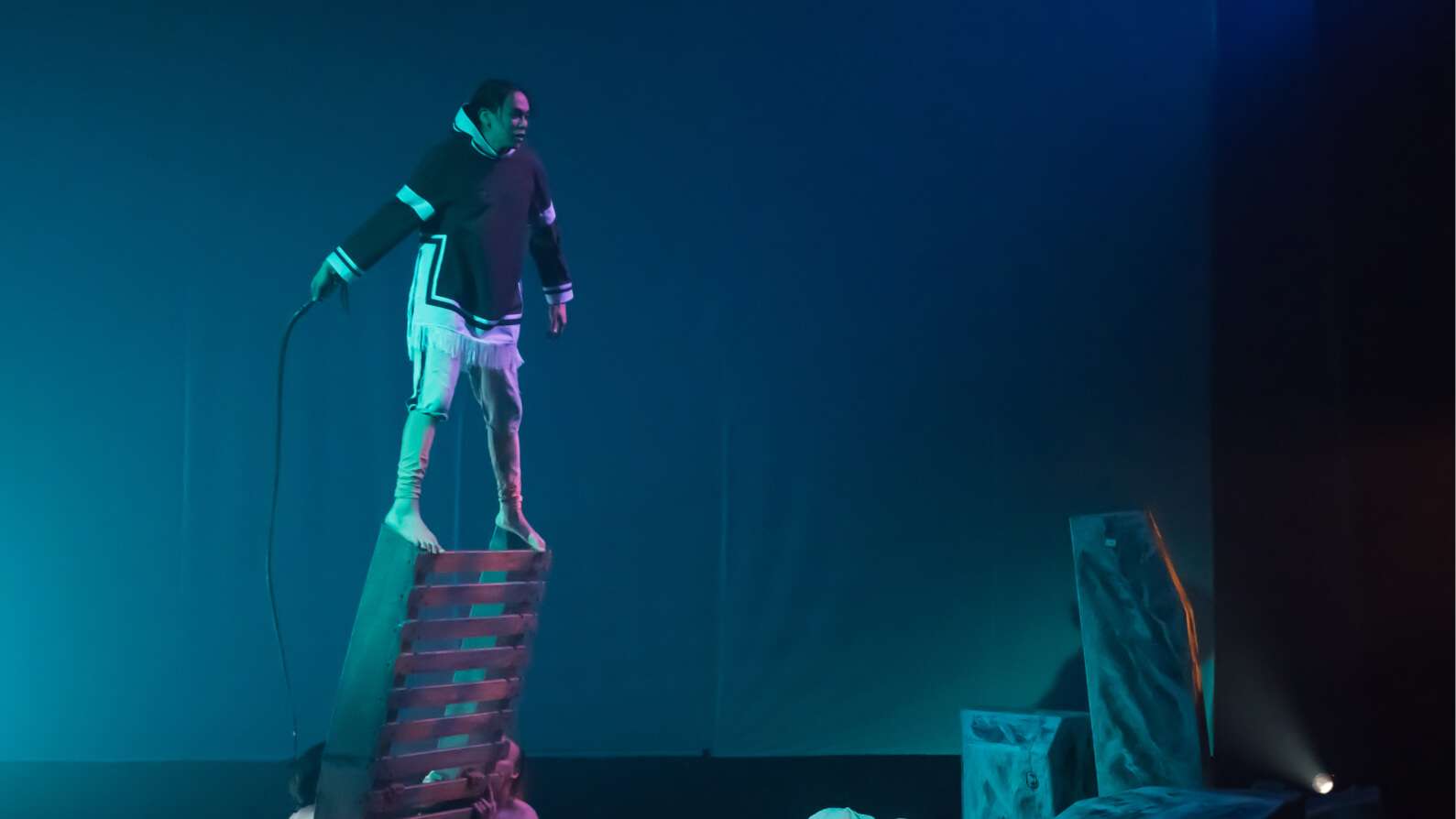
Saali Kuata performs in the Unikkaaqtuat circus theatre show at the National Arts Centre, 2020. © Alexandre Galliez