Deantha Edmunds often sings a personal favourite, Sons of Labrador, when she travels throughout Canada and internationally. Courtesy Deantha Edmunds
Revitalizing Inuttitut Through Choral Culture

I N INUTTITUT the Labrador community of Hopedale is called Arvertok. It means the place of whales. As she sang her original work titled Song of the Whale beneath Memorial University’s blue whale skeleton in the spring of 2023, Canada’s only professional Inuk opera singer Deantha Edmunds was filled with a sense of connection to her Nunatsiavut heritage and her father’s community of Hopedale.
“This is more than a song. We want to make people think about how we can take better care of our oceans, our waters, and our creatures,” says Edmunds, who was recently awarded an Order of Canada for her work in the arts. The lyrics for Song of the Whale, sang in a Nunatsiavut dialect, urge: “Listen, the whale’s song evolves over time. We need to work together to bring change. It is our responsibility. Carry the song on. Evolve.” An oboe and English horn represent the voice of the whale. To accompany Edmunds, a student choir uses percussive vocals to recreate the sound of the ocean.
Through her modern works, like Song of the Whale, Edmunds is contributing to a new experience of the Inuttitut language in operatic music. But her roots in classical music come from a centuries old tradition of choral music sung and played in the churches of Northern Labrador. “Traditional music doesn’t always mean throat‐singing and drum dance,” says Edmunds. “Tradition is what makes you part of your heritage and culture. In Labrador, classical, sacred church music is considered traditional Inuit music.”
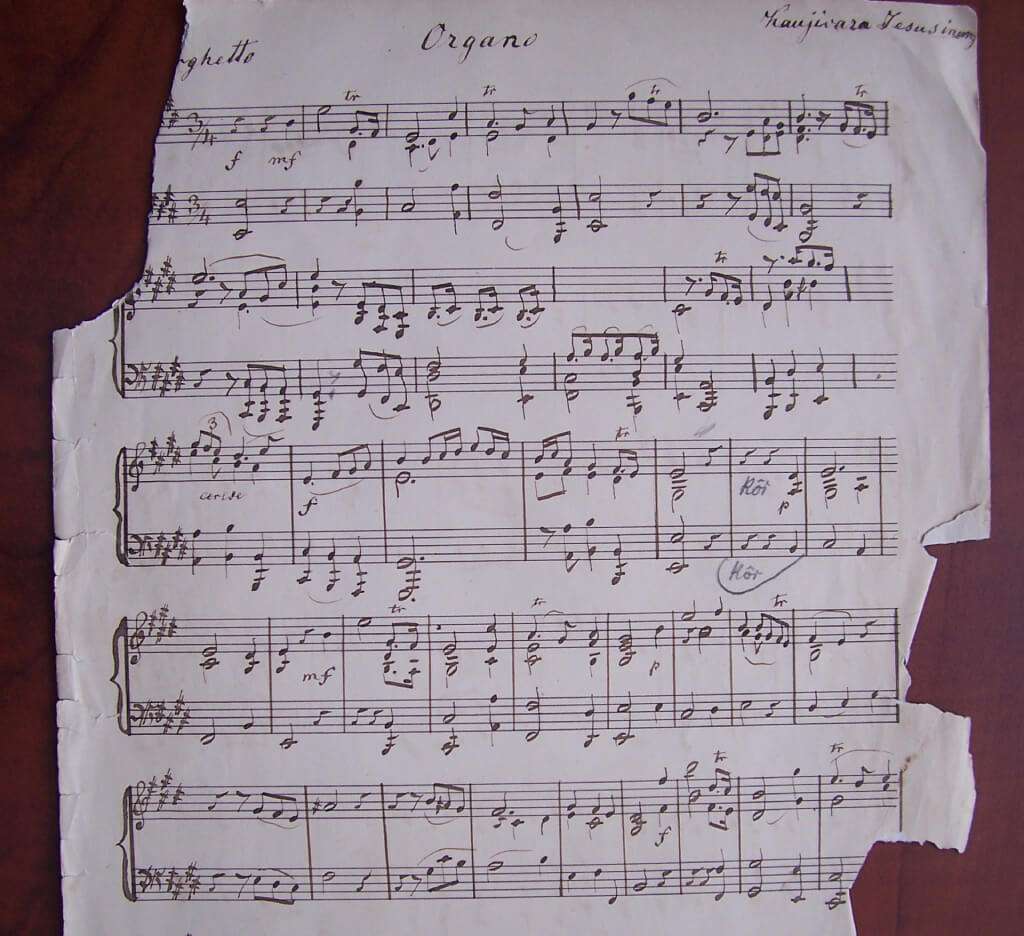
Choral scores of Inuttitut classical music played in Nunatsiavut churches. Courtesy Deantha Edmunds
When German Moravian missionaries visited Nunatsiavut 250 years ago, they brought with them stringed and brass instruments and music by European composers like Bach, Handel, and Mozart. “While the missionaries banned the sacred Inuit traditions of throat‐singing and drum dancing, they did gift the Labrador Inuit this gorgeous European music,” says Edmunds. “The texts were translated into Inuttitut and the music became part of the church and community life. They changed the instrumentation or the rhythms or the voicing, and it became something that belonged to them. To me that speaks to Inuit agency in the face of colonialism.”
One piece traditionally sung at Christmas time, Kausiut Nuijotit, uses trombone instead of the French horn and includes a second vocal part. Edmunds fondly remembers performing this piece as a duet with the late Karrie “Mister” Obed, a lead tenor for the Nain Community Church Choir and widely respected knowledge carrier. “He had the most beautiful singing voice. And this music truly belonged to him, as he grew up in Labrador and it was passed down to him.” Edmunds sings with Obed on the album titled Pillorikput Inuit: Inuktitut Arias for all seasons.
When Edmunds works as an artist in residence at Canadian universities—like Acadia University in Nova Scotia and Bishops University in Quebec—she shares these Nunatsiavut renditions of classical composers. Edmunds says Mozart’s Ave Verum Corpus is one piece sung in Labrador in Inuttitut around 200 years ago that most people will recognize. When Edmunds sang during the visit by Pope Francis to Iqaluit in 2022, she chose an Inuttitut hymn of the Moravian tradition sung at the new year, church anniversaries and special occasions. Titled Saimartigut Jesuse, the evening prayer is a gentle, warm, and flowing song Edmunds hoped would leave listeners with a sense of peace.
“There were Inuit who worked for decades for this apology, and it meant a lot to them that the Pope came. There were Inuit who didn’t want anything to do with it because of their experience, and that’s valid,” she says. “I viewed my small part as a way to celebrate Inuit peace and love, that’s what I was hoping my performance would bring, which would be a healing moment.”
Edmunds is well recognized for her work. Connections, Her June 2022 album of original solos featuring the Atlantic String Quartet, won Music Newfoundland’s 2022 classical and Indigenous Artist of the year awards, and garnered her a nomination at the 2023 East Coast Music Awards. Edmunds was also longlisted for the 2023 Kenojuak Ashevak Memorial Award. In October 2023, Edmunds traveled to Amsterdam to sing an Inuttitut solo for the world premiere of a climate change focused composition, Flights of the Angakok, where she was accompanied by an ice drum— huge blocks of ice kept in plexiglass to keep ice chips from flying over the stage when the drum is hit. And in December, Governor General Mary Simon named Edmunds to the Order of Canada “for her significant contributions as Canada’s first Inuk opera singer, and for her original compositions and her mentorship of young Indigenous musicians.”
It’s on an earlier album, titled My Beautiful Home, that Edmunds shares her own versions of songs she holds dear from Newfoundland and Labrador, like the Nunatsiavut anthem Sons of Labrador. Growing up in Corner Brook, Edmunds remembers hearing the piece on television, on the show Labradorimiut.
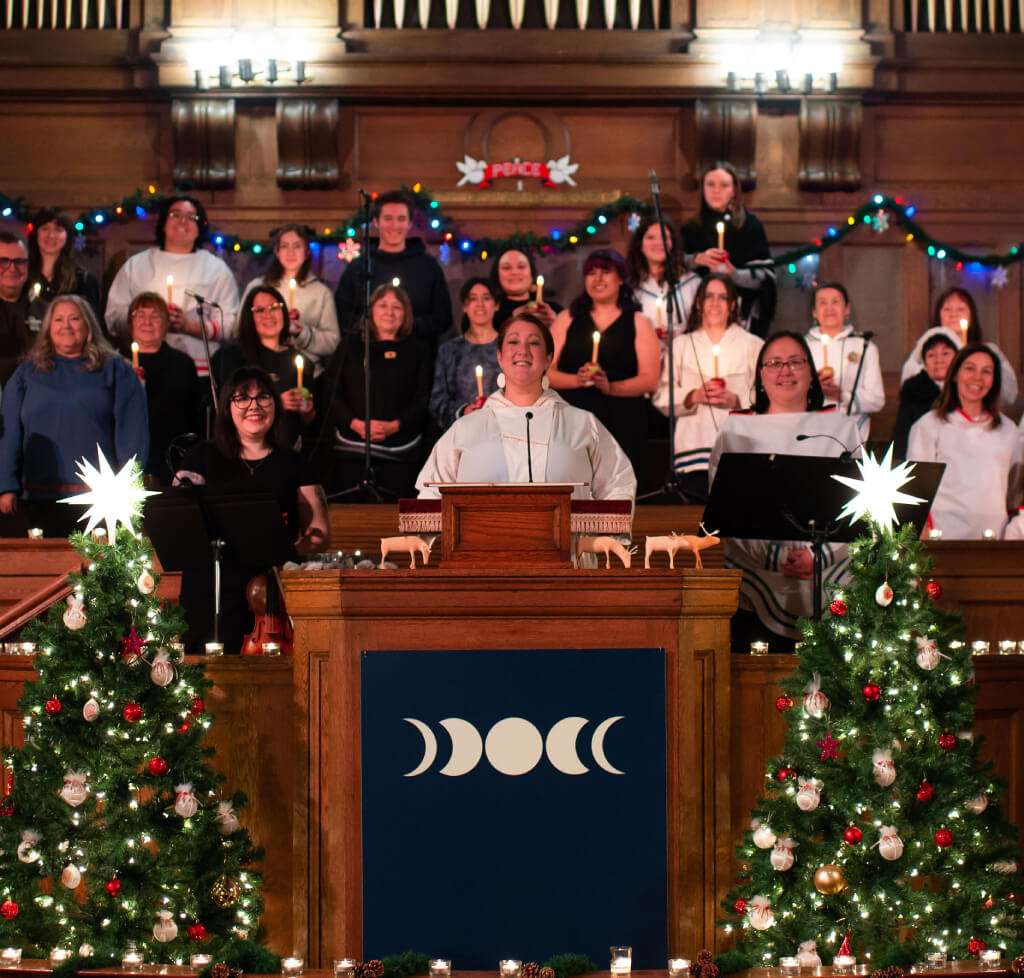
Deantha Edmunds sings with the St. John’s Urban Inuit Community Choir at the December 2023 show Songs and Stories of Christmas in Labrador. Courtesy Deantha Edmunds
“This song was the theme music for the show, and we would watch that show together as a family and I would get a glimpse of living on the land and what it was like when my father grew up,” she says. “When I went away to university in 1990, I took my old boombox and I held it up to the TV speaker so I could record the song and take that cassette tape with me. If I was homesick, I would listen to it. I still have that cassette tape.”
Her favourite song still, Edmunds has sung Sons of Labrador across the globe, in Alaska, Germany, the Netherlands and throughout Canada. Since childhood, she has felt her most authentic self while singing, says Edmunds. “Whenever I sing, I feel like I’m doing what I’m meant to do.”
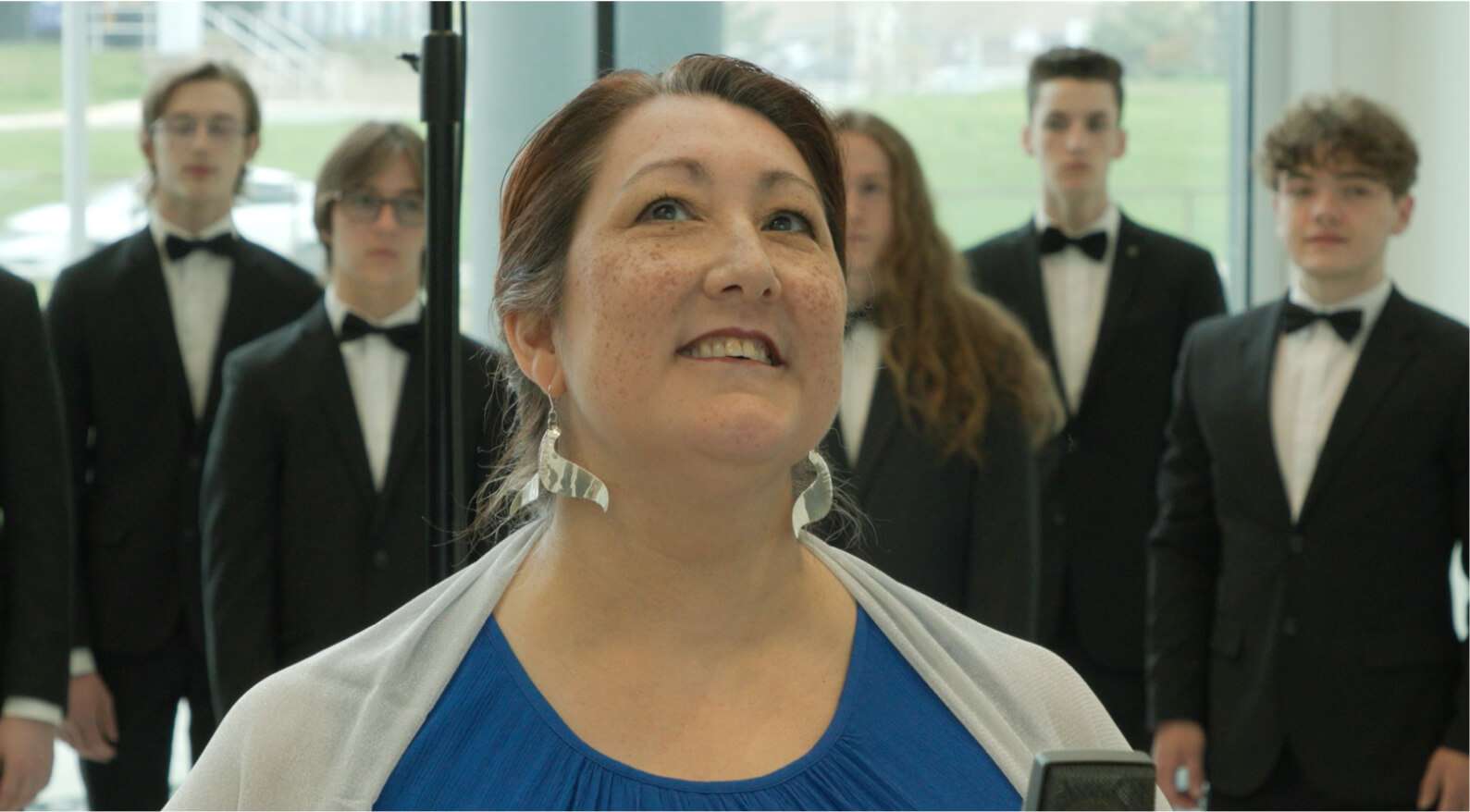
Deantha Edmunds sings Song of the Whale for a video recording at Memorial University in June, 2023. Courtesy Up Sky Down Films