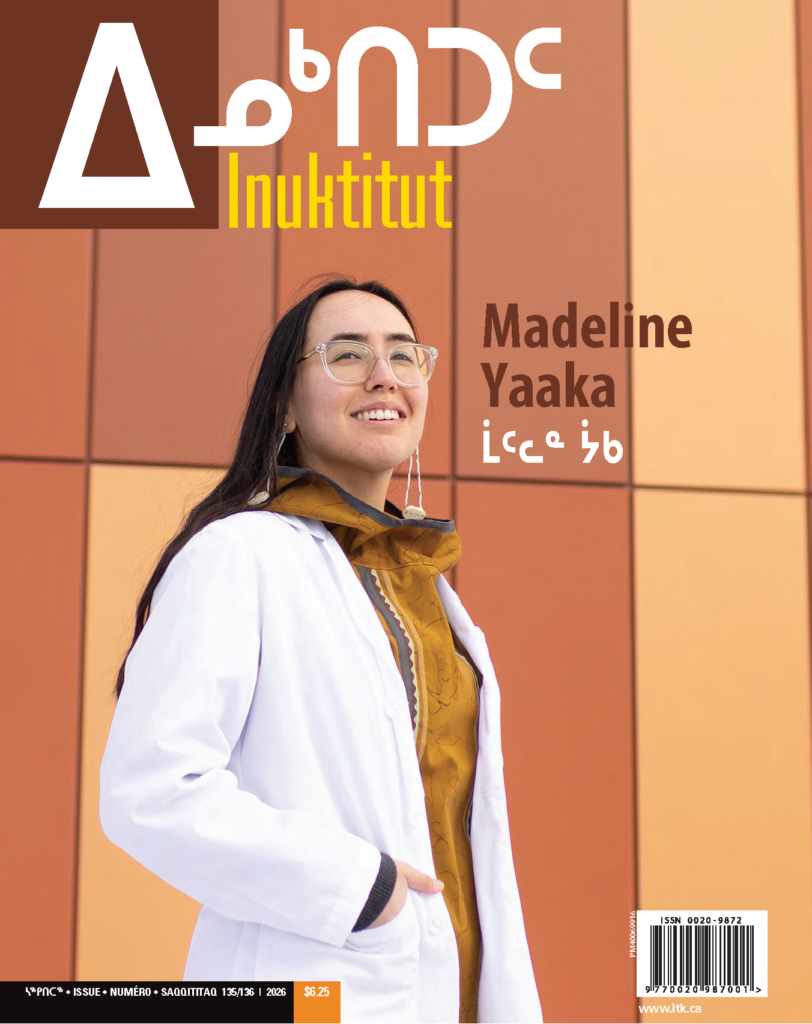
“I thought a doctor was someone who came to town once a year and you never saw again.” – Madeline Yaaka (Photo: Lisa Milosavljevic)
Healing and Healthcare
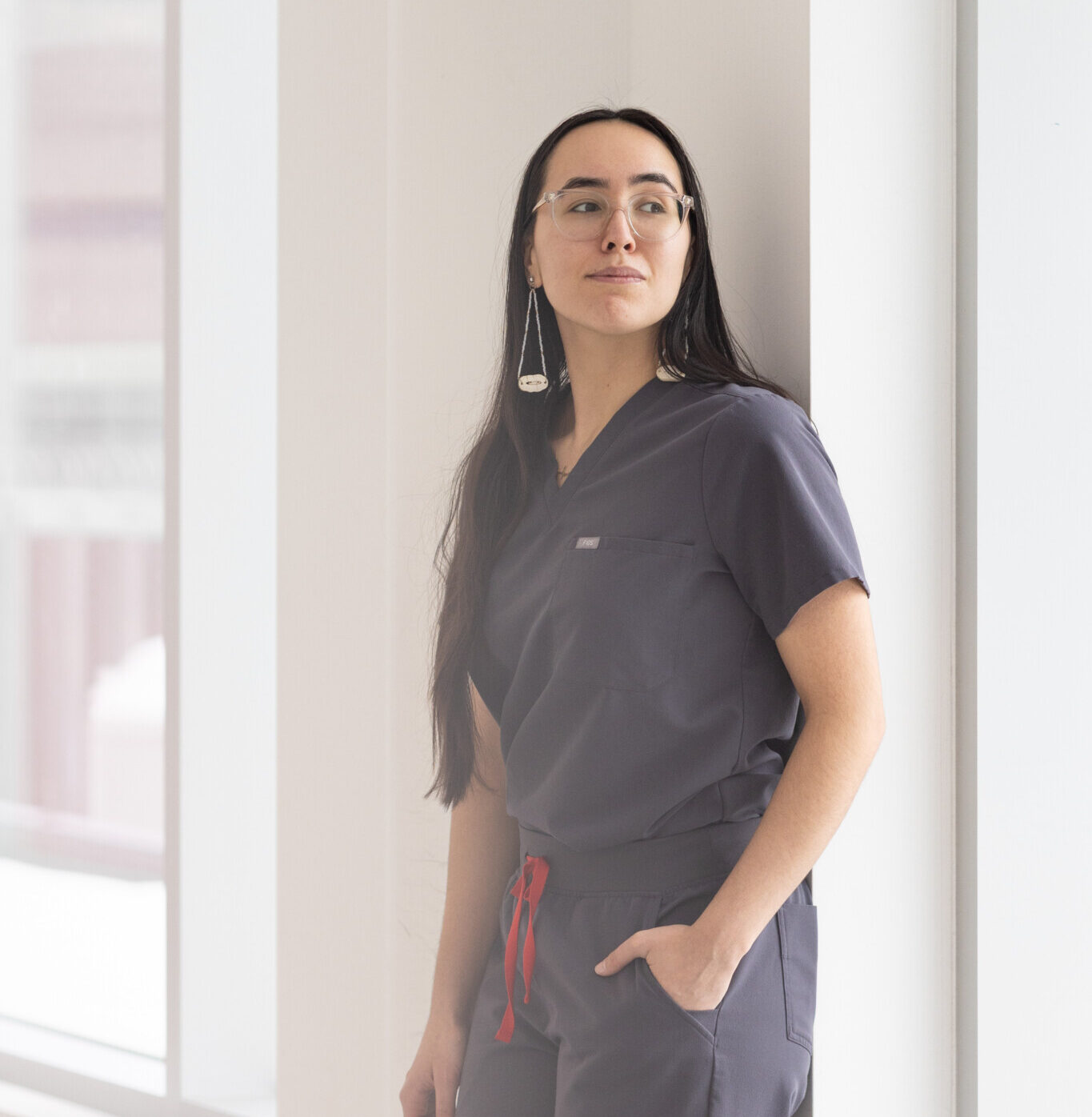
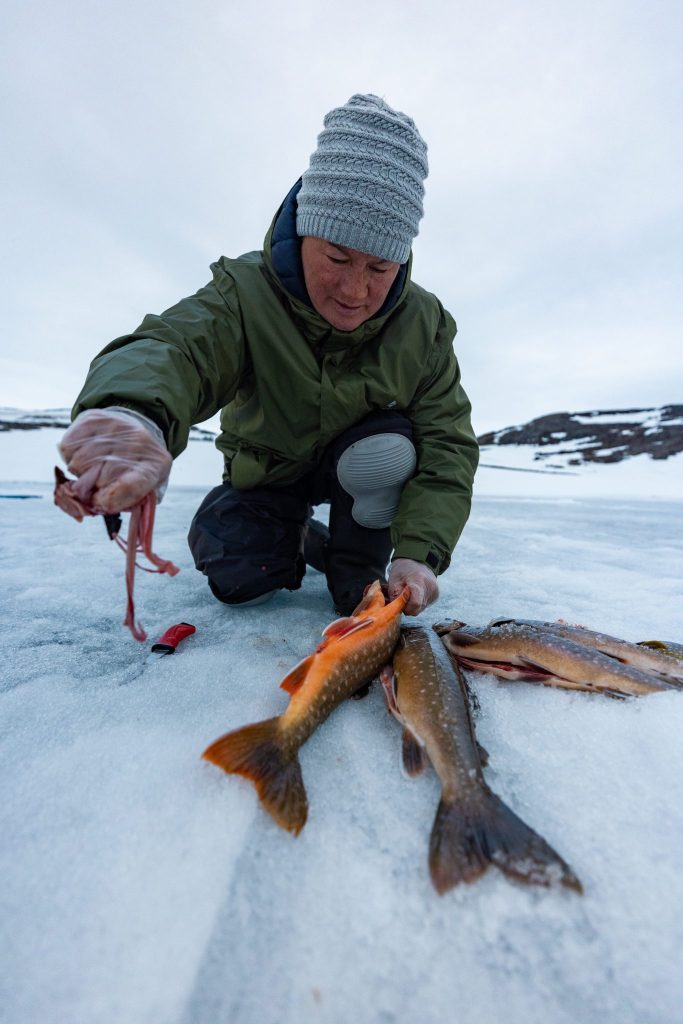
MY NAME IS MADELINE EQQUQ EMILIA YAAKA, and I grew up in Kangiqsujuaq with my Inuk father and my Qallunaaq mother. I grew up traditionally, going hunting and fishing, but also spending summer breaks with my mom’s side of the family in Ontario. I spent my free time sewing and playing sports which opened opportunities to travel for tournaments. I am currently a medical student at McGill University in Montreal.
Though I had positive experiences, my teenage years were especially tough, facing realities that are much too common in Nunavik. I lost my older brother to suicide when I was 13, and my father passed away suddenly when I was 15. I often think about my father’s generation and how cigarettes were brought into Nunavik by fur traders to create profitable addictions in our communities. I also think about how he might still be alive if not for the trauma of having experienced the dog slaughters and attending federal day school, among other colonial policies. Through these traumas and our history, keeping my culture while being far away from home and having the support of my close friends has helped me heal.
Growing up in an isolated community, it was hard to see into the future when I was studying in high school. I had many teachers leave partway throughout the school year, and that made it hard to have consistent academic support. I finished my secondary 5 with an attestation, which meant I had to go back to high school. So I went to live with my aunt in Ontario for a year and a half to do academic upgrading. I then went on to study at Queens University for a year, but transferred to McGill, where I finished with a Bachelor of Science in biology. I then set out to apply to medical school, and started in August 2023.
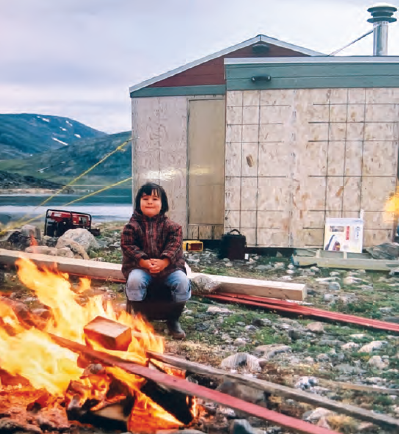
Madeline Yaaka in Kangiqsujuaq, Nunavik. © Madeline Yaaka
There are many barriers still to accessing medical school with all the prerequisites and references that are expected. I look at my non‐Indigenous peers who were able to get into pre‐med (which is a fast track into medicine), and wonder if that would ever be feasible for anyone in Nunavik with the education system we have in place. There are Indigenous‐specific pathways that are portrayed as being so progressive, but the fact that I am the only Inuk student from Nunavik to ever take this program demonstrates how hard it is to get there.
There needs to be more Inuit‐specific support and policy change, because these institutions are still inaccessible. Coming into medical school, I had an idea of what a doctor was; I thought it was someone who would come into town once per year and you would never see again. It was eye‐opening to see that people in Montreal had family doctors whom they trusted and communicated their needs to regularly. They did not have to travel 1,792 kilometers on two airplanes—which is a full day’s travel, weather permitting—to see a specialist.
The difference between access to doctors for Inuit in Nunavik and other Canadians in the South is huge. Why do Inuit have to travel so far to get basic healthcare? Not to mention there are delays in follow‐ups with specialists that can take years. There are people from Nunavik who have stage four cancer (metastatic) by the time they have their first appointment in Montreal.
Throughout my studies I have noticed there seems to be a weird fascination, even a fetishization, of “Le Grand Nord”, as they call it in the South. It creates an uncomfortable learning environment when biased stereotypes or paternalistic ideas are still being taught in medical school to future doctors. In one course, a family doctor told my class that Inuit had to have a meat‐only diet and that we have starvation genes. This comes from a disproven hypothesis from the 1960s.
This research was not even about Inuit. This family doctor went on to conclude that Inuit today can get diabetes from just one drop of sugar. In my two years of medical school so far, I have had only one lecture delivered by an Inuk, yet the topic of Inuit and Nunavik is brought up in my courses almost on a weekly basis. In my program there is so much potential for learning and integration of Inuit traditional knowledge, but the school is not ready yet.
I hope that one day Inuit healthcare access will be equal to what most other Canadians have, because in Nunavik, there is a crisis. There are so many gaps that should be improved. People within these medical institutions and provincial politicians should take a good look at the lower healthcare outcomes that our people are facing in Nunavik. We need more Inuit doctors, and more well‐informed non‐Inuit doctors in our healthcare system in Nunavik, but the medical school programs need to stop their colonial teachings to better serve our communities.
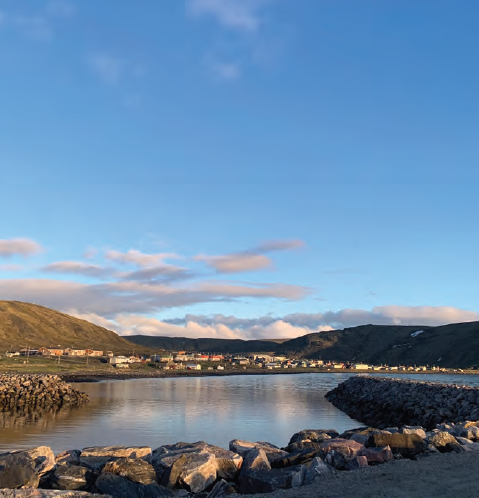
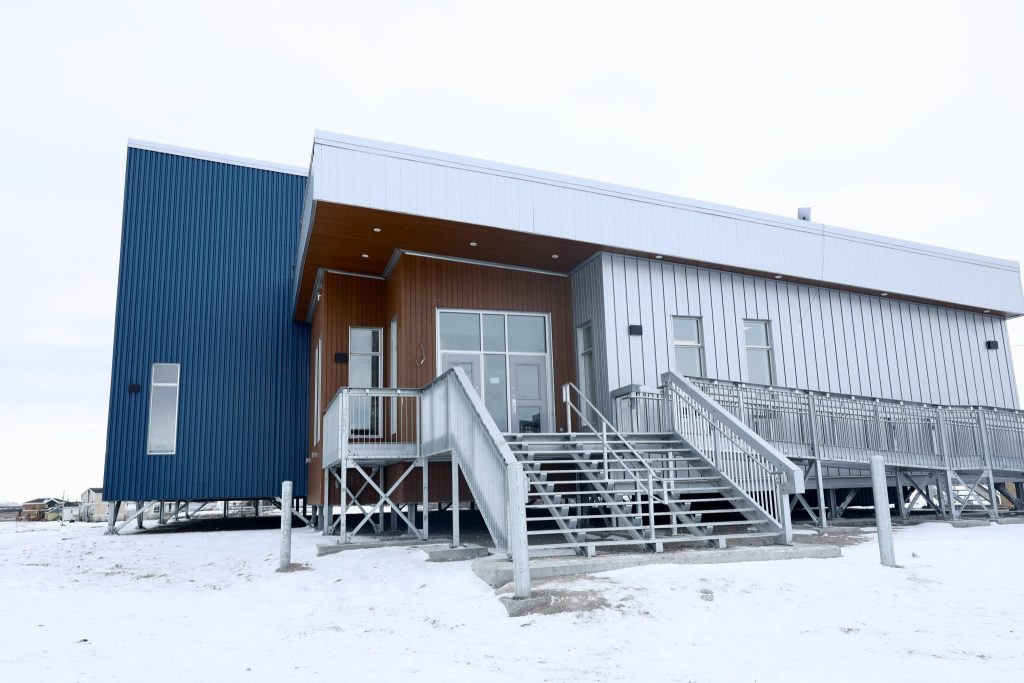
Kangiqsujuaq, Nunavik © Madeline Yaaka