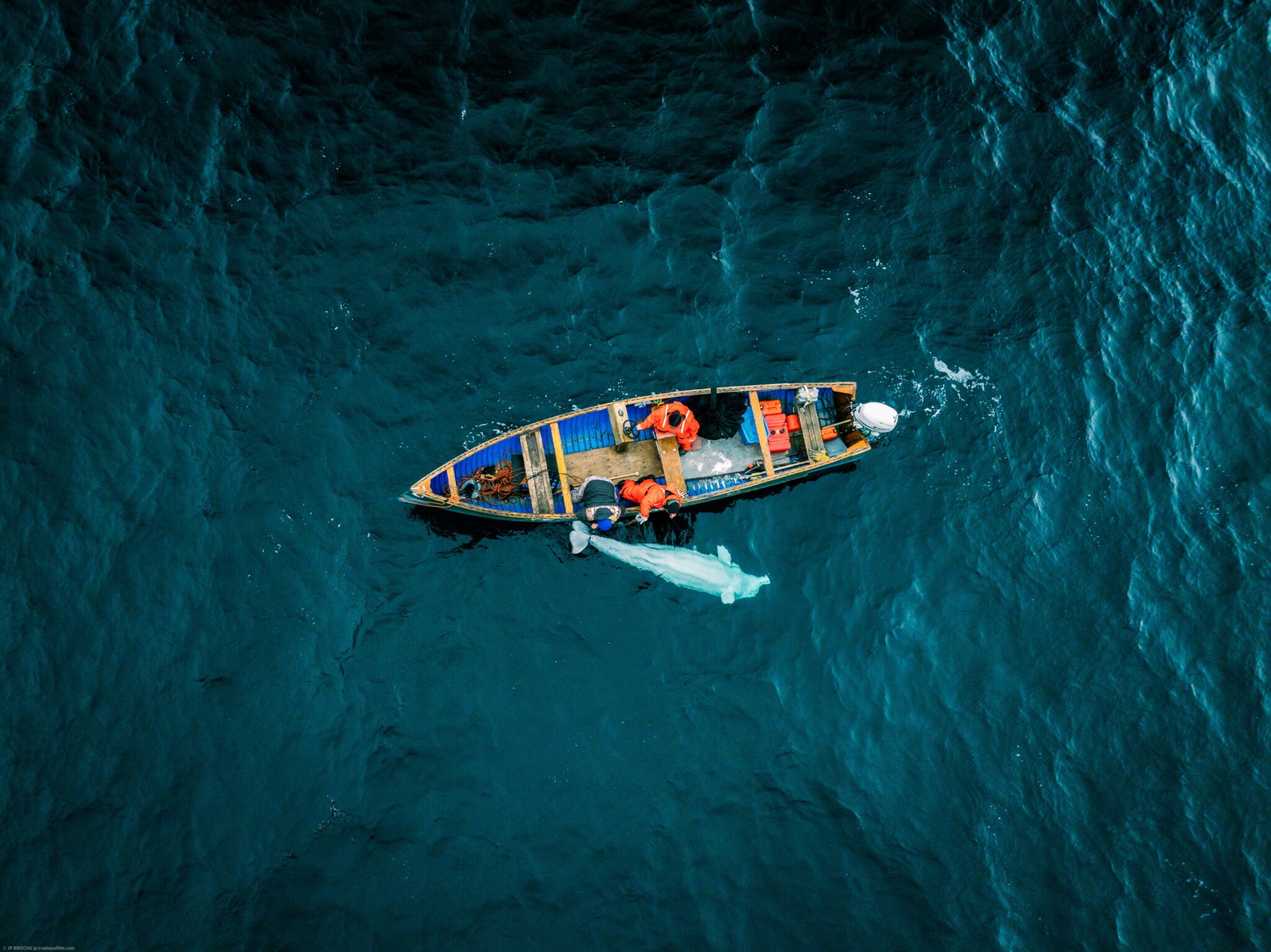
Hunters retrieve a beluga in a 2024 harvest near Quaqtaq. (Photo: JP Brochu)
Beluga Detectives
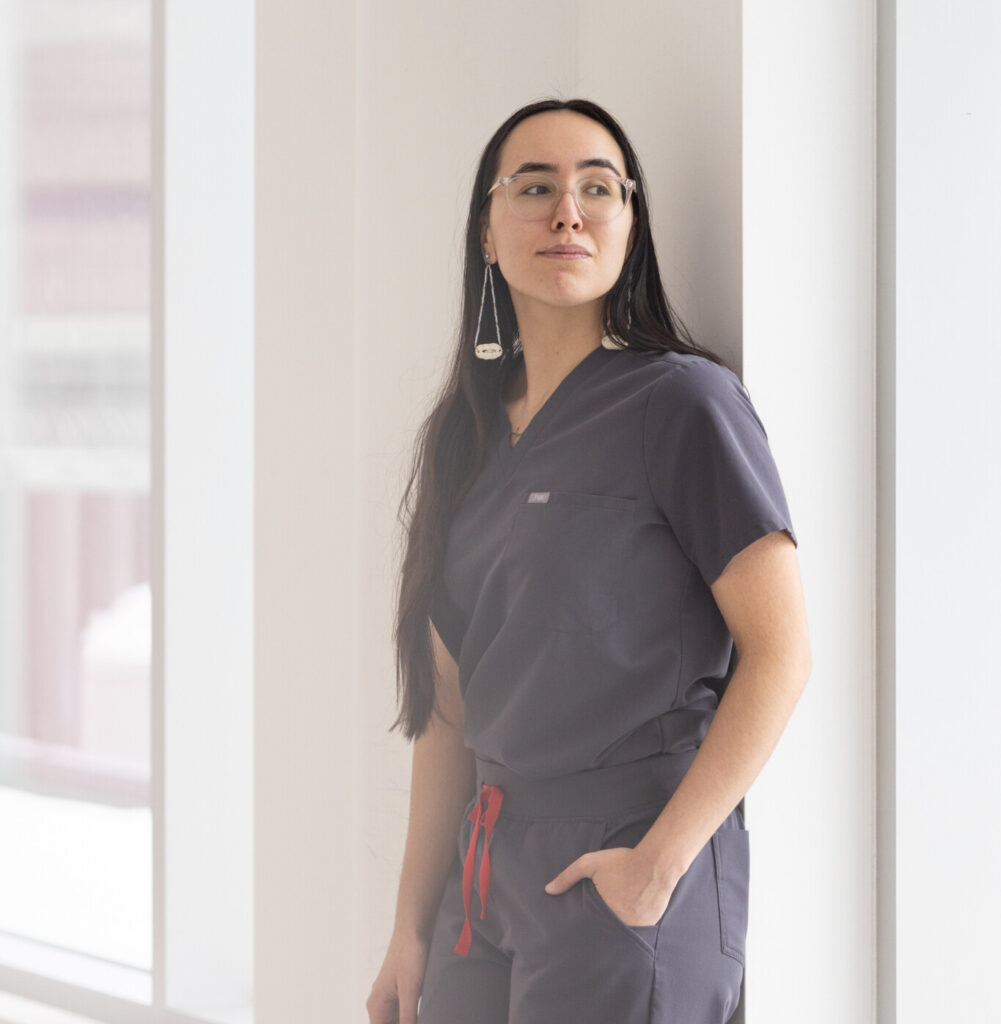
KATHY APUTIARJUK is a young songwriter and recording artist from Kangiqsualujjuaq but in the summer of 2024, she went to Ungunniavik Estuary to learn to be a scientist and conduct research about belugas. Amid the rain, wind, quiet and mosquitoes, she also found comfort and kinship.
“Honestly, it was so good for me to be out there. The land recharges me,” she says. “When I’m out on the land, nothing else matters. You have your binoculars and you don’t think of anything else. I had been struggling. In my community there is trauma and being on the land helps us stay healthy. Observing the belugas was very peaceful.”
Aputiarjuk is now Communications Director for Anguvigaq, Nunavik’s regional voice for wildlife and harvesting rights. The nonprofit represents harvesters, and leads and supports wildlife research projects across Nunavik. One of the most prominent and longest‐running is the Marralik‐Ungunniavik Project, launched in 2021, to study beluga and gather evidence to support the return of the beluga harvest.
Inuit hunted beluga and other marine animals in the Marralik‐Ungunniavik estuary in Ungava Bay, between Kuujjuaq and Kangiqsualujjuaq, until 1986, when Fisheries and Oceans Canada (DFO) banned beluga hunting there. The federal department identified the beluga as part of a unique population in need of protection, largely because of a marked decline in numbers brought on by rampant commercial whaling in the late 19th and early 20th centuries. But Nunavik hunters say those belugas are part of the larger, plentiful Hudson Strait population, and they’re trying to prove it.
The Marralik‐Ungunniavik Project is, at its core, a research, knowledge‐exchange and harvesting summer camp for youth. Through observation, acoustic monitoring, water sampling and DNA analysis of belugas harvested within a limited annual allowable catch, Anguvigaq is hoping to prove the beluga population is not threatened and should be reopened for harvesting.
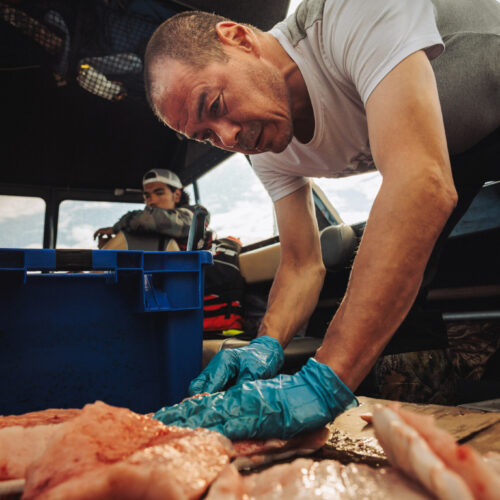
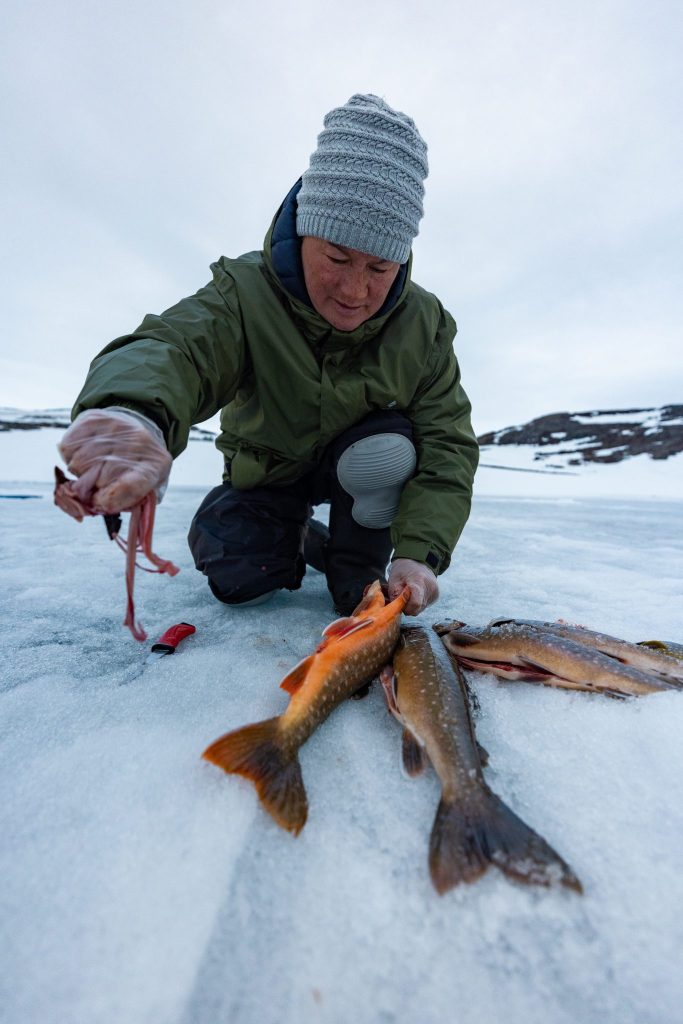
Mark Kooktook prepares maktaaq. (Photo by JP Brochu)
The project is funded through Inuit Qaujisarnirmut Pilirijjutit (an ArcticNet program enabling research for Inuit, by Inuit), Polar Knowledge Canada (the federal agency that advances Arctic research), other federal departments, harvesters support grants from Makivvik and other grants Anguvigaq is able to cobble together.
James May, Acting Vice‐President of Anguvigaq, says multi‐year on‐the‐ground research is more reliable than DFO’s aerial surveys, which could be incomplete depending on weather, ice and other environmental conditions. “You can’t base decisions off two weeks in an airplane every two years. Inuit are in the best situation to monitor wildlife but they are being taken over by scientists. We’re trying to document Inuit knowledge because it’s not documented,” he says. “When you try to challenge these decisions, it’s very hard because you don’t have hard copies of what is known. They want to base everything on research. OK, let’s have our own research and use techniques they use and see what we see.”
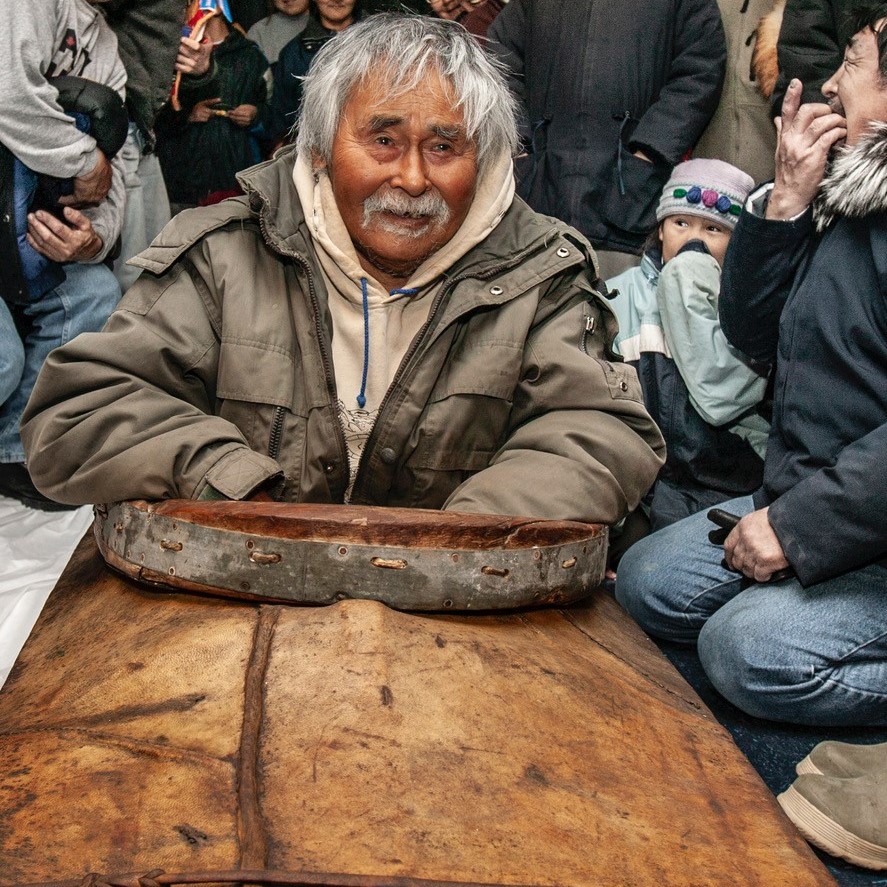
In the mid‐1980s when beluga harvesting was banned in Marralik‐Ungunniavik estuary, knowledge about geography, weather patterns, animal migration and behaviour, and harvesting techniques started to fade. Knowledge keepers stopped passing on crucial information about how and when to hunt beluga and young people didn’t get to learn.
“It’s been stolen from me,” says Aputiarjuk. “We live on this land and the land provides for us but an outsider tells us we can’t hunt there anymore. How dare they. This beluga hunting is a big game for us but I haven’t had a chance to see how it’s butchered. I can’t harvest an animal until I know how to butcher one and I can’t know unless I see someone else do it.”
The ban took away a healthy food source, contributing to regional food insecurity, says May. It also discounted Inuit knowledge and Inuit self‐determination, deepening resentment by Inuit toward southern‐based scientists and a general distrust of government. People were angry and felt powerless, says May, who helped launch the project. It took years to convince his peers that research, when done locally, could be beneficial.
In the first few years, about 100 people came and went from the camp. (DFO allows several beluga to be harvested annually for research purposes.) The harvesting portion of the project was taken over in 2024 by the local Kuujjuaq and Kangiqsualujjuaq hunting, fishing and trapping organizations so now participants can concentrate on the research. This year, they will be hosting several Indigenous Yawuru people from Australia, owing to a relationship Aputiarjuk helped to build during a recent wildlife conference there.
The camp is meaningful to participants, but it’s also hard work. Bad weather can make it physically and mentally challenging. Keeping everyone warm, dry, fed and engaged can be difficult. One year they ran out of firewood. Boats and motors break down. But participants are devoted and take care of each other.
In 2023, Anguvigaq hired wildlife biologist Jacob Seguin to lead the project. Anguvigaq is partnering with McGill University in Montreal, where Seguin is working on a PhD, but Anguvigaq controls the project, defines the goals and decides how to achieve them.
Seguin says a group of 8‐10 people camp on a small island for six weeks in summer to conduct the season’s fieldwork. Participants spend their days recording beluga by sight and with drones, taking water samples to detect the presence of beluga (called environmental DNA or EDNA), and monitoring devices called hydrophones—underwater recorders that capture beluga vocalizations. None of these methods are complete on their own, Seguin says, but together they can help validate each other and this strengthens the overall results. All the data is shared with DFO.
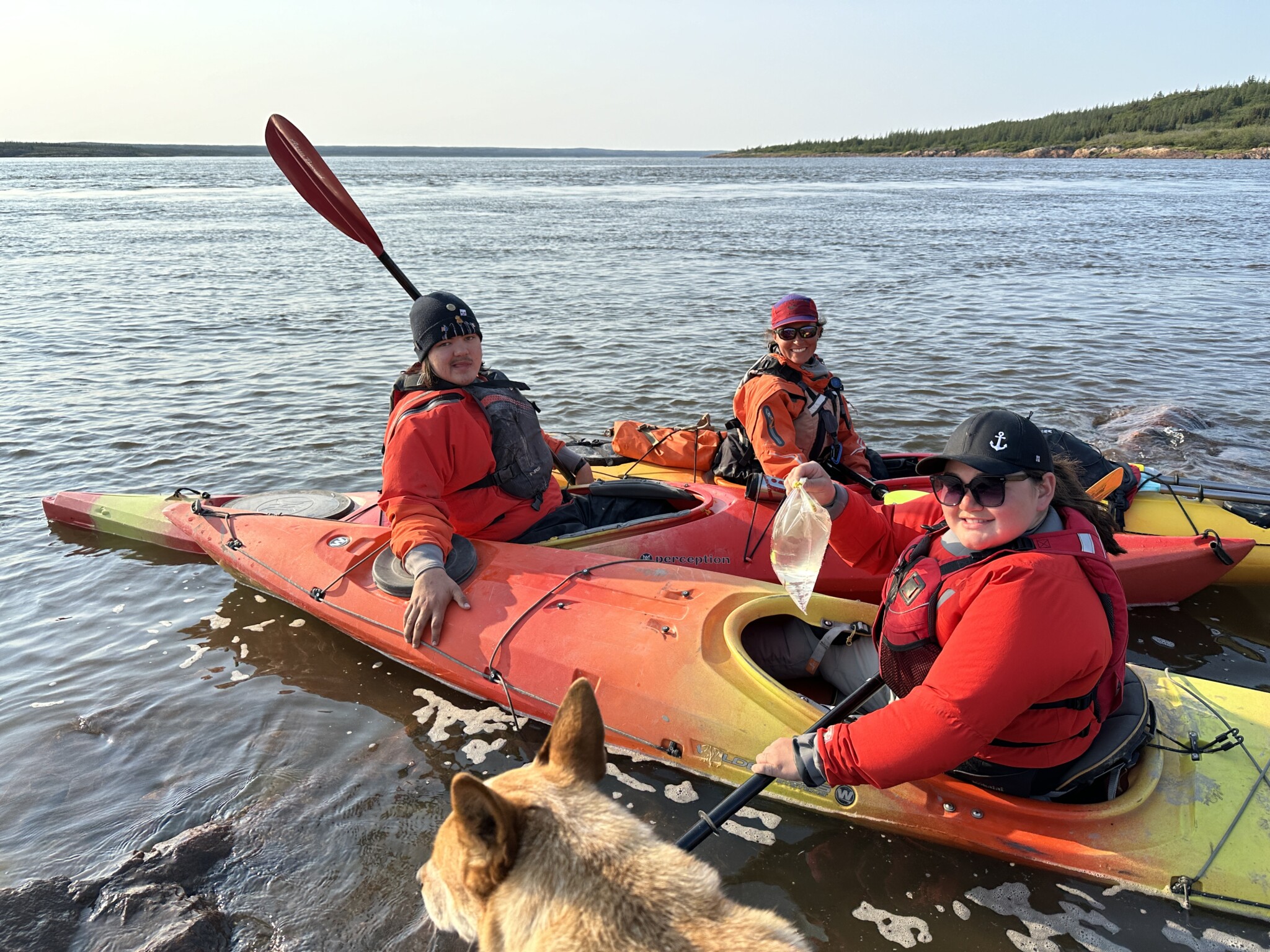
Peter-John Pederson, left, Delphine Roy, Kathy Snowball Aputiarjuk and JD the dog collect water samples. (Photo: JP Brochu)
“The whole thing was a really great experience, despite the mosquitos,” Aputiarjuk says. “After the rain, it got humid and it was unbearable sometimes. But it was super nice to be out on the land. You have to disconnect to reconnect.”
This was one of the biggest unexpected gains from the project, May says: getting kids out on the land camping, fishing, hunting. If they like it, they have an incentive to stay in school so they can find a job to pay for a boat or snowmobile.
“Being out on the land and being connected and having activities for these youth as they’re growing up fixes a lot of social problems,” May says. “Alcohol and drugs are an issue. If kids are occupied to work harder, stronger, and have goals, it changes the mindset. A lot of kids are coming from families afflicted by generational trauma which can cause addiction, poverty and other problems. It’s very important to get these kids on track before the cycle repeats itself.”
May says it will be years before they accumulate enough data to convince DFO to reconsider the ban, but that’s OK. The impact of the camp on Inuit knowledge, pride and expertise is worth the wait.
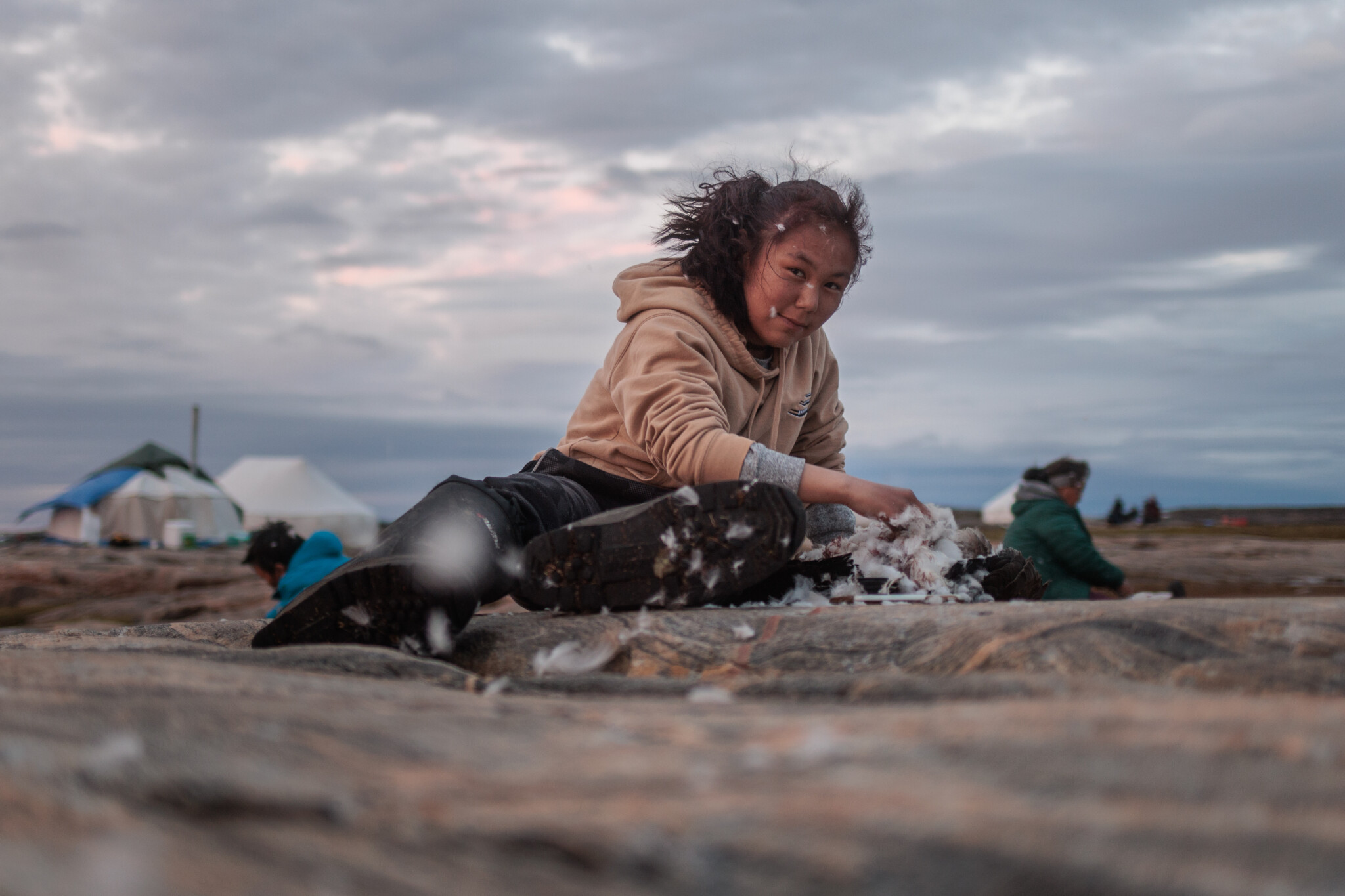
Aputiarjuk Tukkiapik plucks a goose. (Photo by JP Brochu)
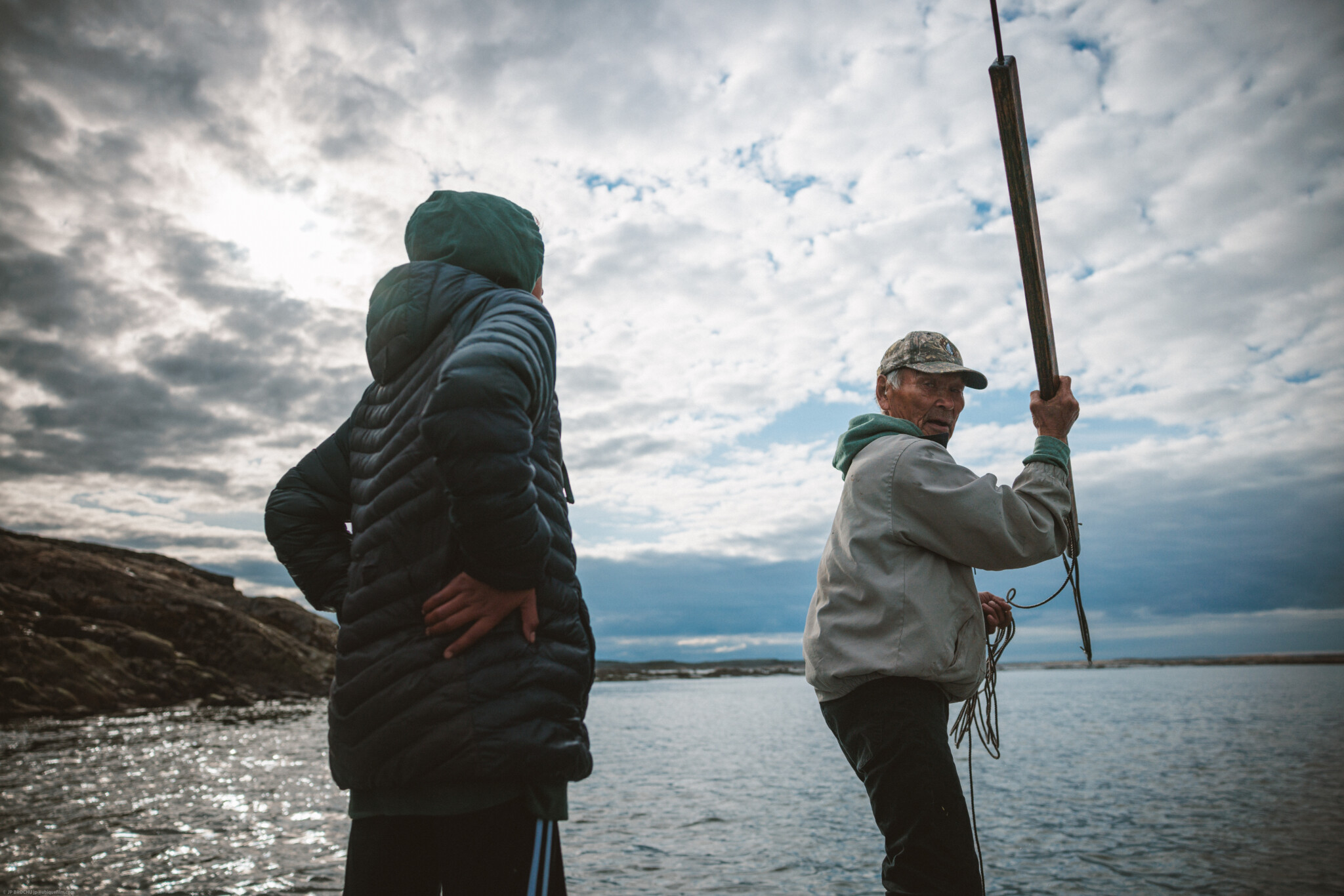
Kenny Angnatuk teaching daisy Lydia how to use a harpoon. (Photo by JP Brochu)