Courtesy of Noel Cockney
On the Fire Line
An Inuvialuit Firefighter’s Account of One NWT Wildfire
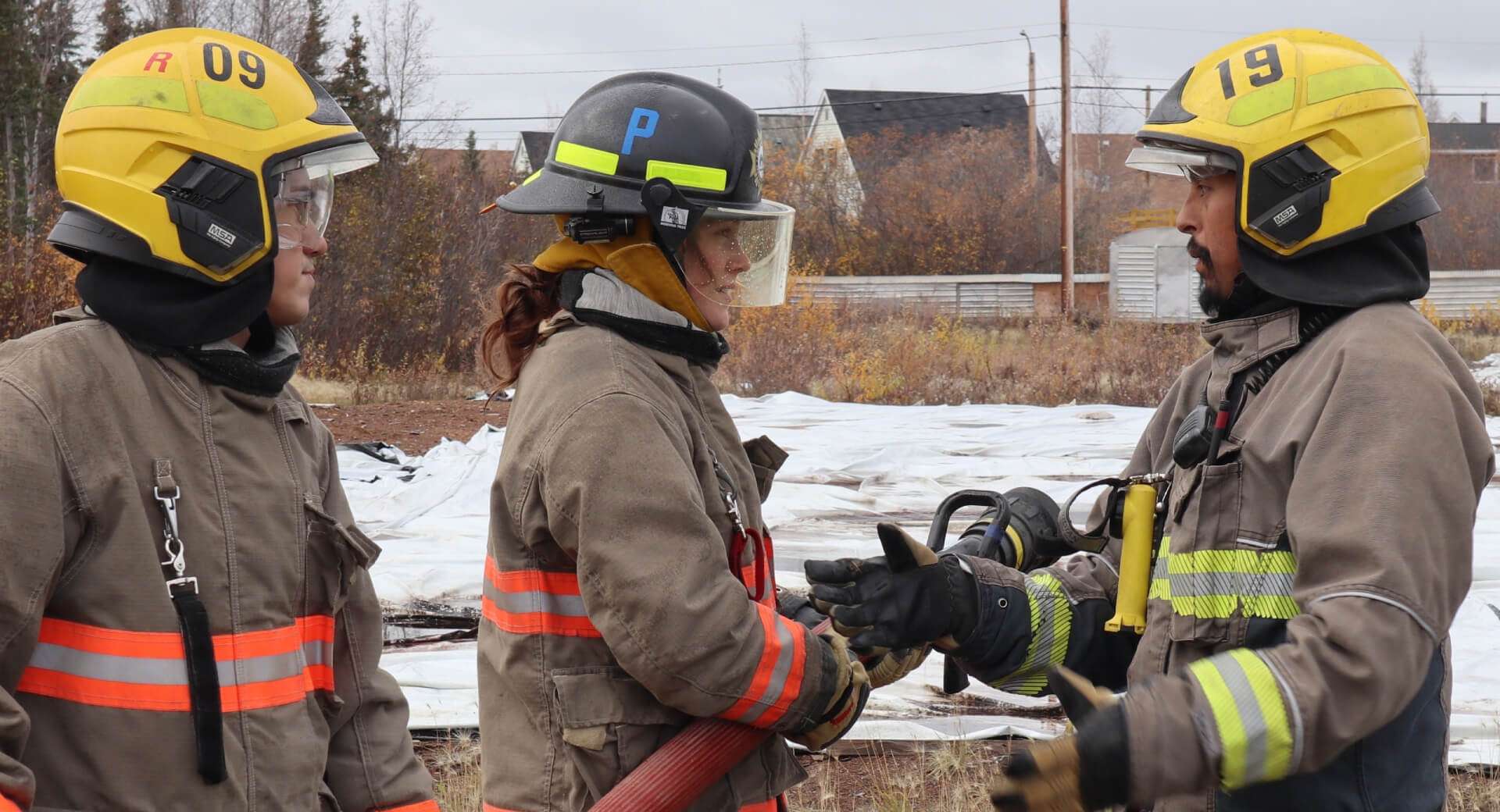
WHEN NOEL COCKNEY heard the news of wildfire evacuations in the Northwest Territories last summer, he went straight to the Inuvik wildfire office to see how he could help. A volunteer firefighter of four years, Cockney was already trained in fighting wildland fires. Here he recounts a two‐week deployment combatting one of many fires that devastated the western Canadian territory over the summer of 2023.
Noel Cockney:
“That fire was right around Jean Marie River, nearly two hours’ drive from Fort Simpson. Our crew went out on the fire line down in that region to help keep the fire from going all the way to the small community of Jean Marie. It was after the evacuations and the territory was asking for support. Fires are a natural thing but having that happen in and around communities is scary.
“I was driving one of the vehicles up from our base. The first day we spent bringing up all the equipment like the water pump, hoses, shovels, and axes so we were able to hold the fire. What we were doing, once we got to the water source, was putting out the fire both on the surface, as well as underneath the ground, for at least 15 feet, so no sparks would jump from the fire into the live vegetation. After that we had to figure out how to get across to the other side of the river to put out the fire that was inaccessible to our vehicles.
Fighting fires reminds me of the work ethic you have to have growing up on the land.
“There were a few days where we had really high temperatures and high winds. I kept seeing fire spark up close by on that fire line. It’s what we call the black line, where everything has been burnt already. But those few patches where there is still live vegetation would catch. We kept an eye on those in case of spreading. “There were six or seven of us, so we had teams of three working on different parts of the fire. We kept an eye on everyone so the trees that had been on fire didn’t fall on anybody. We used the water pump and the hoses to put out the fire, as well as shovels and axes to dig into the ground to expose the soil that would be smoldering. That’s what we call the hot spots that are underneath the surface. We would make sure the space within 15 feet of the live vegetation was all the way out, cooling it down and putting it out and doing that right from the river where we were getting the water from to the road and that was almost two kilometers away. Once we were able to control that area, there were cabins where we had to knock the fire down and build that barrier around.
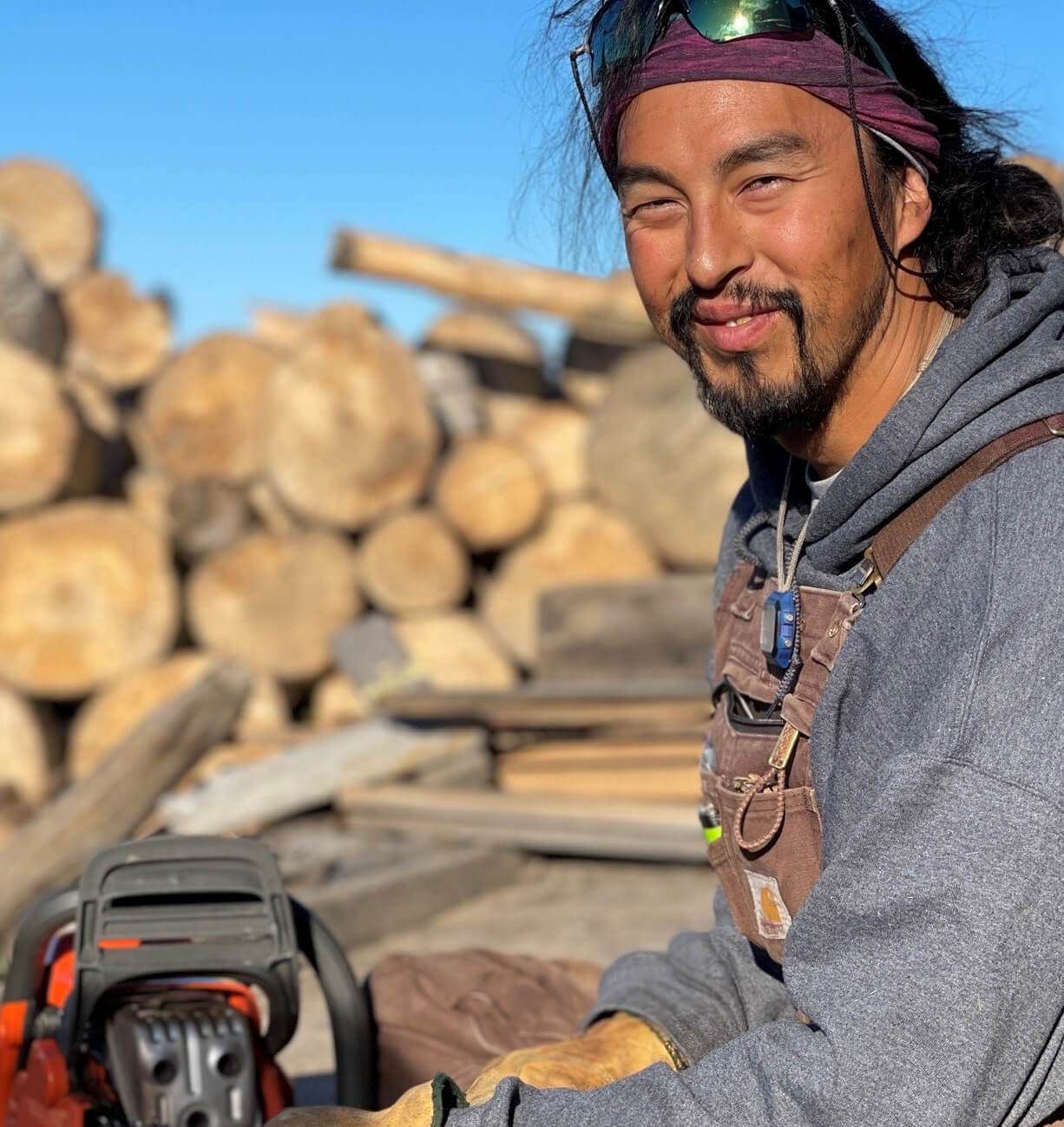
Noel Cockney says growing up in the bush helped prepare him for fighting wildfires. Courtesy of Noel Cockney
“The biggest challenge was on one of those hotter, windier days. We were working on the original fire line from the river to the road when we had to rush over to one of the cabins where a hotspot had reignited. At all the cabins are big sprinkler systems set up to protect the surrounding area. But there was a hot spot that got really big really fast. It was crawling up the bank of the river into the trees that were next to a cabin. Luckily, we were able to put the fire out right at the tree trunks. I was feeling the heat coming from that fire and looking back and forth from where the fire started to where it was spreading. It’s a matter of being able to calmly choose where you do have to fight that fire so it doesn’t spread quicker and get out of hand. This happened towards the end of the day, so we had to muster up the energy to rush over from one spot to the other, and then make sure that the fire was suppressed enough that we were able to go back to the base that night and rest. The fire was small enough we were able to control it within two hours.
“Having to switch areas and get the hose line to put out a raging fire was scary. Especially knowing how important these cabins are to people. That’s what was going through my mind, was to save this cabin so the family is still able to get out there. I was just hoping that fire didn’t reignite overnight, that we fully put out the fire to make that black line around the cabin.
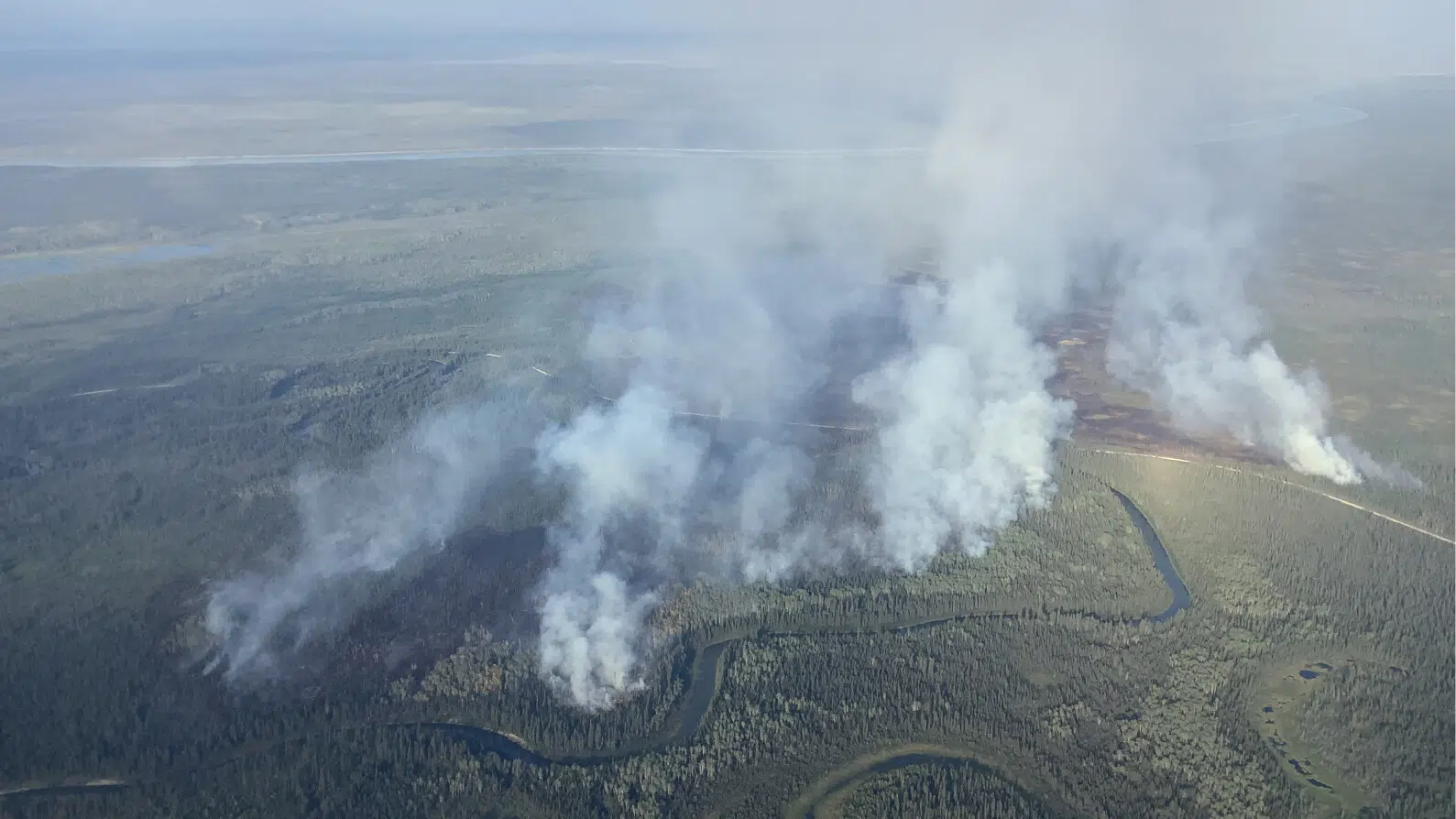
An aerial view of a fire near Jean Marie River, Northwest Territories, on August 25, 2023. Courtesy of the Government of the Northwest Territories
“It is a really tough job, but I enjoy jobs like that. Having grown up camping out in the bush most of my life my body is used to stuff like that. Hauling the water pump and hose lines wasn’t that big of a deal. But doing that for two weeks straight takes a toll on your body. Whenever we were not at the fire, which could be from 8 to 12 hours plus driving back and forth to Fort Simpson, we would just eat something and go to sleep.
“Fighting fires reminds me of the work ethic you have to have growing up on the land. At our cabins, getting firewood, getting water, those are always chores that needed to be done as well as when we’re hunting, hauling the harvest and our tools back home. Being able to help with wildland fires is to be able to preserve land my ancestors used to survive, going out on the land, going to gather fish, caribou, moose.
“I also enjoy being able to help other people, trying to preserve what we’re able to, whether that be in a structure fire or a wildland fire. Because whenever we have to intervene, there’s that danger of potential loss to other human beings as well as communities.”
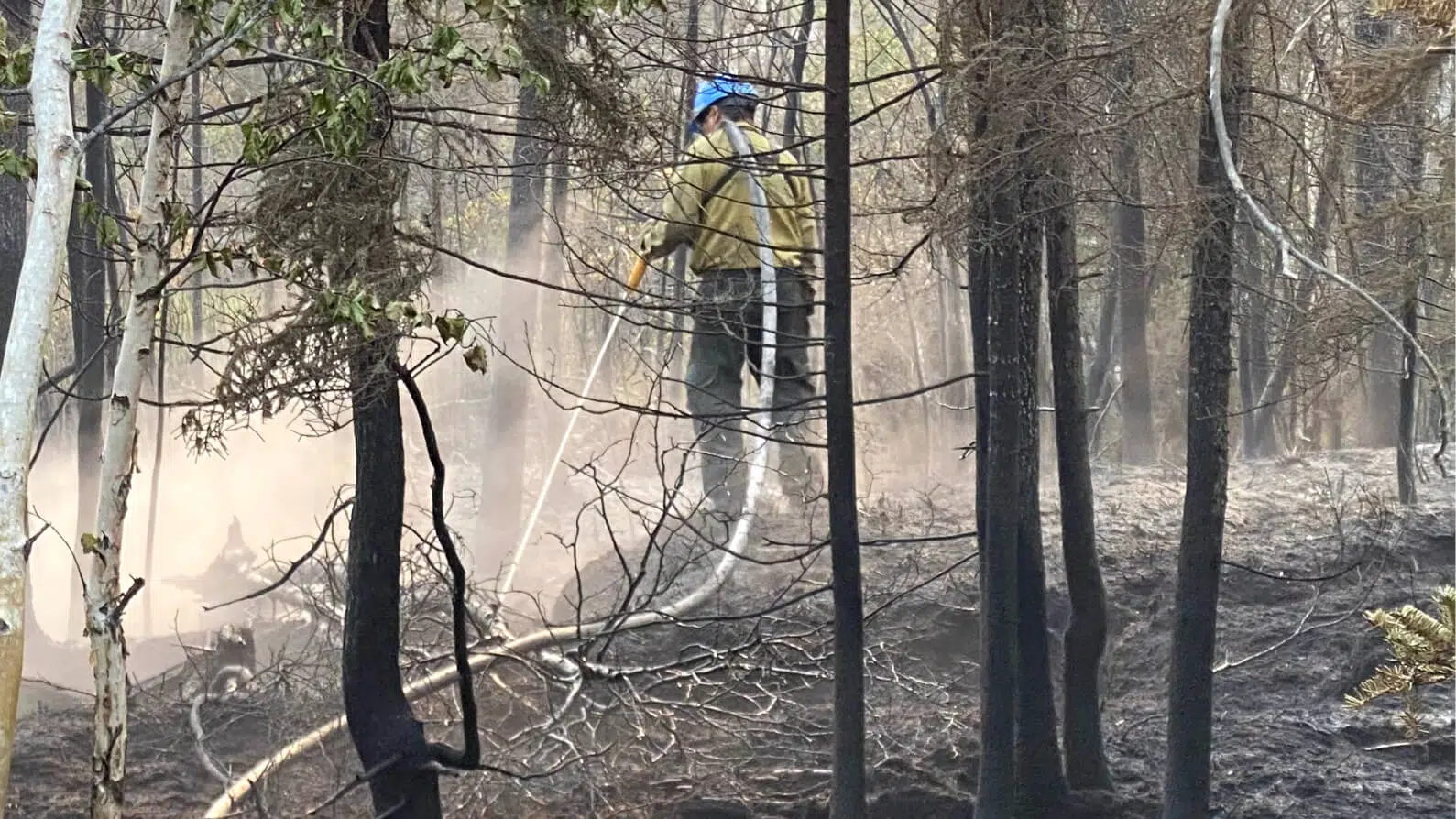
An NWT wildland firefighter works along a fireline. Courtesy of the Government of the Northwest Territories