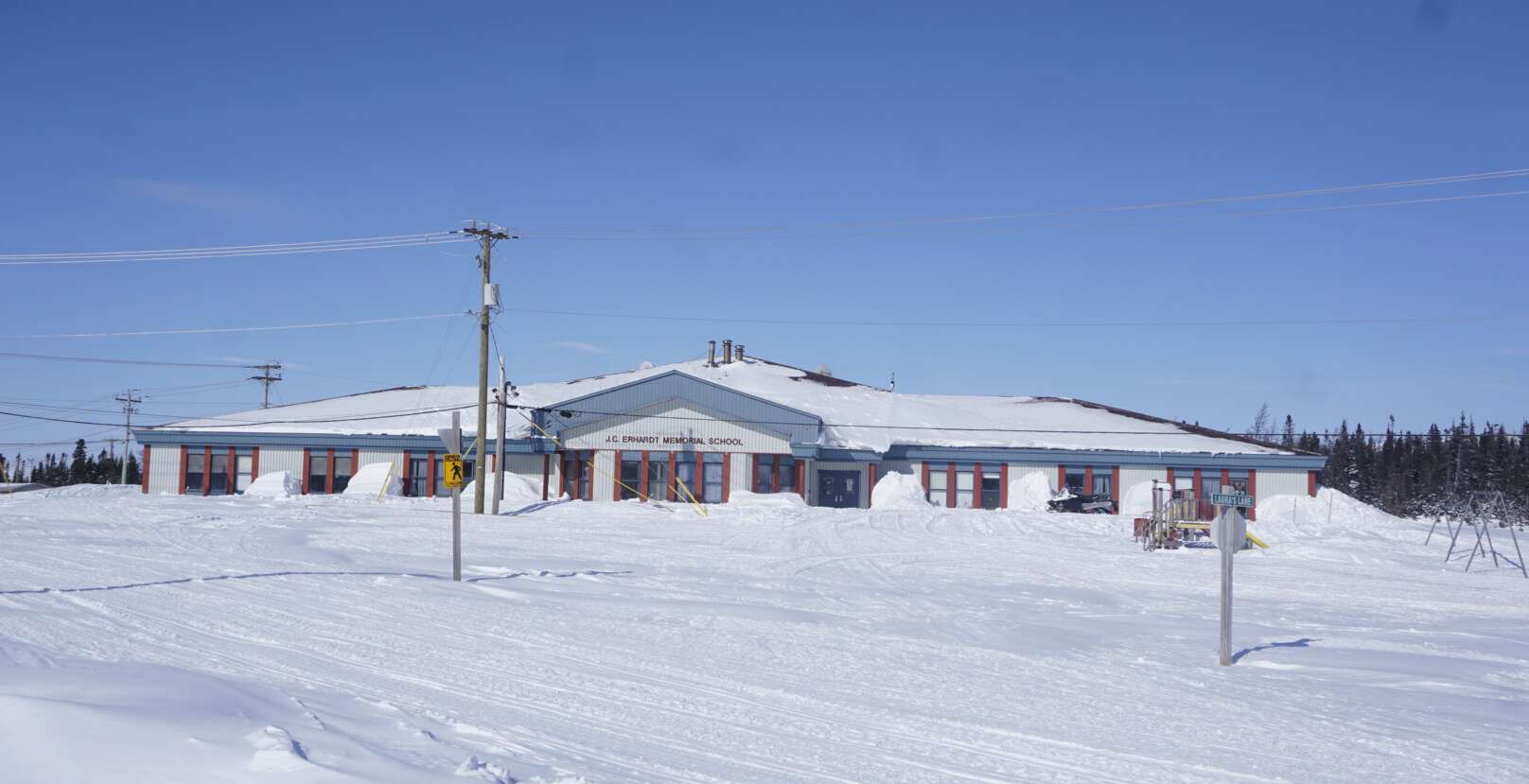
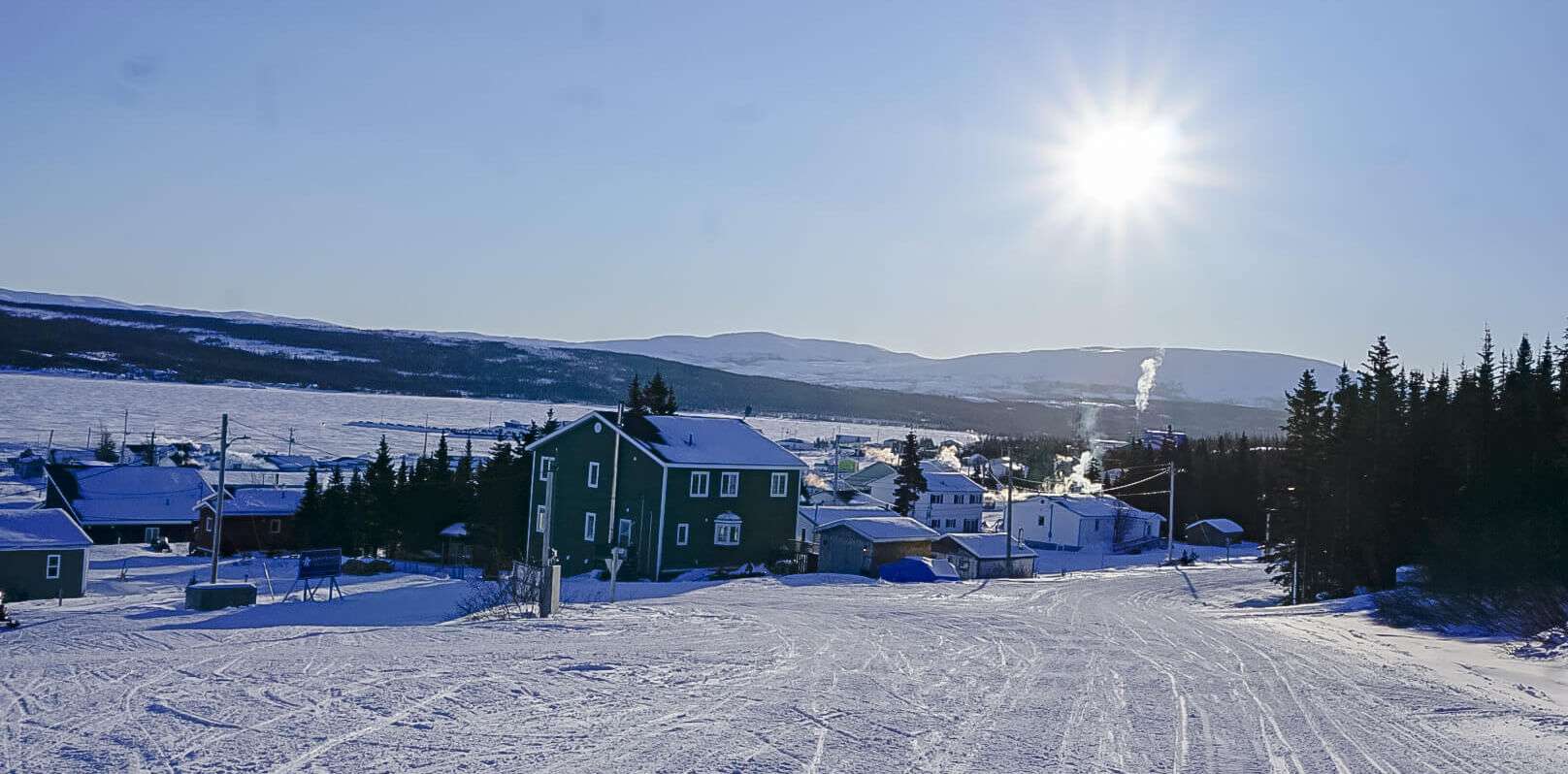
John Christian Erhardt Memorial School in Makkovik, Nunatsiavut. © Cathy Ford
Nunatsiavut through the 1980s
MY NAME IS JESSICA WINTERS and I grew up in Makkovik, Nunatsiavut. Christine Nochasak was my Inuktitut teacher for several years at the school in Makkovik. Over the years she has been a huge supporter of my work as an artist, and her work within cultural and language revitalization has been a great inspiration.
Christine was born and raised in Makkovik. She gave birth to her first child in 1983, while living with and taking care of her grandmother and pursuing a career as an Inuktitut teacher.
Christine: I grew up in Makkovik, and my kids grew up in Makkovik. My family was relocated to Makkovik from Hebron in 1956. My children went to school at John Christian Erhardt Memorial School.
Jessica: What was the housing situation like for you with three kids?
Christine: There was housing available through Torngat Housing, but before then, I had a house with my grandmother. Which was very old, built in the early 70s. By the time the 80s came around and the kids were growing up it wasn’t in the best shape. Tracy Ann was born in 1983 so she grew up there. Anaansiak passed away in 1985 but we stayed there until she (Tracy) was old enough to leave for university.
Jessica: How did your family get food at the time?
© Cathy Ford
Christine: There was one store, the Government Store, in Makkovik. Besides that we didn’t have a hunter at the time, well we did but they were busy working.
Jessica: Did you and your family travel a lot?
Christine: Not a lot, but we travelled to St. John’s when I was going to University at Memorial. There were a few times that we had to travel for courses when I was taking courses for University towards my teaching degree. It started as a teacher education program in Labrador, and my kids were still in school and I was still working at the school as an Inuktitut teacher in the 90s. We did summer courses after work, four‐week summer courses towards our certificate and they came with me to Goose Bay and they stayed with me at the family residence.
Jessica: So in Makkovik in the 80s how did you guys get around?
Christine: In the summer I think we had a truck. We had a skidoo in the winter.
Jessica: What were your necessities back then?
Christine: In the summer it was our speed boat, and in winter, our skidoo, besides clothing and food. Basic necessities.
Jessica: What did your kids do for fun?
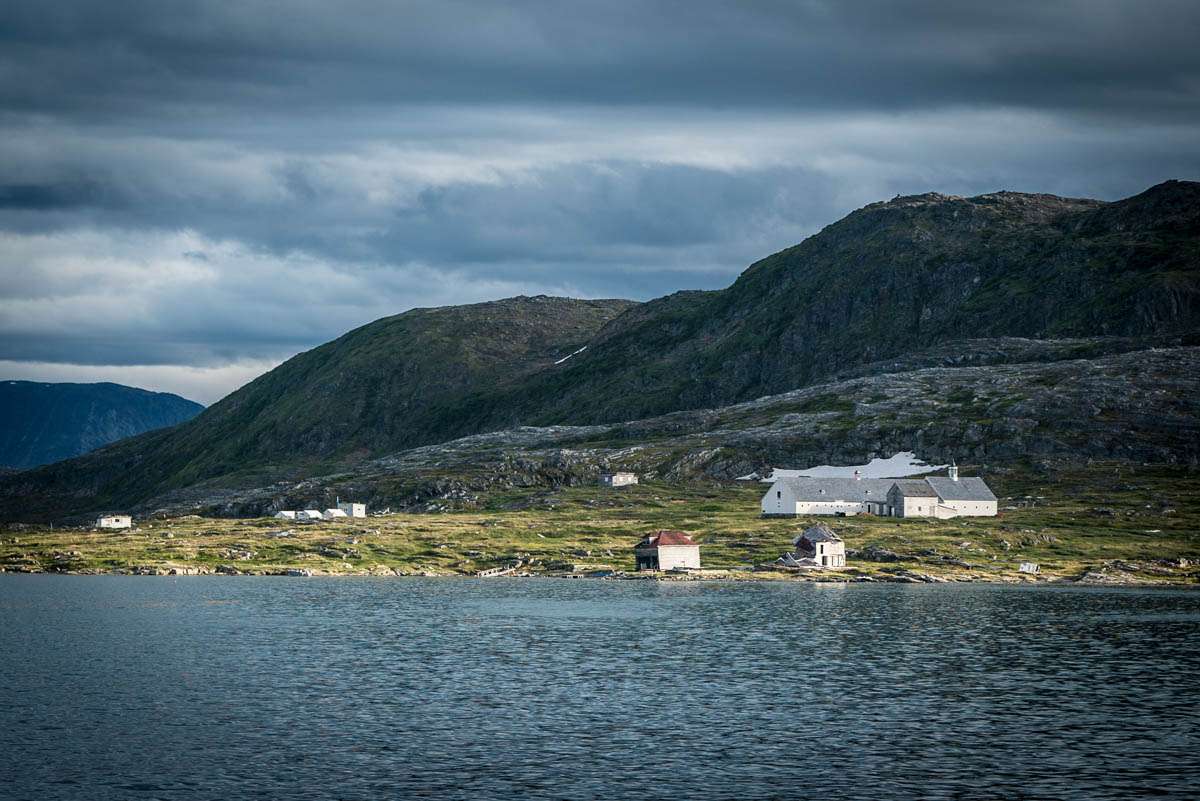
The old Moravian Mission still stands in Hebron as a National Historic Site. © Peter Wall/Students on Ice Foundation
Christine: There was no internet, I think it was mostly crafts and art, colouring, drawing, and painting, until there was maybe VHS players, some movies, or might have been even Nintendo by a certain year, but that was really it besides playing out, playing with friends, going to school, doing homework, those sorts of things.
Jessica: Did your kids play sports?
Christine: They didn’t have a gym at the school in the 80s, so my oldest didn’t have a gym to play in as a kid. They played outside, they played activities and sports outside.
Jessica: What’s one of your favorite memories from that time?
Christine: My kids being born and taking care of my grandmother. And I also started working at Labrador School Board in 1988.
Jessica: Do you recall any specific struggles from those days with regards to raising a family?
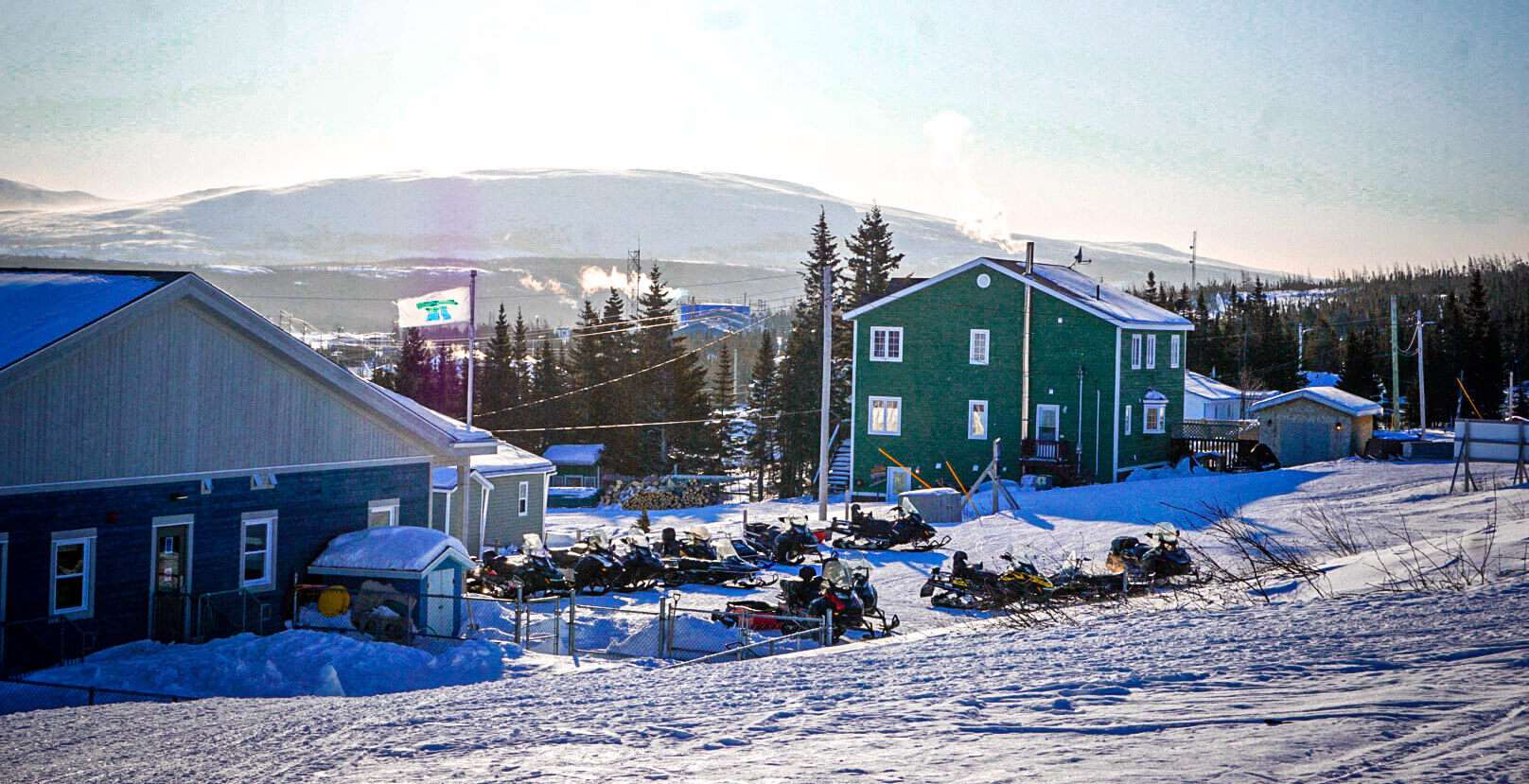
Christine Nochasak’s family was relocated to Makkovik from Hebron, Nunatsiavut, in 1956. © Cathy Ford
Christine: Before I started working with the school board I worked at the fish plant and would rely on EI (Employment insurance) in the winter months. It was hard because the income was low and depended on the hours you got at the plant in the summer. You had to accumulate so many in order to get insurance for the winter. We had to write out our EI through the mail, fill out a form and send it back in the mail. Sometimes you wouldn’t get it out in time due to weather and planes and sometimes you wouldn’t get your cheque. It was hard to pay bills because of that, it was hard to feed the kids and buy clothes. It was hard buying them things without internet or online shopping, we had to rely on catalogues and mailing your order out. Sometimes you wouldn’t get what you ordered, or it would be out of stock, and you wouldn’t know until it would come weeks later. Those sorts of things were hard in the 80s because there were no online services.
Jessica: Any memories that reflect simpler times when compared to today?
Christine: There are probably a couple I could mention. The cost of living wasn’t so high even though our income wasn’t as high. Things were simpler in terms of bills, we didn’t have internet bill, cellphone bill, mortgages, insurance. We had the basic necessities that we needed and that was enough. We got by with kids playing out. Kids were healthier back then because kids were outside more than they are now, they weren’t hunched over looking at iPads and iPhones all the time. It was healthier for their eyes, fresh air, outdoors. Kids are inside a lot using their eyes on screens, not paying much attention to what’s around them, but in the 80s they were outside a lot, in tune with nature outdoors, learning traditional things and what’s going on around them, baking, storytelling, listening to their grandparents, it still happens but not as often as they should be.