
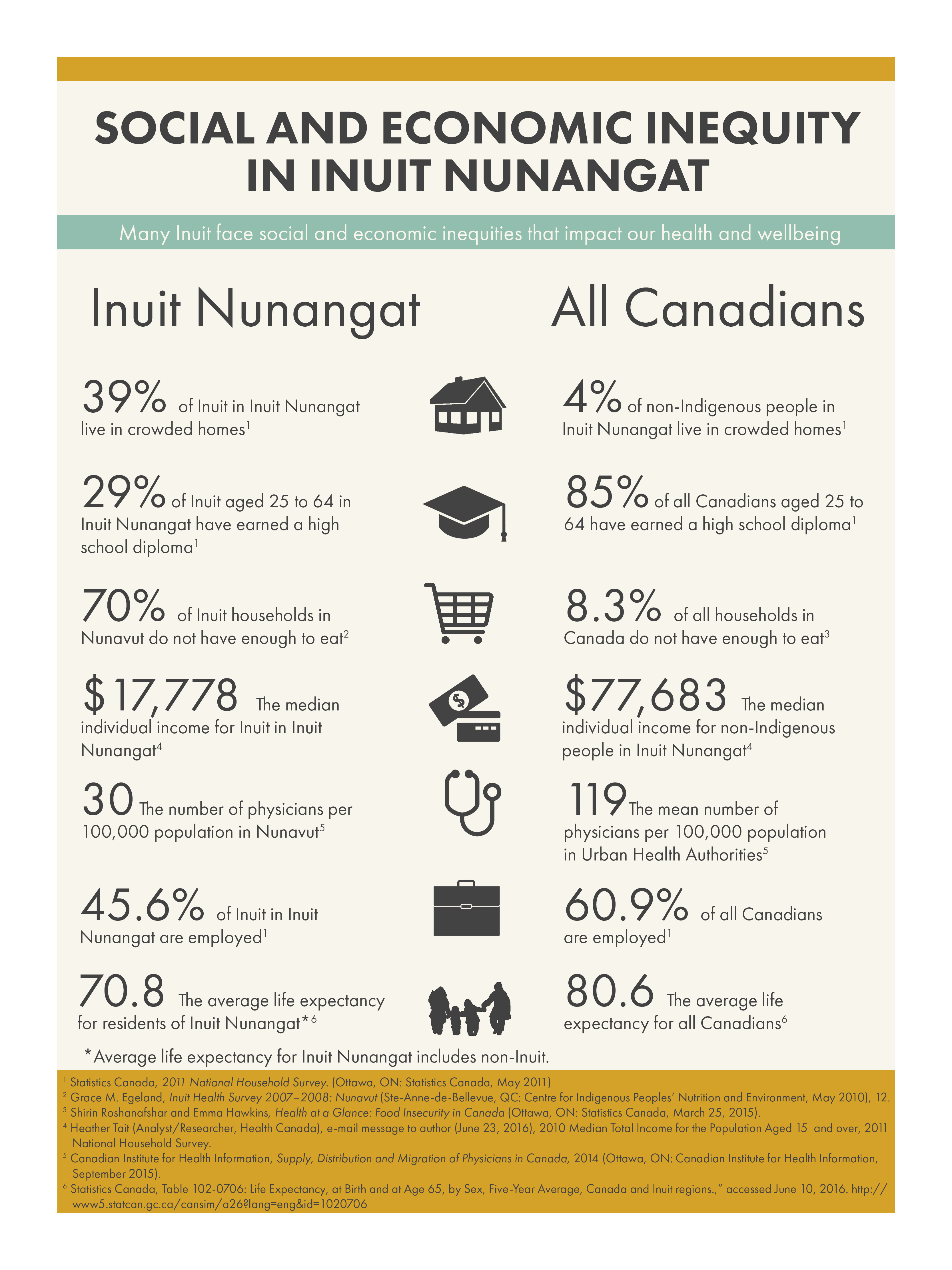



 This base level of risk can multiply through stress factors related to social inequity such as poverty and poor education.
 Personal experiences, including physical or sexual abuse, can further multiply a person’s overall risk for suicide.
 Exposure is a risk factor. Knowing people who have died by suicide can add to a person’s overall risk.
 Having high rates of suicide in our communities means that it touches every community member, creating an underlying risk that affects all Inuit.


Getting Started with Monitoring, Evaluation and Learning is a means to achieve self-determination in Inuit program design and evaluation. The more Inuit take charge of monitoring and evaluation activities, the more monitoring and evaluation will serve our interests across Inuit Nunangat.

Social Determinants of Inuit Health
The circumstances in which people are born, grow, work, live, and age, are known as the social determinants of health. These factors have a large impact on our overall well-being and play a critical role in suicide prevention. Social determinants of health can vary from one culture and society to another. The social determinants of Inuit health include:
Clear evidence links social disadvantage, such as living in poverty and not getting enough to eat, to higher rates of suicide. Addressing these underlying causes of social inequity, are necessary to prevent suicide and will also improve many other areas of Inuit life.