Where the Inuvialuit
Come from

By Article

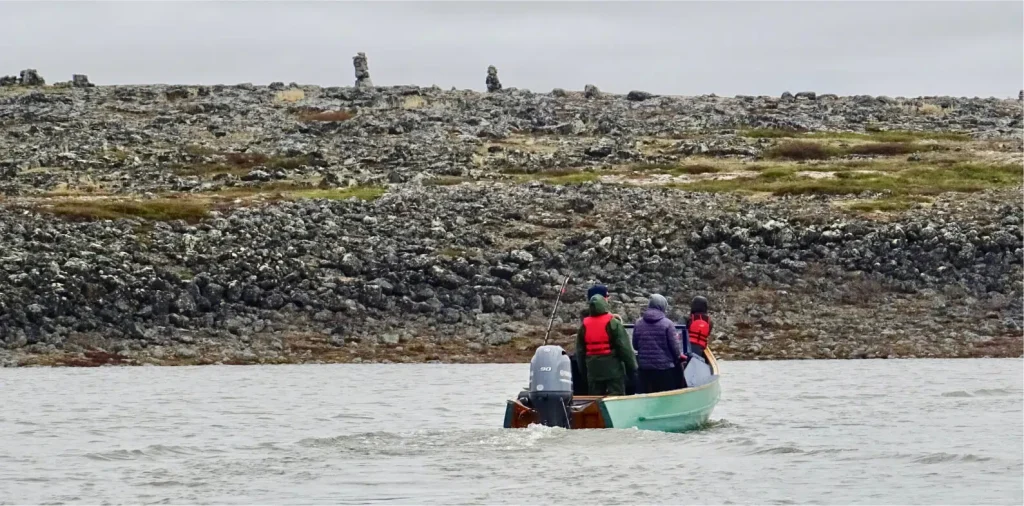
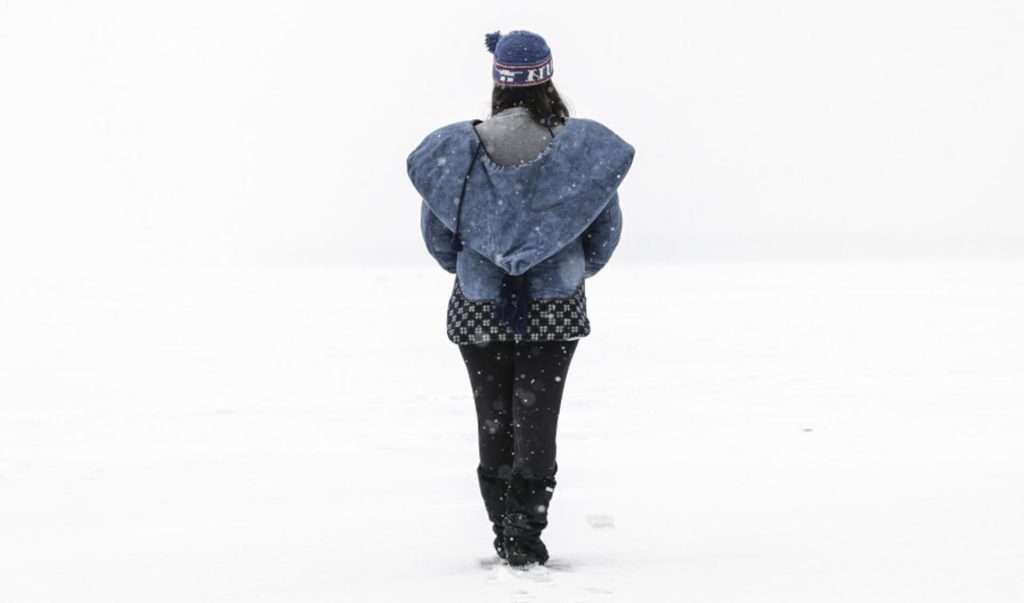
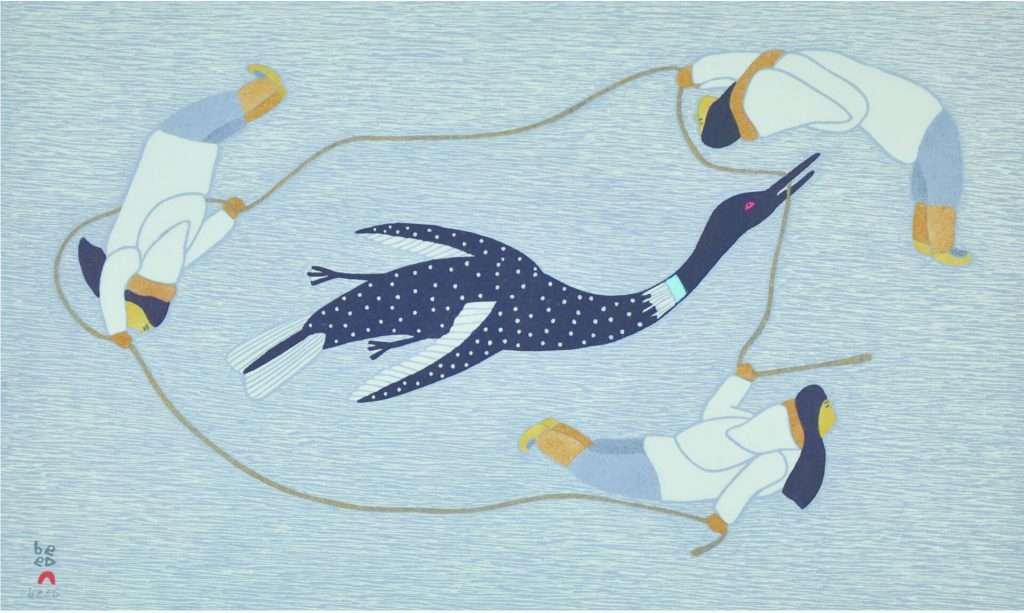
A LONG TIME AGO WHEN THE WORLD WAS OLD, but Inuit were new, there were lots of different Inuit around the Western Arctic. There were the Qiqiktarmiut from Herschel Island, the Kuupukmiut from the Mackenzie River, the Kittirgaryamiut from Kittigariut, and there were the Anderson River Inuit whose name we don’t remember. Or at least I don’t.

Read More
A group of five smiling individuals from Kugluktuk proudly holding up a large piece of tanned moose hide inside a community space

Embracing Moose in Kugluktuk

By Article

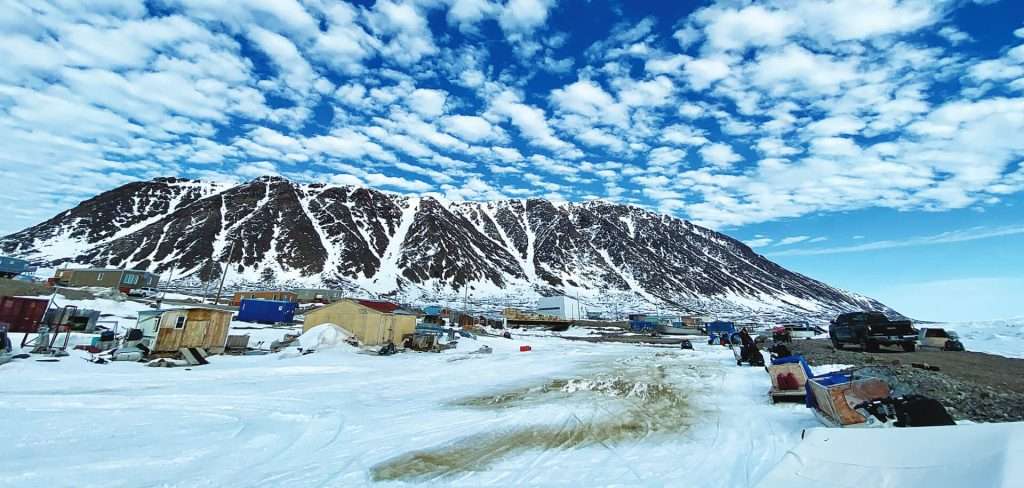
TENT RINGS, ARTIFACTS AND REMNANTS of rusted barrels can be seen as you travel the islands and shores along the Coronation Gulf of Western Nunavut. Copper Inuit hunters and gatherers have crossed these shores since time immemorial, travelling by seasons, following migrations paths, and charting the land and rivers for food and skins.

Read More

The North is My Bank

By Article

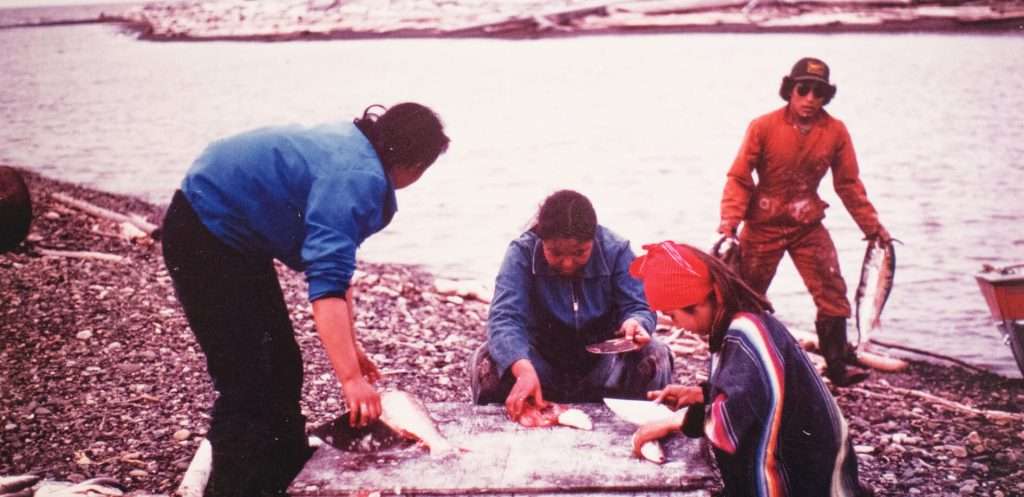
IN THE SUMMER OF 2019, I flew with my three daughters to my hometown of Tuktoyaktuk, from Yellowknife, to practice the sustainable, age‐old tradition of beluga harvesting. Watching my girls, aged 10, 8, and 1, participate in a harvest at the mouth of the Mackenzie River, where generations of our family have survived for centuries, was a highlight for me as a mother. The beluga harvest is one of many Inuvialuit traditions passed down from our Inuvialuit forefathers, and it continues to teach lessons and build connections to our heritage.

Read More

Serving Seal in Ikpiarjuk

By Article

I LOVE SEAL MEAT when it’s still warm. Red so deep, my eyes feel it. Delicious. Last fall, I shot a seal near Arctic Bay, Nunavut, and my first reaction was “wow! — I got it.” My second thought was the seal’s liver, and how it makes my mouth water. And then a little disappointment comes over me when I realize that I shot the seal through one of its eyes. I wanted to eat it.

Read More
Black and white photo of an Inuit couple sitting outdoors, dressed in traditional clothing

Unrecognized:

By Article

INUIT RCMP SPECIAL CONSTABLES are unsung heroes, but let us acknowledge the partners of these special constables who helped support their husbands’ work, which has largely gone unrecognized. Prior to 1983, when Mary Hunt became the first Inuk woman officially hired as a special constable in what is now Nunavut, Inuit women, and sometimes even children, assisted with various duties, but were never designated as special constables. Here are a few examples of how the families of special constables assisted the RCMP in Inuit Nunangat in earlier years.

Read More
Illustration of a figure dressed in traditional Inuit clothing, holding a harpoon with mist swirling around them.

The Northern Lights
of Nunatsiavut

By Article

It was told to me thusly: A powerful angakok wanted the beauty of the northern lights all to himself, so he stole them from the sky and trapped them
within the rocks at his home along the coast of Northern Labrador. A group of people living nearby suffered in despair during the sudden darkness.

Read More
An interview-David Serkoak_img

An interview with David Serkoak

By Article

The Ahiarmiut were relocated over and over again. In 1949 the Government of Canada bulldozed their camp at Ennadai Lake, southwest Nunavut, and began a devastating decade-long relocation process. David Serkoak lived through the relocations as a child. The retired teacher and principal in Nunavut now lives in Ottawa. Last January, in Arviat, the 21 remaining Ahiarmiut relocation survivors finally heard the Canadian government apologize.

Read More
A drawing of an Inuit hunter paddling a kayak near the edge of the ice, with a seal on the kayak and a vibrant sunset in the background. Another figure in a kayak can be seen in the distance.

Adrift

By Article

THE ATLANTIC OCEAN BORDERS the Labrador coastline from the northern end of the Big Land, where it meets Davis Strait to the southern end, which runs into the Gulf of St. Lawrence. Storms have shaped the landscape as well as the People living on the coast. Conditions all along the coastline are harsh, but the northern climes are the hardest areas for people to adapt to.

Read More